
Disarmament, Conflict and New Questions in a Chilly Era
From the 1986 Reykjavík Summit to new questions about nuclear weapons, forty years after the historic meeting at Höfði.
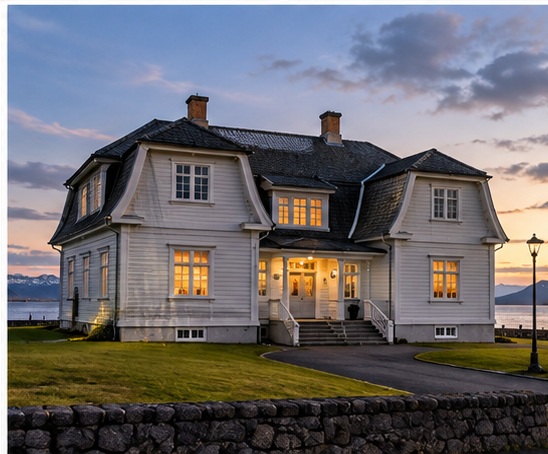
Illustration created for Fréttir 24/7 using artificial intelligence. Not a photograph of the event.
Forty years later, the question remains: can the great powers find common ground before another arms race becomes firmly entrenched?
In 1986, two of the world’s most powerful leaders sat in a small house by the sea in Reykjavík and discussed the future of weapons capable of destroying entire cities. They did not resolve every disagreement, but a year later they signed a treaty that resulted in the destruction of thousands of missiles.
Iceland had no nuclear weapons, yet it hosted talks whose effects reached far beyond its borders. The meeting demonstrated that even when leaders fail to sign an agreement, their discussions can change the foundations of future negotiations.
What Can the World Learn from Höfði?
To mark the summit’s 40th anniversary, the City of Reykjavík has announced a peace week featuring exhibitions and events. According to the programme, Höfði is expected to open to the public on Saturday, 10 October 2026, from 10 a.m. to 4 p.m., and the Höfði Peace Centre’s peace conference is scheduled for 12 October at Harpa. Visitors should check the organisers’ latest programme.
Peace Week in Reykjavík, Forty Years Later
With the treaty’s demise, one of the most important pillars of arms control established toward the end of the Cold War disappeared. The war in Ukraine and growing tensions between Russia and the West have since made questions of nuclear deterrence and disarmament even more pressing.
The INF Treaty remained in force for more than three decades. The United States withdrew in 2019 following a prolonged dispute with Russia over alleged violations. Russia rejected the US accusations and raised criticisms of its own.
An Arms-Control Treaty That Lasted Three Decades
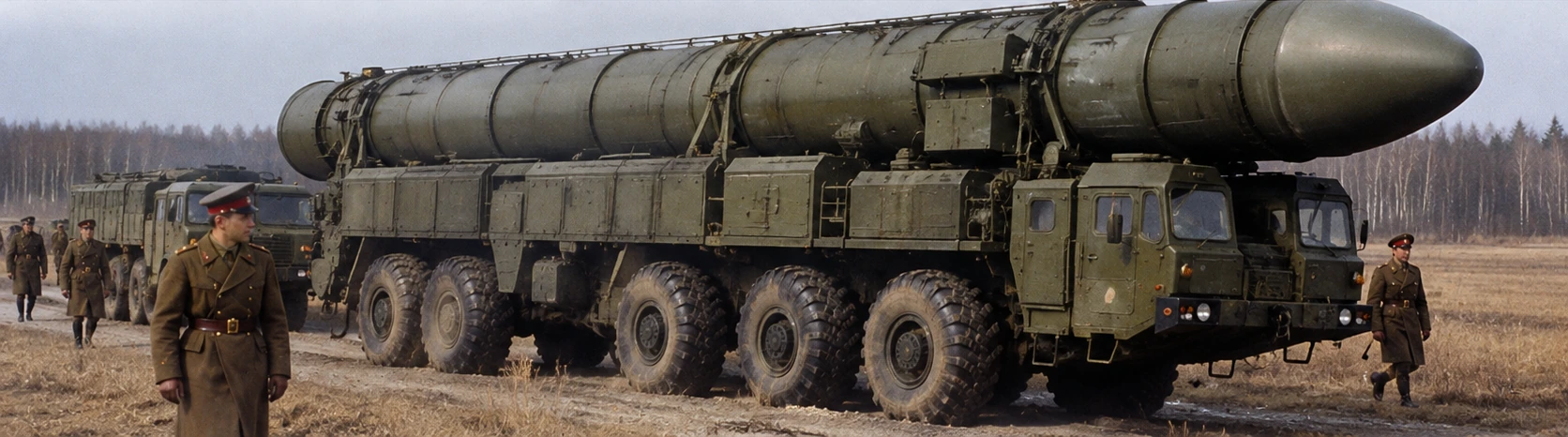
The United States and NATO responded in part by deploying Pershing II missiles and cruise missiles in Western Europe. The INF Treaty later led to the destruction of systems covered by its provisions.
Among the weapons that came to symbolise the arms race were the Soviet RSD-10 Pioneer missiles, known to NATO as SS-20s. They could carry nuclear warheads and had a range that made them particularly significant to Europe’s military balance.
The Soviet Missiles That Threatened Europe
Rather than merely limiting the number of weapons, the treaty eliminated an entire category of weapon systems. It also established verification procedures and mutual inspections. The Reykjavík Summit had been an important precursor to this achievement, although the treaty itself was not signed in Iceland.
On 8 December 1987, Reagan and Gorbachev signed the Intermediate-Range Nuclear Forces (INF) Treaty in Washington. It required the elimination of ground-launched ballistic and cruise missiles with ranges between 500 and 5,500 kilometres, along with their associated launchers.
The Treaty Signed One Year Later
The summit therefore ended without a comprehensive agreement. Nevertheless, the discussions showed that the leaders were prepared to consider disarmament on a previously unprecedented scale.
Although they moved closer to agreement on several issues, the US Strategic Defense Initiative (SDI), a missile-defence research programme, proved a difficult obstacle. Soviet leaders feared that extensive US missile defences could upset the military balance. Reagan, however, would not accept the limits on the research programme demanded by Gorbachev.
The talks included proposals for major reductions in long-range nuclear weapons and the elimination of certain categories of intermediate-range missiles. The ideas went so far that the leaders discussed the possibility of ridding the superpowers of nuclear weapons within the following ten years.
They Discussed the Possibility of Eliminating Nuclear Weapons
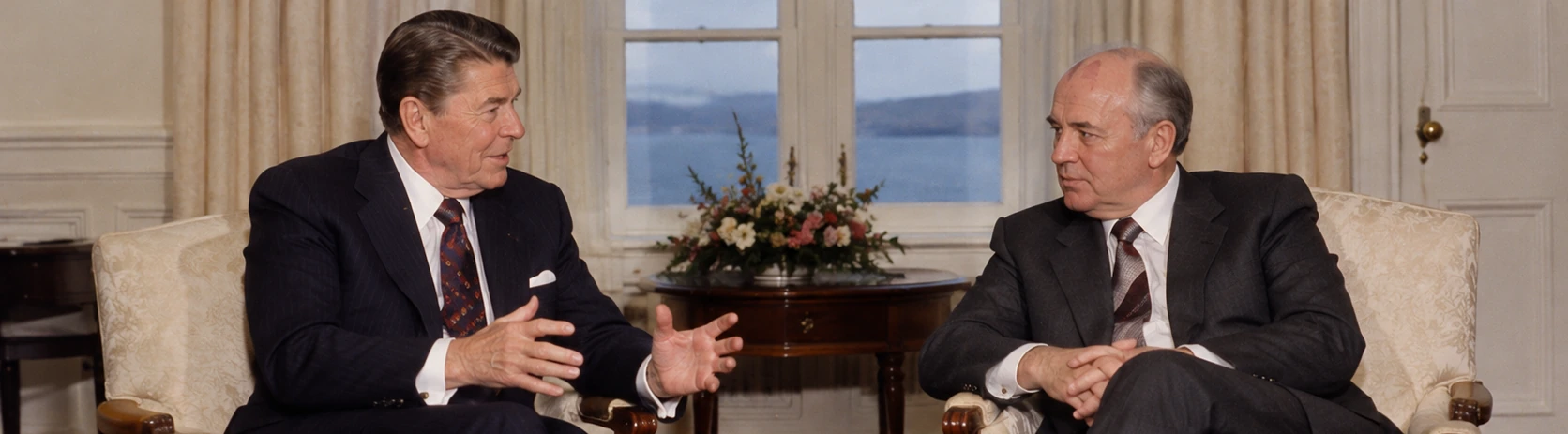
The Reykjavík meeting offered an extraordinary opportunity to discuss not only limits on armaments but far-reaching disarmament.
The United States and the Soviet Union had amassed enormous nuclear arsenals. Deterrence rested on each country knowing that the other could respond to an attack with a devastating counterstrike. This situation also carried the risks of error, misunderstanding and unintended escalation.
On 11–12 October 1986, US President Ronald Reagan and Soviet leader Mikhail Gorbachev met at Höfði in Reykjavík. Against the backdrop of the Cold War, they discussed ways to reduce the nuclear weapons that had shaped both superpowers’ security policies for decades.
Two Superpowers and One Small House
Sources
- Reykjavíkurborg – Friðarvika
- RÚV – Friðarvika
- Bandaríska utanríkisráðuneytið – skjöl um Reykjavíkurfundinn
- Bandaríska utanríkisráðuneytið – INF-samningurinn
This article is based on sources available on 9 October 2026. Circumstances may change.