
A Strong Icelandic Króna — But for How Long?
A high real exchange rate can make imports cheaper but create difficulties for exporters.
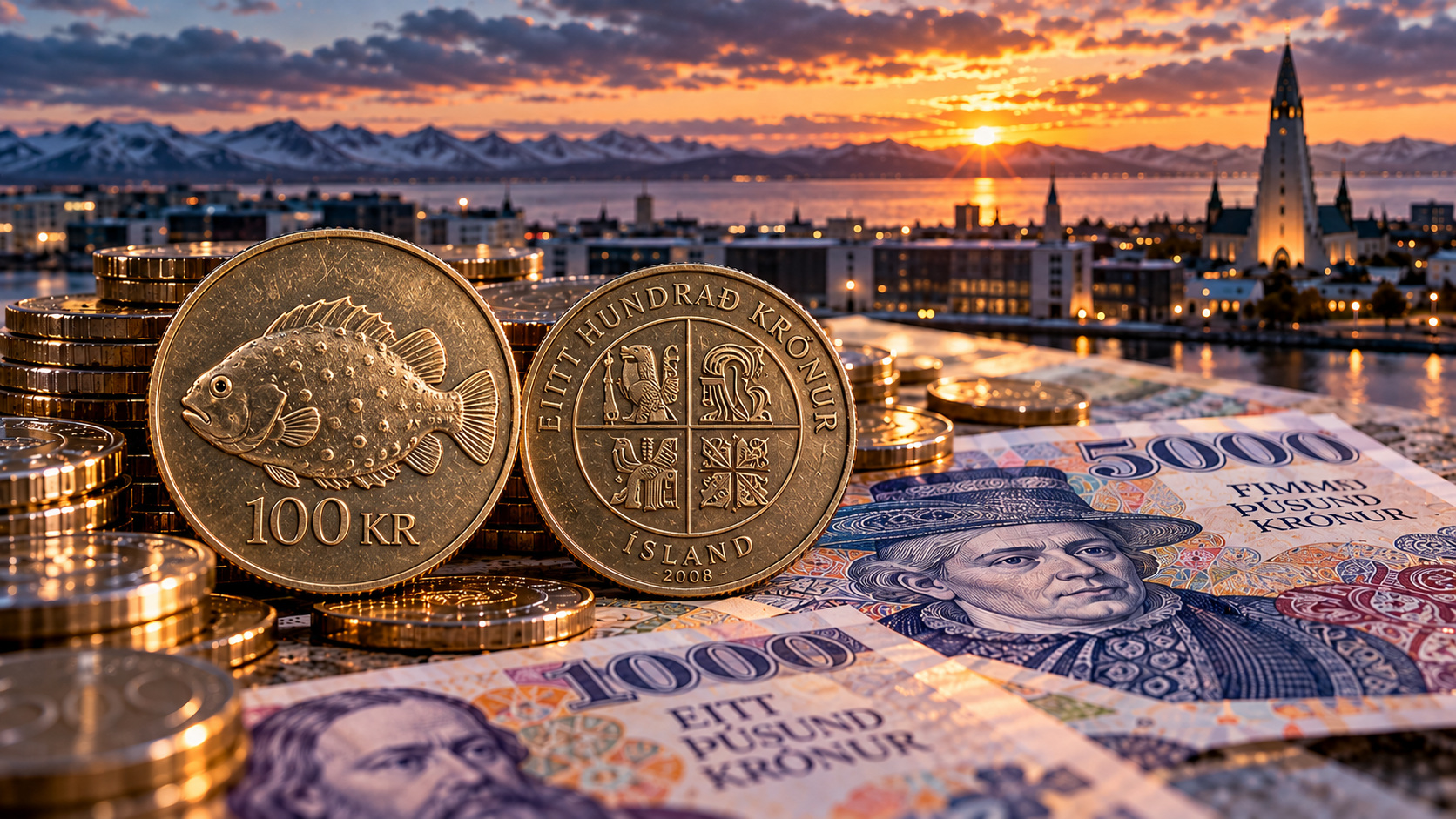
Homepage images are stock images or illustrations, not documentary photographs.
What is the real exchange rate?
The real exchange rate measures relative price levels or labour costs between countries, adjusted for exchange-rate movements. It is not the same as the simple euro-to-króna exchange rate.
Who feels the effects?
All else being equal, a strong króna can reduce the price of imported goods in Icelandic currency. Tourism businesses and exporters, however, may face higher costs relative to foreign competitors.
What needs to be verified?
Assessing sustainability requires looking at the current account, inflation, productivity, labour costs and the latest Central Bank of Iceland figures. This article does not claim a specific percentage increase in the króna without a verified timeframe and basis for comparison.
What affects the króna’s exchange rate?
The króna’s exchange rate is influenced by foreign-exchange trading, trade in goods and services, interest-rate differentials and market expectations. A single explanation rarely accounts for short-term fluctuations.
For households, exchange-rate movements can affect the prices of imported goods and travel, but the impact depends on pricing decisions and how quickly changes are passed on.
Sources
This article draws on sources available on 9 October 2026. Circumstances may change.