
Oil, War and the Great Powers — What Lies Behind America’s New Energy Agreements?
The United States has reached an agreement with Russia to increase diesel supplies while Washington is trying to persuade Ukraine to halt attacks on Russian oil refineries. At the same time, US authorities have concluded extensive energy agreements with Venezuela, discussed possible trade involving Russian natural gas and participated in emergency measures to increase oil supplies. These developments raise questions about whether energy security and economic interests are reshaping the priorities of US foreign policy.
An agreement that surprised Ukraine

US President Donald Trump announced on Friday, October 9, that he had reached an agreement with Russian President Vladimir Putin for supplies of Russian diesel fuel to the US and global markets.
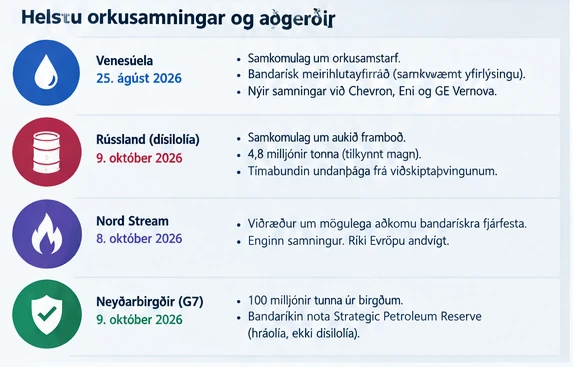
According to Trump's announcement, Russia is to deliver more than 300,000 tonnes immediately, 500,000 tonnes in November and one million tonnes thereafter. Up to another three million tonnes could follow, depending on the production capacity of Russian refineries.
The total could therefore reach approximately 4.8 million tonnes.
It has not been confirmed that these deliveries have taken place. Details of the purchase price, final buyers and destinations have not been disclosed.
Shortly after Trump's announcement, the US Treasury issued a specific exemption from sanctions. It permits certain transactions involving Russian diesel until April 7, 2027.
The decision is striking because, since Russia's 2022 invasion of Ukraine, the United States has used economic pressure to restrict Moscow's revenue from energy exports.
Trade is now being opened up in fuel from that same country.
Ukraine fears continued funding for the war

Ukrainian President Volodymyr Zelenskyy has sharply criticised the agreement.
He argues that increased trade in Russian petroleum products could provide Moscow with revenue to continue its military campaign in Ukraine.
The criticism comes as Ukrainian forces have targeted Russian oil refineries and other energy infrastructure with drone strikes.
The attacks are intended, among other things, to disrupt fuel production, weaken Russia's military logistics and reduce the economic benefits of energy exports.
The strikes have disrupted Russia's domestic fuel market, but they have also increased uncertainty in international markets where supply is already under pressure.
Two competing interests collide here.
Ukraine wants to weaken Russia's economic ability to sustain the war.
The United States wants to increase diesel supplies and bring fuel prices down.
Those priorities do not necessarily align.
Peace talks in the shadow of an oil agreement
Trump's announcement came while a Ukrainian delegation was holding talks with US negotiators in Miami.
Those involved included Steve Witkoff and Jared Kushner, who have participated in US peace efforts.
According to the Financial Times, US representatives pressed Ukraine to stop attacking Russian oil refineries.
The newspaper's sources also said that restrictions on sharing US intelligence were discussed if Ukraine refused the request.
There has been no confirmation that any such restrictions have taken effect.
The issue is especially sensitive for Ukraine because US intelligence has played an important role in its defensive operations.
Zelenskyy has said Ukraine is prepared to discuss a mutual halt to attacks on energy facilities, but that Russia would also have to stop striking Ukrainian energy infrastructure.
There is no confirmation that Russia has accepted such an arrangement.
Why is the United States turning to Russia?
Part of the explanation lies in the global energy crisis.
The conflict involving Iran and disruption to shipping through the Strait of Hormuz have created considerable uncertainty in oil markets.
The Strait of Hormuz is one of the world's most important shipping routes for crude oil and petroleum products. Disruption there can affect supplies and prices far beyond the Middle East.
Diesel is particularly important for freight transport, agriculture, construction and manufacturing.
Price increases can therefore gradually feed through into the cost of food and other essentials.
The United States produces large quantities of crude oil, but that does not guarantee an adequate supply of every type of fuel at all times.
Crude oil and finished diesel are not the same product. Refining capacity, the composition of crude oil, transport routes and inventory levels also matter.
The agreement with Russia could therefore help increase supply in particular markets.
But it is not yet clear how much of the Russian diesel would go directly to the United States or whether most would be sold to other buyers.
Can Russia actually deliver all that diesel?
New information highlights a significant contradiction in the agreement. Russia, which has promised to increase global diesel supplies, is itself experiencing fuel shortages.
In July, Russian authorities restricted diesel exports to protect domestic supplies. Ukrainian attacks on refineries have reduced output and disrupted the country's fuel market.
According to information published by Al Jazeera on October 10, Russian exports of diesel and related petroleum products fell sharply in the third quarter.
Neil Atkinson, a former head of oil markets at the International Energy Agency, has questioned how Russia could supply the quantities under discussion without harming its own fuel market.
Russian authorities have nevertheless indicated that export restrictions might be eased if production exceeds domestic demand.
It remains unclear how much of the promised diesel will actually be delivered, when it might arrive, and whether the volumes would be sufficient to significantly affect world prices.
The agreement may therefore carry political weight even if its economic impact proves limited.
Additional sources, October 10: Al Jazeera and Reuters
Venezuela — another major shift in energy policy
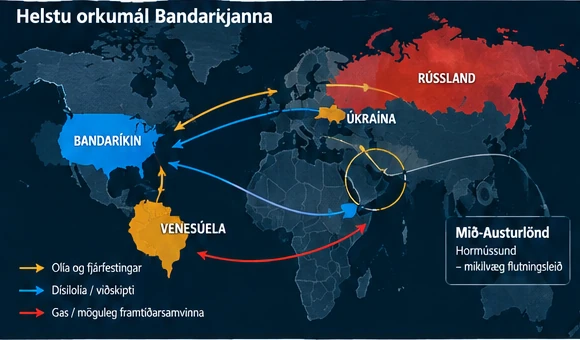
The agreement with Russia is only one part of a broader development.
In late August, the United States and Venezuela announced extensive cooperation in the energy sector.
The US Department of Energy says the agreement gives the United States majority control over an estimated 65 billion barrels of proven oil resources.
The precise legal structure of that control has not, however, been independently verified through a review of official contract documents.
Agreements with major international energy companies followed in September.
The US company Chevron announced plans to invest more than seven billion US dollars over the next five years, aiming to increase its oil production in Venezuela.
Italy's energy company Eni also signed a 25-year agreement with state oil company PDVSA to develop the Junín 5 oil field.
Some agreements have therefore already been signed, although future production and investment plans still depend on implementation.
Venezuela has vast oil resources but has faced difficulties in its petroleum industry for years, including underinvestment, deteriorating infrastructure and political conflict.
For the United States, increased Venezuelan production could become important over the longer term.
It does not, however, automatically resolve the current shortage of diesel.
Russian gas returning to Europe?
Another development has attracted attention in Europe.
Reuters reported on October 8 that US and Russian representatives had discussed possible involvement by American investors in the Nord Stream gas pipelines.
Those pipelines were previously an important route for Russian natural gas to Germany.
They have, however, been out of operation since gas flows stopped and explosions damaged sections of the system in 2022.
According to Reuters' sources, Jared Kushner and Kirill Dmitriev, an adviser to Putin, have been involved in discussions about possible future business arrangements.
US authorities have nevertheless played down expectations that a deal is imminent, saying recent talks did not take place in the manner described.
The German government has also expressed opposition to resuming gas shipments through Nord Stream.
Sanctions remain in force, and no agreement has been signed to restart deliveries.
Even so, the reporting shows that the future of energy trade between Russia and Europe remains a subject of discussion in connection with peace efforts.
Emergency reserves — a temporary solution
The United States has not only sought new suppliers.
It has also taken part in coordinated action by industrialised countries to temporarily increase the supply of oil and fuel.
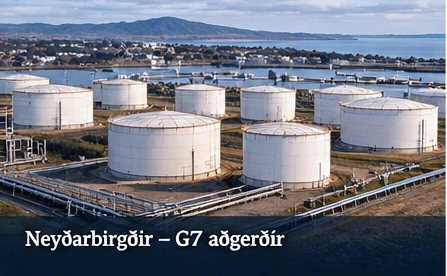
In March, member countries of the International Energy Agency agreed to a major release of emergency stocks in response to disruptions in international markets.
In early October, G7 leaders decided to accelerate the release of 100 million barrels over the next four months, with particular emphasis on diesel.
Importantly, this volume is part of a previously approved emergency measure, not an additional 100 million barrels on top of the earlier plan.
The aim is to bring fuel to market faster and ease the effects of shortages.
But emergency reserves are finite.
They can cushion short-term disruptions but cannot replace stable production and secure transport routes in the long term.
That is why agreements with producing countries and energy companies continue to matter.
Has energy become a bargaining tool for the great powers?
Viewed together, these decisions reveal a pattern.
The United States is expanding cooperation with Venezuela, allowing certain transactions in Russian diesel, exploring possible future projects involving Russian natural gas and participating in coordinated releases from emergency reserves.
All these actions concern, to some degree, supply, prices and access to energy.
But they also have political consequences.
Cooperation with Venezuela could change the position of international energy companies and affect future supply.
Trade with Russia could generate new revenue for a country that Western governments have sought to pressure economically over the war in Ukraine.
Ideas involving Nord Stream could affect future relations among Europe, the United States and Russia.
That does not mean all these actions are part of a single secret or predetermined plan.
Some are formal agreements, others temporary exemptions, and still others unconfirmed discussions about possible future projects.
What they have in common is that energy has become a prominent factor in relations among major powers.
Who benefits — and who bears the risks?
For the US government, greater fuel supplies could ease economic pressure.
For American and international energy companies, new agreements could create investment opportunities.
For Russia, increased trade could mean new export revenue and opportunities for wider economic cooperation.
For Ukraine, however, the risk is that economic pressure will be relaxed without Moscow committing to reduce military operations.
European countries also face difficult questions about energy security and their future relationship with Russia.
In recent years, they have invested heavily in reducing their energy dependence on Moscow.
A return to extensive trade could therefore create new disagreements among allies.
What does this mean for Iceland?

Although Iceland generates almost all its electricity from renewable sources, the country still relies on imported fossil fuels for much of its transport, fisheries and freight operations.
Higher international diesel prices can therefore increase businesses' operating costs and eventually affect consumer prices.
This is particularly significant in industries where fuel accounts for a large share of expenses.
It cannot, however, be asserted that the new agreement between the United States and Russia will produce any particular price change in Iceland.
The impact will depend on global supply, exchange rates, transport costs and the course of conflicts in the Middle East, among other factors.
For Icelandic consumers, the key question is not simply what the major powers agree to, but whether those agreements deliver a real and lasting supply of fuel.
Oil and peace
The US–Russia diesel agreement has opened a new chapter in the debate over the relationship between energy security and the war in Ukraine.
For Washington, lowering fuel prices is an urgent priority.
For Ukraine, maintaining economic pressure on Russia is an important part of the effort to bring the invasion to an end.
For Moscow, expanded energy trade could create economic opportunities even while the war continues.
But there is no confirmation that Russia has accepted new commitments to peace or a ceasefire in connection with the diesel agreement.
That is the central uncertainty.
Can increased trade lay the groundwork for peace, or might economic gains come before the political concessions that peace requires?
The answer will depend not only on how much oil Russia delivers, but also on whether the agreements lead to genuine changes on the battlefield and at the negotiating table.
Meanwhile, the war continues, and energy has become one of the most important factors in relations among the great powers.
Illustrations / AI-generated images: Some or all of the images and infographics were produced using artificial intelligence. Maps and arrows are simplified explanatory representations, not verified transport routes. Images of political leaders are illustrations, not photographs of actual meetings or events.