World Court Finds Myanmar Committed Genocide Against the Rohingya
For the first time, the International Court of Justice has found a state responsible for committing genocide. Myanmar calls the ruling unfair.
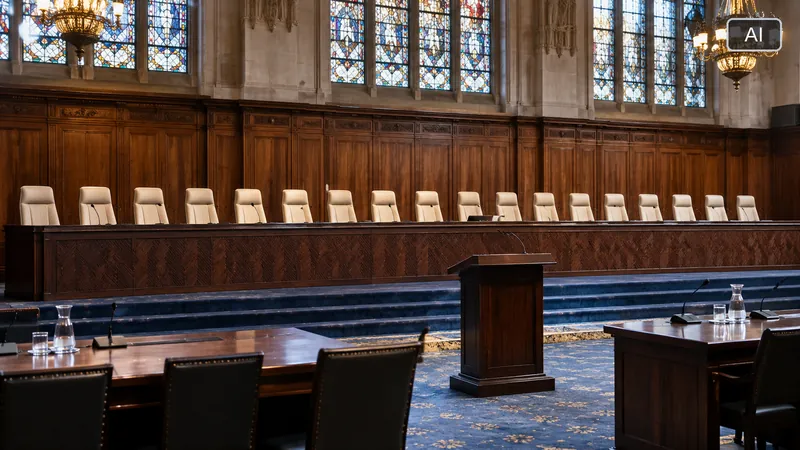
The International Court of Justice (ICJ) in The Hague ruled on Thursday, 19 November, that Myanmar "has committed genocide against the Rohingya group in northern Rakhine state", in breach of the 1948 Genocide Convention. The judges were split nine to six. The President of the Court, Yuji Iwasawa, read the judgment over about three hours.
It is the first time the ICJ has found a state responsible for committing genocide. The ruling is final and cannot be appealed.
What the court found
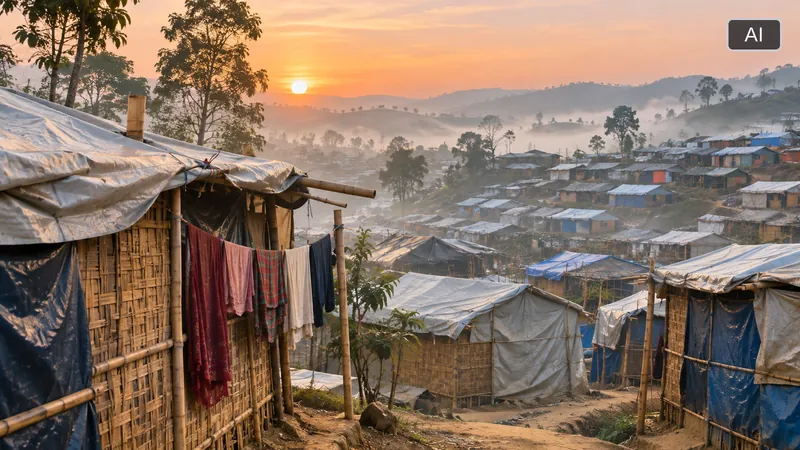
The case concerns the Myanmar military's so-called clearance operations in 2016 and 2017, which drove more than 730,000 Rohingya, a mostly Muslim minority, across the border into Bangladesh. According to the court, Myanmar's forces killed at least 10,000 Rohingya, and there was widespread sexual violence and attacks on civilians as they fled. Myanmar has said it was responding to attacks on police posts by the Arakan Rohingya Salvation Army.
The court said the "only reasonable inference" from the evidence was an intent to destroy a substantial part of the Rohingya. It also found that Myanmar had failed in its duty to prevent and punish genocide.
What Myanmar must do
The court ordered Myanmar to stop the violations, to give guarantees that they will not be repeated, and to make reparations. That includes enabling the Rohingya to return home safely and voluntarily, reuniting separated families, searching for the missing and paying compensation, the amount of which will be decided later.
ICJ judgments are binding, but the court has no means of enforcing them. If a state does not comply, the other party can turn to the UN Security Council, which has never used that power.
A first in The Hague
The Gambia, a small West African country, brought the case in 2019 with the support of the Organisation of Islamic Cooperation. Eleven states that are party to the Genocide Convention intervened on questions of how it should be interpreted, among them Canada, Denmark, France, Germany, the Netherlands and the United Kingdom.
The ruling goes further than the court's best-known earlier genocide case. In 2007, in a case brought by Bosnia and Herzegovina, the court found that genocide had been committed at Srebrenica in July 1995, when about 7,000 Bosnian Muslim men were killed, but it held that Serbia was not responsible for committing it. Serbia was found to have breached its duty to prevent the genocide and to punish those responsible, among other things by failing to hand over General Ratko Mladić to the UN war crimes tribunal.
The response
"Our country was unjustly accused," said Myanmar's government spokesperson, Khaing Khaing Soe, on Friday. "It is not a unanimous decision by everyone; it is not fair." China's foreign ministry spokesperson, Guo Jiakun, said such rulings were "not conducive to the settlement of disputes".
The Gambia called it "a historic day for international justice" and urged Myanmar to comply "fully and without delay". The UN Secretary-General, António Guterres, called the ruling a "demonstration of international justice" and said impunity for "such horrific acts must not stand". Bangladesh, which hosts the refugees, welcomed it and said safe return remained the only workable solution.
The United Kingdom expelled Myanmar's defence attaché and asked for an urgent meeting of the UN Security Council. The United States said it was studying the decision.
"Justice has been decided, but not yet delivered," said Yanghee Lee, a former UN special rapporteur on Myanmar.
On the same day as the ruling, the United States, China and Russia issued a joint declaration saying the International Criminal Court "and other similar bodies" should not overstep their powers. The declaration did not mention the Myanmar case.
Sources
- Al Jazeera — UN's top court finds Myanmar guilty of genocide against Rohingya, 19 November 2026 – The ruling.
- Al Jazeera — World reacts to ICJ finding Myanmar guilty of genocide against Rohingya, 19 November 2026 – Reactions.
- Al Jazeera — Myanmar, China object to 'unfair' ICJ genocide ruling, 20 November 2026 – Myanmar's and China's responses.
- Human Rights Watch — World Court Finds Myanmar Committed Rohingya Genocide, 19 November 2026 – What the court ordered and how judgments are enforced.
- International Court of Justice — Declarations of intervention admitted, 3 July 2024 – The states that intervened.
- American Society of International Law — World Court finds Serbia responsible for breaches of Genocide Convention, 2007 – The 2007 Bosnia v. Serbia judgment.
Reporting note: This article is based on reporting by Al Jazeera, Human Rights Watch and the American Society of International Law, and on the ICJ's own records. No British newspapers or broadcasters are quoted (house rule 4).
This article was drafted with AI assistance and reviewed and edited by Fréttir 24/7's editorial team.
Tips, corrections or questions: ritstjorn@frettir247.news