
Major League Baseball in 2026: Milwaukee's Historic Championship and the Future of a Global Sport
The Milwaukee Brewers have won their first World Series, beating the Tampa Bay Rays. As baseball celebrates a new champion, the sport faces big questions about money, broadcasting and its future.
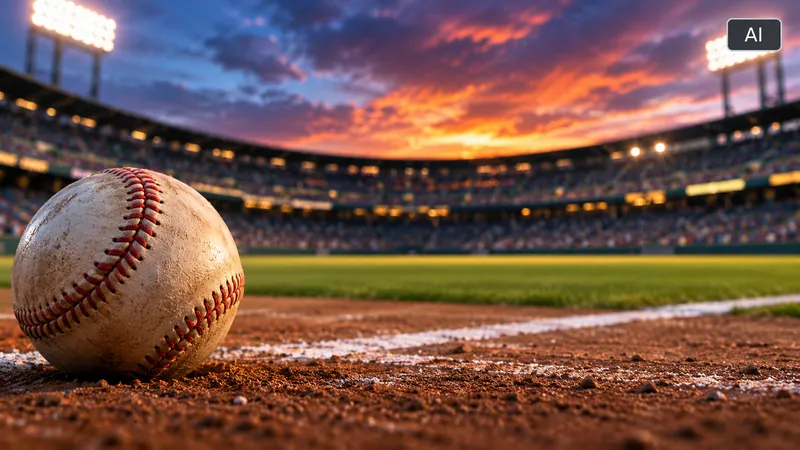
MILWAUKEE — Major League Baseball has crowned a new champion. The Milwaukee Brewers defeated the Tampa Bay Rays four games to one in the 2026 World Series, winning the first championship in their franchise's history and bringing the trophy to one of baseball's smallest markets.
The Brewers finished the regular season with 103 victories and 59 defeats, the best record in Major League Baseball. They then won 11 of their 13 postseason games, beating the San Diego Padres 3–1 in the Division Series, sweeping the two-time defending champion Los Angeles Dodgers 4–0 in the National League Championship Series and defeating Tampa Bay in the World Series.
It was a season that demonstrated how a well-managed club can compete with baseball's wealthiest organisations. Milwaukee's success was built on pitching, disciplined hitting, defensive strength and a roster capable of delivering under pressure.
The result also ended the Dodgers' pursuit of a third consecutive World Series championship.
For international readers, the conclusion of the 2026 season provides an opportunity to examine not only who won, but how Major League Baseball operates, why its influence extends far beyond North America and what challenges lie ahead.
Milwaukee's historic World Series victory
The Brewers' championship was the culmination of a season in which the club consistently outperformed expectations.
Milwaukee had previously reached the World Series in 1982, losing to the St. Louis Cardinals. Forty-four years later, the Brewers returned to baseball's biggest stage and secured the first title in the franchise's 57-year history.
Their opponents, the Tampa Bay Rays, had also enjoyed an outstanding campaign as one of the American League's strongest teams, and defeated the Cleveland Guardians in six games to win the American League Championship Series.
Milwaukee won the first two games, coming back from a four-run deficit in the first inning of Game 2, which Cooper Pratt settled with a game-winning hit. The Brewers then took control with a commanding 10–1 win in Game 3.
Tampa Bay refused to surrender. In Game 4, Pratt's home run gave Milwaukee the lead in the 12th inning, but the Rays answered with a walk-off win. Milwaukee responded in Game 5, winning 4–1 at Tropicana Field to secure the championship.
William Contreras, Milwaukee's catcher, was named World Series Most Valuable Player. He hit well throughout the series and was just as important behind the plate, throwing out three would-be base stealers and winning 10 of his 13 challenges under the new automated ball-strike system.
Pitcher Jacob Misiorowski also played a decisive part in the championship. In Game 5, he delivered 5⅔ scoreless innings before leaving with a calf cramp, helping Milwaukee establish control of the deciding contest.
Other important contributors included Jackson Chourio, Christian Yelich, Cooper Pratt and a bullpen that repeatedly protected narrow leads.
The Brewers' success offered a compelling sporting story: a team from a relatively small market defeating some of baseball's most prominent organisations.
Where the leading teams finished in 2026
Major League Baseball's regular season is one of the longest in professional team sport. Every club plays 162 games, making consistency essential.
Milwaukee finished with 103 victories, the most in the majors for the second year in a row. The Los Angeles Dodgers and the Tampa Bay Rays were also among the strongest clubs of the season.
The Dodgers entered October with the reputation and resources of an established powerhouse. Their roster included some of the sport's most recognisable international players, and the organisation had already won consecutive World Series titles.
But baseball's postseason is unforgiving. A team can dominate over six months and still lose its championship opportunity in a short series.
Milwaukee's sweep of Los Angeles illustrated that reality.
Tampa Bay's appearance in the World Series was another example of a club succeeding without the financial resources traditionally associated with baseball's largest markets.
The Rays reached their third World Series but remain without a championship.
The players who shaped the season
Individual statistics remain central to baseball's identity. They allow supporters to compare performances across teams, generations and playing styles.
The 2026 regular season produced several outstanding individual achievements.
Houston Astros hitter Yordan Alvarez led Major League Baseball with a .316 batting average and a 1.033 on-base plus slugging percentage, commonly known as OPS.
Arizona Diamondbacks catcher Gabriel Moreno won the National League batting title with a .311 average.
Pete Alonso, playing his first season with the Baltimore Orioles, led the American League with 43 home runs and 113 runs batted in.
Chicago Cubs outfielder Pete Crow-Armstrong and Philadelphia Phillies slugger Kyle Schwarber shared the overall home-run lead with 45 each.
Crow-Armstrong also contributed exceptional defensive performances and speed, making him one of the most complete players of the season.
St. Louis Cardinals first baseman Alec Burleson led MLB with 116 runs batted in, while Washington Nationals infielder Nasim Nuñez led the majors with 49 stolen bases.
On the pitching side, Milwaukee's Jacob Misiorowski emerged as one of the season's most formidable performers, leading the majors with a 1.80 earned run average and 252 strikeouts.
These achievements underline the variety of skills that determine success in baseball. Some players dominate through power hitting, others through precision, speed, defence or pitching.
The sport rewards different kinds of excellence.
How baseball works: a guide for international readers
For audiences more familiar with football, basketball or rugby, baseball can initially appear complicated.
Its basic objective, however, is straightforward: score more runs than the opposing team.
A baseball game is played between two teams, each with nine players on the field when defending.
One team bats while the other fields. The batting team attempts to hit the ball and advance players around four bases arranged in a diamond.
A player scores a run by safely advancing around first, second and third base before reaching home plate.
The defending team attempts to record three outs, after which the teams exchange roles.
A standard game consists of nine innings. Each inning has two halves, allowing both teams an opportunity to bat.
If the score is tied after nine innings, additional innings are played until a winner is determined.
The pitcher and batter
The pitcher throws the ball towards the batter, who attempts to hit it into play.
The batter can receive a strike if a pitch passes through the strike zone, if the batter swings and misses, or if the batter hits a foul ball in most circumstances.
A foul ball normally cannot count as a third strike, although exceptions exist, including certain caught foul tips and foul bunts.
Three strikes result in a strikeout.
Four pitches called balls allow the batter to advance to first base, an event known as a walk.
A home run occurs when a batter hits the ball out of the playing field in fair territory, allowing the batter and any runners already on base to score.
Understanding the statistics
Baseball uses more statistical measures than many other major sports.
Batting average measures how frequently a player records a hit during an official at-bat. A .300 average means the player records a hit in approximately 30% of those opportunities.
Home runs measure how often a batter hits the ball in a way that allows a complete circuit of the bases.
Runs batted in, or RBIs, measure runs credited to a player's offensive contribution.
For pitchers, earned run average, or ERA, measures the number of earned runs allowed per nine innings. A lower ERA generally indicates better performance.
OPS combines a batter's ability to reach base with the power of their hitting.
Modern baseball analysis also uses more advanced statistics to measure defensive performance, pitching quality and a player's overall contribution to victories.
These figures help explain why a player who rarely hits home runs can still be extremely valuable to a team.
How Major League Baseball is organised
Major League Baseball consists of 30 clubs, 29 based in the United States and one in Canada.
The clubs are divided between two leagues: the American League and the National League.
Each league contains three geographical divisions: East, Central and West.
Every division has five teams.
During the regular season, each club plays 162 games against opponents from its own division, elsewhere in its league and from the opposing league.
At the end of the regular season, 12 teams qualify for the postseason.
Six qualify from the American League and six from the National League.
The three division winners in each league automatically qualify, joined by three Wild Card teams with the strongest remaining records.
The highest-ranked division winners receive an opening-round bye.
The postseason then progresses through the Wild Card Series, Division Series and League Championship Series.
The winners of the American League and National League championships meet in the World Series.
The World Series is played over a maximum of seven games, with the first team to win four crowned MLB champion.
This structure makes the regular season important, but it also creates the possibility of unexpected outcomes in October.
Baseball's international influence
Although MLB is headquartered in the United States, the league is increasingly international in its players, audiences and commercial relationships.
On Opening Day in 2026, MLB reported 249 players born outside the 50 United States on active rosters and inactive or restricted lists.
They represented 26.3% of the 948 players included in the league's count and came from 16 countries and territories outside the United States.
The Dominican Republic supplied the largest number, with 93 players.
Venezuela followed with 60, Cuba with 20, Canada with 19 and Japan with 14.
The figures demonstrate how important international development has become to professional baseball.
Japan's growing influence
Japan has one of the world's strongest baseball traditions.
Its professional competition, Nippon Professional Baseball, has produced internationally recognised players for decades.
Japanese stars have also become major attractions in MLB, increasing television audiences, sponsorship interest and merchandise sales across Asia.
Shohei Ohtani has become one of the most internationally recognisable figures in baseball because of his exceptional ability as both a hitter and pitcher.
The presence of Japanese players creates an important commercial connection between MLB and a country where baseball already enjoys widespread popularity.
Latin America and the Caribbean
The Dominican Republic, Venezuela, Cuba, Puerto Rico and other parts of Latin America and the Caribbean have made enormous contributions to baseball's development.
For many young players, professional baseball offers a potential career pathway that begins in local academies and development systems before progressing towards the major leagues.
These systems have created opportunities, but they have also generated questions about recruitment practices, education, financial protection and the treatment of young prospects.
The international development of baseball therefore involves both sporting achievement and responsibility towards the communities supplying its talent.
Venezuela's World Baseball Classic triumph
The international game enjoyed a major moment in March 2026 when Venezuela defeated the United States 3–2 to win its first World Baseball Classic championship.
The tournament brings together national teams featuring professional players from MLB and leagues around the world.
Unlike the World Series, which determines the champion of Major League Baseball, the World Baseball Classic is an international competition between countries and territories.
Venezuela's victory demonstrated the depth of talent beyond the United States and Japan.
It also strengthened the tournament's importance as a showcase for baseball's global appeal.
The business of Major League Baseball
MLB is not simply a sporting organisation. It is a commercial enterprise built around 30 independently operated franchises working within a shared league structure.
Its principal sources of income include broadcasting rights, ticket sales, sponsorship, advertising, merchandise, licensing, stadium operations and digital subscriptions.
The economic strength of individual franchises varies considerably.
Clubs in major markets can benefit from larger commercial audiences, stronger local sponsorship opportunities and greater potential broadcasting income.
Teams in smaller markets must often rely more heavily on player development, recruitment efficiency and careful financial management.
Milwaukee's 2026 championship is particularly interesting in this context.
The Brewers showed that a smaller-market team can build a championship-winning roster without necessarily matching the spending power of the league's wealthiest clubs.
But one championship does not eliminate the broader economic differences between franchises.
Broadcasting and the streaming revolution
MLB's broadcasting arrangements are changing as media consumption moves towards digital platforms.
For the 2026–2028 period, the league introduced agreements involving ESPN, NBCUniversal and Netflix, alongside established broadcasting partnerships.
ESPN acquired rights connected to MLB.TV and a midweek game package.
NBCUniversal obtained Sunday Night Baseball, Sunday Leadoff and Wild Card Series coverage.
Netflix secured selected major events, including Opening Night and the Home Run Derby, as well as rights relating to the World Baseball Classic in Japan.
Other partners, including Fox, TBS and Apple TV, continue to play important roles.
These arrangements illustrate the changing economics of professional sport.
Traditional television remains valuable, but streaming platforms are increasingly important for reaching younger audiences and viewers outside established markets.
The challenge for MLB is to make its product widely available without creating a confusing collection of subscriptions and regional restrictions.
Baseball's challenge: attracting younger audiences
Baseball has traditionally been associated with patience, strategy and an appreciation of small details.
A game can be decided by a single pitch, a defensive adjustment or a carefully timed substitution.
For established supporters, that complexity is part of the attraction.
For younger audiences accustomed to short videos, constant digital interaction and fast-moving entertainment, it can present a challenge.
MLB has responded by introducing changes intended to improve the pace of play and make games more engaging.
The pitch clock, introduced in 2023, placed time limits on pitchers and batters, helping reduce the length of games.
Restrictions on defensive positioning and changes to the size of bases were also designed to encourage more action.
The league has continued experimenting with technology and presentation.
Automated ball-strike challenges
The 2026 season introduced the Automated Ball-Strike Challenge System.
Under this system, human umpires continue to make the original ball-and-strike decisions, but players can challenge certain calls.
Electronic tracking technology then determines whether the pitch passed through the strike zone.
Teams begin games with two challenges and retain a challenge when it succeeds.
The system attempts to balance the traditional role of umpires with the accuracy offered by modern technology.
It also reflects a wider question affecting professional sport: how much decision-making should be transferred from people to machines?
The salary-cap dispute and the future of MLB
The most significant issue facing Major League Baseball after the 2026 season may be its relationship with the players' union.
The current collective bargaining agreement expires on 1 December 2026.
Negotiations over the next agreement have focused heavily on the possibility of introducing a salary cap.
Unlike several other major North American professional leagues, MLB does not operate under a hard salary cap.
Instead, it uses a competitive balance tax system that imposes financial penalties on clubs whose payrolls exceed specified thresholds.
MLB has proposed a new system combining a salary cap with a payroll floor.
Under one proposal reported during negotiations, the 2027 cap would be approximately $245.3 million, while the floor would be approximately $171.2 million.
The players' union strongly opposes a hard cap, arguing that it would restrict salaries and weaken players' bargaining position.
Club owners argue that changes are needed to address competitive balance and the financial differences between franchises.
These positions reflect a fundamental disagreement over how baseball's revenues should be distributed.
Could the season become shorter?
MLB has also proposed reducing the regular season from 162 to 154 games beginning in 2029.
The proposal includes more consistent rest days for players.
Other proposed changes would expand the Division Series from five to seven games and allow higher-seeded postseason teams to select certain opponents.
These changes remain proposals and have not been adopted.
They are connected to the broader labour negotiations, including the dispute over a salary cap.
If the league and players' union cannot reach an agreement, a lockout could disrupt preparations for the 2027 season.
Baseball has experienced damaging labour disputes before.
The 1994 players' strike resulted in the cancellation of the World Series, while a lockout before the 2022 season delayed its opening.
The negotiations now underway will help determine the financial and competitive structure of MLB for years to come.
Women's baseball and professional softball
The international development of baseball cannot be fully understood without considering women's participation.
Women's baseball and softball are related but distinct sports, each with its own rules, competitions and development pathways.
Women's baseball uses the same fundamental rules as men's baseball.
Softball is played on a smaller field, typically with a larger ball and an underarm pitching motion.
Both sports have established international competitions and national teams.
Women's baseball on the international stage
The 2026 Women's Baseball World Cup group stage in Tainan, Taiwan, brought together Japan, the reigning champions, with Venezuela, Chinese Taipei, the Philippines, Cuba and Great Britain. The Philippines made its World Cup debut there.
The competition illustrated the international reach of women's baseball and the importance of national-team tournaments in providing opportunities for female athletes.
Japan has been particularly influential in the development of women's baseball, supported by a strong domestic baseball culture and successful national teams.
The challenge for the sport is to build stronger domestic leagues, increase participation and create sustainable professional opportunities.
Professional softball's commercial development
Professional softball has attracted renewed investment in the United States.
MLB has entered a partnership with the Athletes Unlimited Softball League, providing financial, promotional and broadcasting support.
The partnership is intended to strengthen professional opportunities and increase visibility for elite female softball players.
The development of women's baseball and softball is important beyond the sports themselves.
It forms part of the wider expansion of women's professional sport, where increased broadcasting exposure, sponsorship and investment are helping create new career opportunities.
However, sustainable growth requires more than occasional major events.
It depends on regular competitions, youth development, accessible facilities and financial structures capable of supporting athletes over the long term.
Baseball and the Olympic Games
Baseball and softball will return to the Olympic programme at the Los Angeles 2028 Games.
Both sports appeared at the Tokyo 2020 Olympics, which were held in 2021 because of the COVID-19 pandemic.
Their return in Los Angeles creates an opportunity to introduce baseball and softball to audiences who may not regularly follow professional leagues.
Organisers have scheduled baseball competition to begin before the Olympic Opening Ceremony, partly to create a window that could make participation by MLB players more feasible.
However, participation by MLB players has not been guaranteed.
It will depend on agreements involving the league, players and international sporting authorities.
For baseball's international governing bodies, the Olympics provide an important opportunity to demonstrate that the sport's appeal extends well beyond its traditional strongholds.
From nineteenth-century America to a global professional league
Modern professional baseball developed in the United States during the nineteenth century.
The National League was founded in 1876, followed by the American League in 1901.
The first modern World Series was played in 1903, when the Boston Americans defeated the Pittsburgh Pirates.
The competition subsequently became one of the most recognisable championships in American professional sport.
Baseball's history also reflects major changes in American society.
For decades, racial segregation excluded Black players from the established major leagues.
The Negro Leagues provided opportunities for outstanding players who were denied access to MLB.
Jackie Robinson's debut with the Brooklyn Dodgers in 1947 became a landmark moment in the integration of professional baseball and the wider American civil rights movement.
Over subsequent decades, MLB expanded geographically, introduced new franchises and developed increasingly strong relationships with players from Latin America, Asia and elsewhere.
Today, the league combines traditions established more than a century ago with international recruitment, advanced statistical analysis, digital broadcasting and modern commercial partnerships.
What comes next for Major League Baseball?
The 2026 season will be remembered above all for Milwaukee's first World Series championship.
The Brewers demonstrated that success in baseball depends on more than financial resources or international reputation.
Their achievement came through a combination of player development, recruitment, pitching, defence and the ability to perform under postseason pressure.
But the conclusion of the season also marks the beginning of a period of uncertainty.
The dispute over a salary cap could reshape the relationship between owners and players.
Broadcasting agreements will influence how supporters watch the sport.
Technology will continue to affect decisions on the field, while international tournaments and the Olympic Games provide opportunities for baseball to reach new audiences.
Women's baseball and softball are also developing new structures and commercial opportunities.
The challenge for MLB is to preserve the qualities that have made baseball successful for generations while adapting to a changing sporting and media environment.
For Milwaukee, the immediate future is about celebrating a championship that supporters have waited decades to experience.
For Major League Baseball, the larger question is whether the sport can turn its international popularity, commercial strength and competitive traditions into a sustainable future.
The 2026 champions have been decided. Baseball's next chapter is only beginning.
Sources
- ESPN — Brewers close out Rays in Game 5 for first World Series title, 28 October 2026 – The 4–1 clincher, Misiorowski's start, Contreras's MVP award, the 103-win season and the 11–2 postseason run.
- ESPN — Brewers rout Rays in Game 3, one win from first World Series title, October 2026 – The 10–1 win in Game 3.
- CBS Sports — How Milwaukee's first championship came together, 28 October 2026 – Games 2 and 4, Cooper Pratt's decisive hits and Misiorowski's 5⅔ scoreless innings.
- KSL (AP) — Two-run homers send Rays past Guardians in Game 6, 19 October 2026 – The ALCS result and the Rays' two previous World Series appearances.
- MLB.com — 2026 MLB regular-season stat leaders – Batting, home run, RBI, stolen base, ERA and strikeout leaders.
- MLB.com — Opening Day rosters feature 249 internationally born players, 26 March 2026 – International player numbers by country.
- KPBS (AP) — Venezuela beats U.S. 3–2, wins first World Baseball Classic title, 17 March 2026
- CBS Sports — MLB officially proposes salary cap and floor in CBA negotiations, 2026 – The $245.3 million cap and $171.2 million floor from 2027, the 1 December expiry and the union's counter-proposals.
- MLB.com — MLB proposes 154-game schedule, new playoff features, 8 October 2026 – The proposed 154-game season from 2029, best-of-seven Division Series and higher seeds choosing opponents.
- Spin.ph — Philippine team set for Women's Baseball World Cup debut, August 2026 – The Tainan group of the 2026–27 Women's Baseball World Cup.
Reporting note: Results and statistics reflect the completed 2026 season as reported by MLB and the outlets listed. Scores for World Series Games 1, 2 and 4, Contreras's batting figures and the Rays' and Dodgers' win totals in the original draft could not be confirmed and were left out. Proposals on a salary cap, the schedule and the postseason format are proposals, not adopted rules. The illustration is AI-generated.
Tips, corrections or questions: ritstjorn@frettir247.news
More from Sports
 SPORTS · NFLNFL: Understanding American Football1 November 2026
 SPORTS · NBAThe NBA Enters a New Era: New York's Historic Championship and the 2026–27 Season1 November 2026
 SPORTS · WNBAGolden State Valkyries Make History: A New WNBA Champion Emerges as Women's Basketball Enters a New Era1 November 2026