
Mackerel, Norway and the Carbon Levy: How Iceland Competes
Iceland's first mackerel deal leaves it 10.5% of the catch. On 1 January 2027 the fishing fee and carbon levy both rise; Norway's tax on fishing fuel is zero.
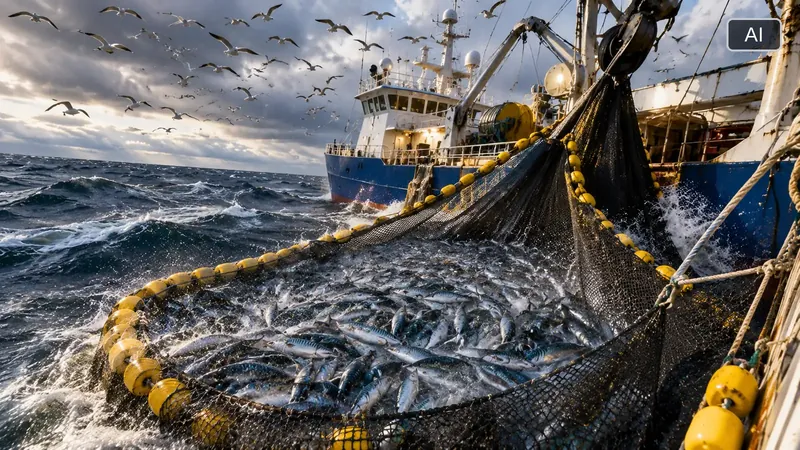
Analysis · Part 3 of 3 in Fréttir 24/7's review of Iceland's fishing industry before the fishing fee changes on 1 January 2027.
Icelandic seafood is sold against Norwegian and Faroese fish in the same markets. Three things shape how Icelandic companies compete in 2027: a new mackerel agreement, the next step of the fishing fee, and a carbon levy that Iceland is raising while Norway has set its own to zero for fishing.
The mackerel agreement
In late 2025 Iceland joined an agreement on mackerel with Norway, the United Kingdom and the Faroe Islands. It was the first time Iceland had been party to any international agreement on the stock.
Iceland's share is 12.5% of the quota the four countries set. After Iceland pays for access to Faroese and Norwegian waters, its share falls to 10.5%. In earlier years Iceland had set its own share at 16.5%. Up to 60% may be caught in Norway's zone, with two-thirds of that catch to be offered for sale through Norges Sildesalgslag, the Norwegian fish sales organisation. Up to 30% may be caught in Faroese waters, with no conditions on how it is sold.
Þorgerður Katrín Gunnarsdóttir, Minister for Foreign Affairs, said Iceland had a strong interest in an agreement so the stock could rebuild after many years of overfishing. SFS said the agreement gives up Iceland's long fight for a fair share as a coastal state for little in return. It said none of the other three countries had accepted such a large cut, and that Iceland had accepted a smaller share than the Faroe Islands.
Prices and supply
Foreign-currency prices for Icelandic seafood rose 15% in 2025 while volume fell 6%, according to Radarinn. Radarinn said the higher prices mainly reflected a smaller supply, including quota cuts in the Barents Sea and a large planned mackerel cut for 2026. It said high prices make it harder for processors to buy enough fish to keep plants running all year.
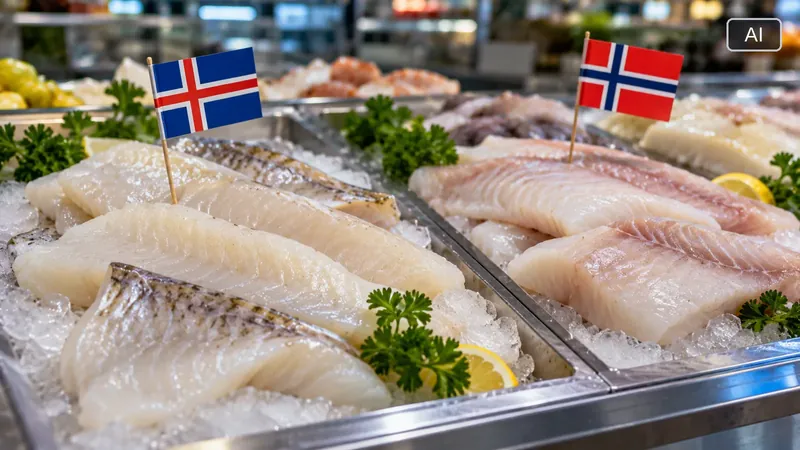
The fishing fee per kilo
| Species | 2024 (ISK/kg) | 2026 (ISK/kg) |
|---|---|---|
| Cod | 26.66 | 50.79 |
| Mackerel | 1.79 | 26.17 |
| Haddock | 22.28 | 22.92 |
| Herring | 4.12 | 4.37 |
The fee for each species also follows its profit and catch, so it moves for other reasons too. The 2026 rates for cod, haddock, mackerel, herring and blue whiting are the first under the new valuation rules, at 85% of the full amount. For 2027 the five species are charged at 95%.
The carbon levy
Fishing companies pay a carbon levy (kolefnisgjald) on every litre of fossil fuel. SFS estimates the industry's payments at almost ISK 4.6 billion in 2026 and close to ISK 40 billion since 2010 at constant prices. It says the levy per litre has doubled since 2024 and has risen about ten times as fast as consumer prices since 2010. In 2019 SFS told Althingi that the industry's oil use had nearly halved since 1990.
In the same 2019 submission SFS said the industry paid more than 35% of all carbon levy revenue while using about 20% of the oil burned in Iceland. It asked for exporting industries to be exempt.
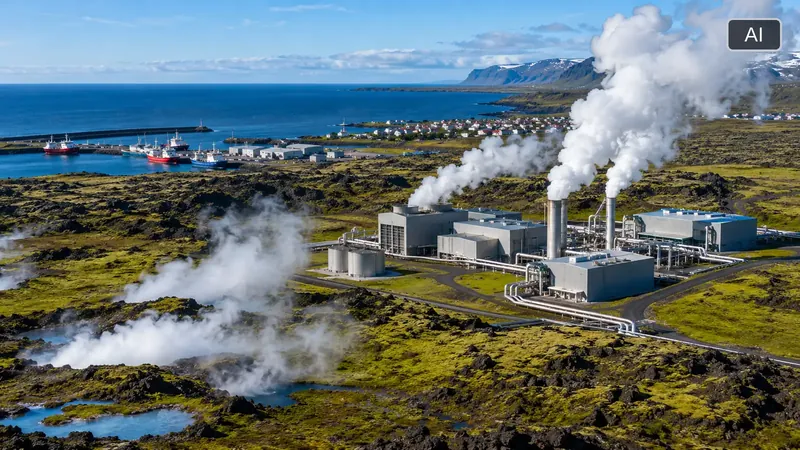
Iceland's electricity comes almost entirely from renewable sources, and geothermal heat warms 89% of homes. The National Energy Authority (Orkustofnun) has said that about half of Iceland's oil use was for the fishing fleet. The levy is meant to speed up the switch to clean energy. SFS says that is not yet possible for ocean-going vessels, and that fishmeal plants which moved to electricity face cuts in supply when power is short.
Iceland cannot send its fish to market by road, rail or pipeline. About 98% of Icelandic seafood is exported, all of it by sea or air, and the main fishing grounds lie far out in the North Atlantic. The fleet's fuel use is therefore tied to the distances involved, not only to how efficiently it fishes.
What Europe and Norway do
Norway had already been easing the tax before 2026. It replaced its exemption for distant-water fishing with a reduced CO2 tax rate, and from 1 January 2026 extended the reduced rate to coastal fishing.
The EU's emissions trading system for shipping, in force since 1 January 2024, excludes fishing vessels. In March 2026 a majority in Norway's parliament, the Storting, voted to remove the CO2 tax for the fishing fleet, at least temporarily. From 1 April 2026 the tax on fuel for fishing was set to zero. Norway also runs a compensation scheme for its fleet worth NOK 640.4 million. Heiðrún Lind Marteinsdóttir, director of SFS, said the decision showed Norway understood its fishing industry's competitive position better than the Icelandic government did.
The case for the levy is that carbon dioxide does the same harm wherever it is burned, and that a price on fuel gives companies a reason to invest in cleaner vessels. The campaign group Transport & Environment has urged the EU to end its exemptions for fishing vessels. Norway's zero rate is described as temporary.
What happens on 1 January 2027
The fishing fee for the five species rises to 95% of its full amount, and a higher carbon levy takes effect the same day. The tax authority proposes the 2027 fee rates by 1 December 2026, and the Minister of Industries must publish them before the new year.
Sources
- Fiskerforum, 17 December 2025 — mackerel agreement
- Radarinn via We Are Aquaculture — 2025 prices and volume
- Fishing fee notice for 2026 (B 1310/2025)
- Fishing fee notice for 2024 (B 1311/2023)
- Phase-in provision — 85% in 2026, 95% in 2027
- mbl.is, 22 October 2026 — ISK 40 billion in carbon levy since 2010
- SFS submission to Althingi (2019) — oil use and the levy
- Energy in Iceland — renewable shares
- Orkustofnun presentation — oil use by the fishing fleet
- Clyde & Co — EU ETS excludes fishing vessels
- Fiskerforum, 31 March 2026 — Storting vote
- VATupdate — CO2 tax on fishing fuel set to zero
- Baird Maritime — Norway's CO2 compensation scheme
- Transport & Environment — shipping exemptions
- Fishing fee act — rates published before the new year
- Skatteetaten — Norway's reduced CO2 rate for fishing
- SFS submission on the 2025–2029 fiscal plan — share of seafood exported
Editorial note: This analysis is based on information available on 15 November 2026. The terms of the mackerel agreement and the quotes from the minister and SFS are as reported by Fiskerforum on 17 December 2025; the exact signing date is not confirmed. The carbon levy figures are SFS estimates reported by mbl.is, and the size of the 1 January 2027 increase has not been confirmed for this article. This article was drafted with AI assistance and reviewed and edited by Fréttir 24/7's editorial team. The illustrations were created with AI for Fréttir 24/7 and are not photographs.
Tips, corrections or questions: ritstjorn@frettir247.news
More in this review
 ICELAND · FISHERIESIceland's Fishing Fee: What Changed and What the Industry Pays15 November 2026
 ICELAND · FISHERIESFishing Towns, Jobs and the Long Run After the Fee Increase15 November 2026
 BUSINESS · INDUSTRYIceland's Next Economic Chapter: Building New Industries Beyond Tourism and Fisheries31 October 2026