
Iceland's Fishing Fee: What Changed and What the Industry Pays
The fishing fee rises to 95% of its full amount on 1 January 2027. How the fee is calculated, what the industry pays and how that compares at home and abroad.
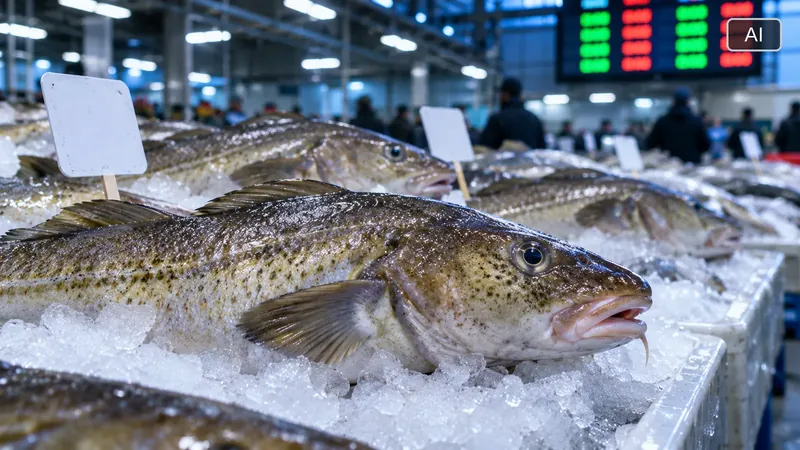
Analysis · Part 1 of 3 in Fréttir 24/7's review of Iceland's fishing industry before the fishing fee changes on 1 January 2027.
Iceland's fishing companies will pay a larger share of a higher fishing fee from 1 January 2027, the second step of a law Althingi passed on 14 July 2025. This first part looks at how the industry got here, what the law changed, what the industry pays the state, and how that compares with fishing in other countries and with other Icelandic industries.
From one of Europe's poorest countries
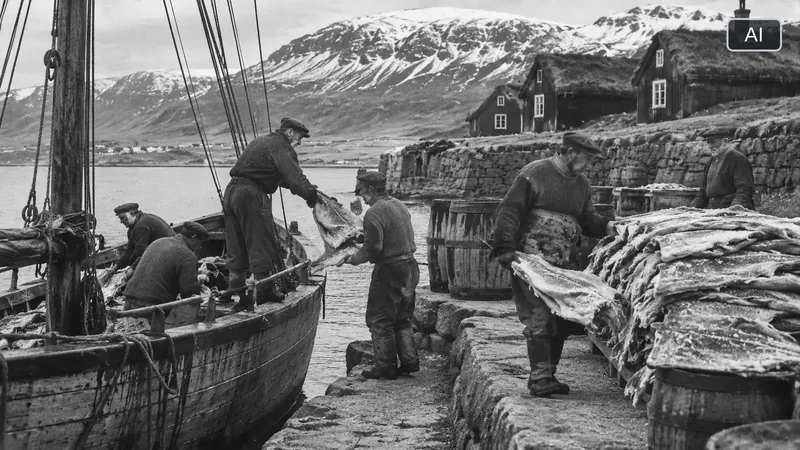
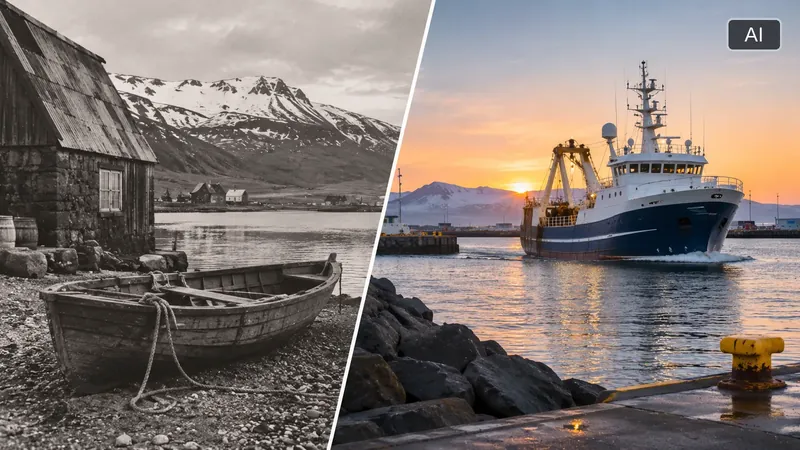
At the start of the 20th century Iceland had among the lowest income per person in Western Europe. The government's history of the fisheries says Iceland was among the poorest countries in Europe until the Second World War. The first motorised fishing boat went out in 1902 and the first Icelandic steam trawler arrived in 1905. By 1930 Icelandic companies ran about 40 trawlers, and fish had become the country's main export. By the end of the century Iceland was one of the richest countries in the world.
The quota system
Individual quotas came in one fishery at a time: herring in 1976, capelin in 1980 and demersal species such as cod in 1984. In 1990 Althingi brought all fisheries under one system of transferable quotas. Each vessel holds a share of the total allowable catch, set every year on the advice of the Marine and Freshwater Research Institute (Hafrannsóknastofnun).
A 2016 study in the journal Marine Policy, co-written by Daði Már Kristófersson, now Minister of Finance, found that Iceland's fishing industry had outperformed its neighbours. It credited free exports, transferable quotas and fish auctions. Quota has also gathered in fewer and larger companies, which has made the system disputed since it began. Seafood exports were worth about ISK 359 billion in 2025, and about 98% of the catch is sold abroad.
A 2021 doctoral thesis at the University of Iceland by Stefán Gunnlaugsson found that the quota system raised profitability, most of all in processing. As catches fell, the industry cut vessels, plants and jobs and moved into better-paying consumer markets. Companies bought up quota and booked it as an asset, which raised the industry's debt. At the end of 2024 fishing and processing companies had equity of ISK 533 billion and an equity ratio of 48.8%, according to Statistics Iceland.
Gunnlaugsson also estimated how the resource rent created since 2008 was shared. About 20% went to the state through the fishing fee and corporate tax, about 40% to people who sold their fishing rights and left the industry, and about 40% to the companies still fishing. Polls in the 1990s found that most of the public opposed the system. The law states that the fish stocks are the common property of the Icelandic nation, and the fishing fee act says its purpose is to cover the state's costs and give the nation a direct and visible share of the profits from fishing.
What the 2025 law changed
The fee remains 33% of the calculated profit from fishing each species. Under Law 55/2025, the catch value used in that calculation now comes from market prices for five species. Mackerel, herring and blue whiting are valued at average prices published by the Norwegian Fisheries Agency, and cod and haddock at weighted average prices on Icelandic fish markets.
The change is phased in: 85% of the full amount in 2026 and 95% in 2027. The fee can still be deducted from taxable income, and a larger tax-free allowance protects smaller companies. The government estimated the fee assessed in 2026 at ISK 19.5 billion, against ISK 11.2 billion under the old law, and expects ISK 18–19 billion a year in 2027–2030. The 30 largest companies are expected to pay 90% of it.
The tax-free allowance for cod and haddock is 65% of the first ISK 15 million and 45% of the next ISK 55 million of each payer's fee. For other species, catch value is still calculated from information provided by Verðlagsstofa skiptaverðs, the office that sets the prices used for fishermen's pay.
Government MPs said the rise for 2026 was about 50%, not a doubling. The previous government's fiscal plan for 2025–2029 had assumed much smaller increases in the fee: ISK 2 billion in 2025, ISK 3 billion in 2026 and ISK 4 billion a year from 2027.
The two sides
Hanna Katrín Friðriksson, Minister of Industries, told Althingi that the aim was to correct the calculation so it reflects real market prices. The ministry later said that different institutions had used different bases to project the fee and that all discrepancies had been corrected.
Fisheries Iceland (SFS) said the law was passed without a proper impact assessment and that, with other charges, it could take more than 70% of fishing profits. Most Icelandic catch goes from a company's own vessels to its own plant without passing through an auction. Opposition MPs argued that valuing it at market prices means processing is taxed in the same way as access to the resource.
SFS also objects to valuing Icelandic pelagic catch at Norwegian prices. It says Norway's industry works differently, with much of its fish exported unprocessed to lower-wage countries such as Poland and China, and warns that the same could happen in Iceland.
Supporters of the fee reply that it is charged only on profit above the normal return. Finance Minister Daði Már Kristófersson told Althingi on 11 June 2026, in a debate on fees for fish farming, that the fee is paid only when profit exceeds what is usual in Icelandic business.
What the industry pays
According to figures an MP cited in Althingi on 5 May 2025, the industry's tax footprint in 2023 was ISK 86.3 billion.
| Received by (2023) | ISK billion |
|---|---|
| State treasury | 54.1 |
| Pension funds | 17.3 |
| Municipalities | 14.9 |
| Total | 86.3 |
Of that, ISK 15.6 billion (18%) came from taxes specific to the industry: the fishing fee, landing charges, the carbon levy and excise duties. Over 2019–2023 the footprint came to ISK 359 billion.
A large part of the footprint is tax that every employer pays. A KPMG analysis for the Association of Fisheries Municipalities found that in 2020 the largest single item was income tax withheld from employees' wages, ISK 24.4 billion, against ISK 7.0 billion in corporate income tax.
The fishing fee itself was about ISK 11 billion in 2023 and 2024, according to Statistics Iceland. The ministry's draft bill put the state's costs of research and control of the fisheries at about ISK 11 billion in 2023.
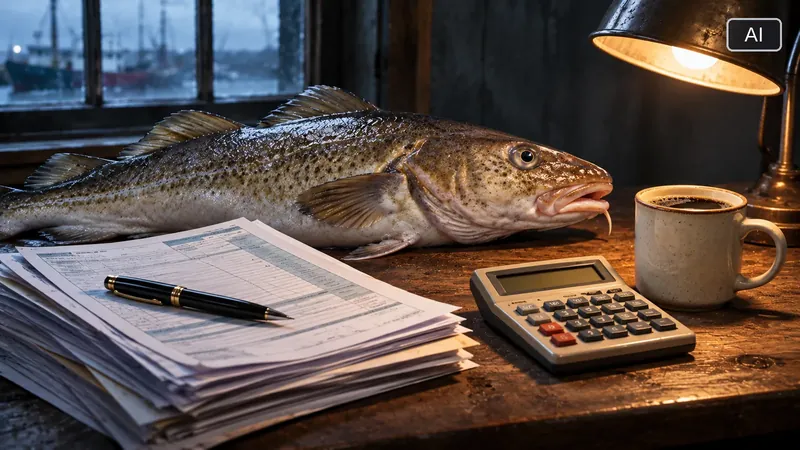
An economic analysis that Hagrannsóknir prepared for SFS in May 2024 put the effective income tax on fishing at about 58% when the fishing fee is added to ordinary corporate tax. SFS says that with the new fee and other charges, the share could pass 70%.
Profits have fallen. Statistics Iceland reports that net profit in fishing and processing dropped from 25% of revenue in 2023 to 16% in 2024. At Fisheries Day on 4 November 2026, Deloitte reported a profit of ISK 51 billion in 2025, the second-weakest result in five years.
Return on equity was 6.3% in 2024 and 9.9% in 2025, against an average of 13.7% in 2015–2024.
EBITDA in fishing and processing fell from about ISK 111 billion in 2023 to ISK 86 billion in 2024. On return on equity over ten years, the industry ranks fourth among Icelandic sectors:
| Sector | Average return on equity, 2015–2024 |
|---|---|
| Construction | 22.4% |
| Passenger transport by sea and land | 20.2% |
| Computer services | 14.7% |
| Fishing and processing | 13.7% |
About 98% of Icelandic seafood is exported and sold at world prices. SFS argues that companies therefore cannot pass domestic cost increases on to buyers, while competitors in other countries receive subsidies or tax exemptions.
How it compares
Other Icelandic industries
An analysis prepared for SFS notes that a special fee for using a natural resource has been limited to fishing, although energy, tourism and agriculture also use the nation's resources. Other sectors pay in other ways:
| Sector | What it pays for the resource | Amount |
|---|---|---|
| Fishing | Fishing fee, 33% of calculated profit | About ISK 11 billion (2024); ISK 18–19 billion a year expected from 2027 |
| Energy (Landsvirkjun) | Dividends to its owner, the state | ISK 20–30 billion a year recently; about ISK 120 billion in 2020–2025 |
| Tourism | Accommodation tax and cruise infrastructure fee | About ISK 4.5 billion together in 2025; a nature-site fee planned for 2027, estimated at ISK 5 billion |
| Salmon farming | Fee per kilo of farmed fish | ISK 41.66 per kg of salmon in 2026 |
Landsvirkjun is 99.9% owned by the state, so its dividend is a return on public ownership, not a fee paid by private companies.
Other countries
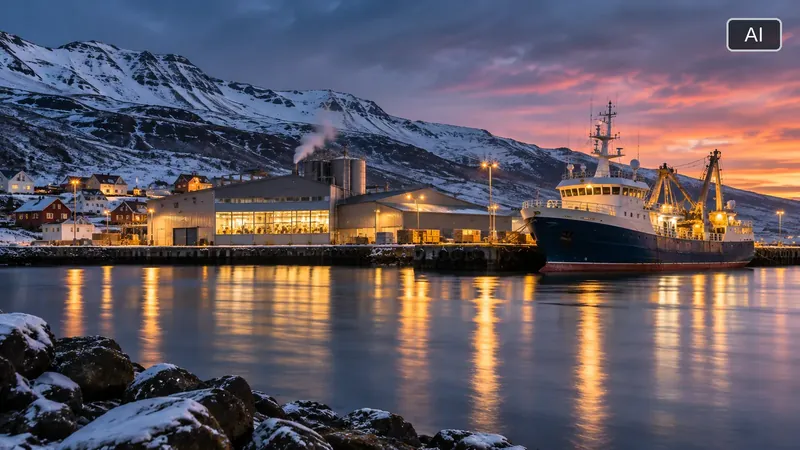
Norway charges no special resource fee on wild fisheries, though since 2023 it has taxed salmon farming's resource rent at 25%. The Faroe Islands go further than Iceland on pelagic fish. They sell part of their herring, blue whiting and mackerel quotas at auction, and from 1 August 2026 charge a fishing fee of 7.73 Danish kroner per kilo of mackerel, about ISK 141 at the exchange rate in early November 2026 (1 DKK = ISK 18.30). Iceland's fee for mackerel in 2026 is ISK 26.17 per kilo. The two systems are built differently: the Faroese fee is a flat charge per kilo, while Iceland's follows each species' profit.
The tax authority proposes the 2027 fishing fee rates by 1 December 2026, and the Minister of Industries must publish them before the new year.
Sources
- Statistics Iceland — profitability in fishing and processing 2024
- Government of Iceland — history of the fisheries
- Bergmann (2014) — from poorest to richest
- The Icelandic ITQ system — quota timeline
- Marine Policy (2016) — profitability in Iceland and Norway
- Radarinn via We Are Aquaculture — 2025 export value
- Law 55/2025 as passed and phase-in provision
- Government press release, 1 May 2025 — revenue estimates
- Althingi, 5 May 2025 — Minister of Industries introduces the bill
- Althingi, 5 May 2025 — opposition: processing taxed
- Althingi, 5 May 2025 — tax footprint figures
- Fiskerforum — ministry statement on the figures
- Baird Maritime — SFS response to the law
- Ministry draft bill (2025) — cost of state services
- Hagrannsóknir for SFS (2024) — resource fees limited to fishing
- mbl.is, 5 November 2026 — Fisheries Day 2026
- Althingi answer — Landsvirkjun dividends
- Deloitte Tax Day 2026 — tourism taxes
- Budget bill 2027 — planned nature-site fee
- Aquaculture fee 2026
- Norwegian Directorate of Fisheries — resource rent tax on aquaculture
- Fiskerforum — Faroese quota auctions
- Faroese fishing fee notice, 13 July 2026
- Icelandic fishing fee notice for 2026
- Fishing fee act — rates published before the new year
- Gunnlaugsson (2021), University of Iceland — profitability and resource rent
- ICSF — concentration and public opinion in the 1990s
- Bill 351, explanatory notes — purpose of the fee and earlier fiscal plan
- Law 55/2025, Stjórnartíðindi — tax-free allowance
- Althingi, 5 May 2025 — "about 50%, not 100%"
- Iceland Monitor, 25 March 2025 — SFS on Norway and unprocessed exports
- Althingi, 11 June 2026 — fee paid only on above-normal profit
- KPMG for the Association of Fisheries Municipalities (2021) — taxes and charges
- SFS submission on the 2025–2029 fiscal plan — exports and competition
Editorial note: This analysis is based on information available on 15 November 2026. The 2023 tax footprint figures were cited in Althingi; the original report has not been located. The ISK value of the Faroese mackerel fee uses the exchange rate in early November 2026 and will change as the rate moves; check it against the Central Bank of Iceland's rate on the day of publication. Norway's lack of a special fee on wild fisheries is noted as background and should be confirmed with the Norwegian Directorate of Fisheries before publishing. This article was drafted with AI assistance and reviewed and edited by Fréttir 24/7's editorial team. The illustrations were created with AI for Fréttir 24/7 and are not photographs.
Tips, corrections or questions: ritstjorn@frettir247.news
More in this review
 ICELAND · FISHERIESFishing Towns, Jobs and the Long Run After the Fee Increase15 November 2026
 ICELAND · FISHERIESMackerel, Norway and the Carbon Levy: How Iceland Competes15 November 2026
 BUSINESS · INDUSTRYIceland's Next Economic Chapter: Building New Industries Beyond Tourism and Fisheries31 October 2026