
Iceland's Next Economic Chapter: Building New Industries Beyond Tourism and Fisheries
Iceland has the energy, natural resources and technical expertise to develop new export industries. Data centres, aquaculture, biotechnology and advanced manufacturing are already contributing to economic activity. But the country's next stage of growth will depend on whether it can expand electricity infrastructure, improve productivity and turn promising projects into lasting value for the domestic economy.
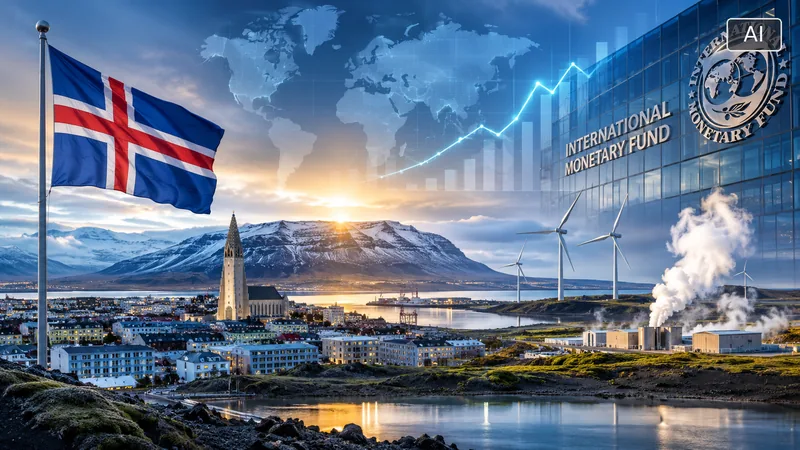
Iceland's economic success has long been built on its ability to make use of what the country has available.
Fishing grounds created an internationally competitive seafood industry. Hydropower and geothermal resources supported energy-intensive manufacturing. In more recent decades, tourism became one of the country's largest sources of foreign revenue.
These industries remain important. But Iceland is approaching a new stage in its economic development.
The question is whether a country of fewer than half a million people can build a broader range of export industries, create higher-value employment and become less exposed to fluctuations in a relatively small number of established sectors.
There are reasons for optimism. Digital services, data processing, aquaculture, pharmaceuticals, medical technology and other knowledge-intensive activities are gaining importance.
There are also considerable obstacles. Electricity generation and transmission capacity are not expanding quickly enough to meet all projected demand. Businesses report shortages of specialised skills. Infrastructure investment has lagged behind some Nordic neighbours, and research spending has not consistently translated into commercial innovation.
The International Monetary Fund's 2026 Article IV assessment identifies these issues as central to Iceland's medium-term economic prospects.
Its conclusion is significant: future income growth will increasingly depend on productivity, diversification and the ability to develop new export-oriented industries.
This is not a proposal to abandon tourism or fisheries. It is an argument for building an economy in which more industries contribute to national prosperity.
The economic starting point: a small country with a concentrated export base
Iceland has a relatively small domestic market. Its businesses therefore depend heavily on exports, international investment and access to foreign customers.
In 2025, merchandise exports were valued at ISK 923.2 billion, while imports reached ISK 1,408.9 billion, producing a goods trade deficit of ISK 485.7 billion.
Marine products represented 38.9% of merchandise export value, while manufacturing products accounted for 51.7%. Aluminium and aluminium products alone represented 34.5% of manufacturing export value.
Services provide a different picture.
Statistics Iceland recorded service exports of approximately ISK 1,046 billion in 2025, compared with service imports of ISK 763.8 billion. The resulting services surplus was ISK 282.7 billion.
Travel services remained the largest category, generating ISK 478.3 billion. But telecommunications, computer and information services were increasingly important, with export value reaching ISK 101.4 billion, an increase of 38% from 2024.
These figures show that diversification is already taking place.
Tourism remains a major source of revenue, but it is no longer the only service industry with significant export potential. Digital services and intellectual-property-based activities are becoming more visible in the national accounts.
The challenge is to turn that development into a sustained change in the structure of the economy.
Data centres: an emerging export industry with significant energy demands
One of the most visible developments is the expansion of data centres.
Iceland has several advantages as a location for data processing. Electricity is generated almost entirely from renewable sources, the climate can reduce cooling requirements, and the country has established international telecommunications connections.
These characteristics make Iceland attractive to companies that need reliable electricity and suitable conditions for operating computing infrastructure.
Data centres also connect Iceland to the rapid expansion of artificial intelligence, cloud computing and digital services.
The opportunity is not simply to host computer equipment. It is to sell computing capacity, data processing, storage and related services to international customers.
The investment is already showing up in the statistics
Statistics Iceland reported record investment in data-centre-related industries in the second quarter of 2026.
Gross fixed capital formation increased by 5.7% in real terms year-on-year, while business-sector investment rose by 10.1%. The data-centre-related sector recorded a 10.6% increase in investment volume, reaching a new quarterly record.
There is a clear connection between this investment and Iceland's changing export profile.
Telecommunications, computer and information service exports reached ISK 101.4 billion in 2025, up 38% from the previous year. Statistics Iceland attributed much of the growth to companies connected with data-centre operations.
This is a promising development, but the investment figures need to be interpreted carefully.
The imports come before the export revenue
A data centre requires substantial equipment before it can begin generating revenue.
Servers, computer systems and other capital goods are often imported. The initial investment therefore increases imports, while the resulting service exports appear later, once the equipment is operational and customers are using the facilities.
The Central Bank of Iceland has highlighted this pattern in its economic analysis.
An October 2026 analysis by Íslandsbanki adds further detail. It estimates that computer imports totalled ISK 171 billion in 2025, with much of the increase associated with data-centre equipment. The bank also estimates that data-centre-related computer-service exports increased substantially during the first half of 2026.
The important qualification is ownership.
Many data-centre operators and customers are foreign-owned. Consequently, not all the revenue generated by the facilities remains in Iceland. The domestic economic benefit depends on electricity payments, wages, taxes, local suppliers, maintenance services and other value created inside the country.
A large investment figure is therefore not the same as an equally large increase in Icelandic national income.
The electricity question
Data centres can create a significant source of export revenue, but they also compete for electricity.
Íslandsbanki's October analysis, citing the Federation of Icelandic Industries, estimated that data centres used an average of around 70 megawatts in the first half of 2026, equivalent to approximately 3.7% of Iceland's electricity consumption.
The same analysis referred to a proposed 120-megawatt data-centre project in Reykjanesbær. That figure describes a planned project, not an established operating facility.
This distinction matters. Iceland cannot assume that every proposed data centre will be built, connected to the grid or supplied with electricity on the expected timetable.
The country needs to assess each project against the availability of new generation, transmission capacity and the economic value it is likely to create.
Assessment: Data centres are one of Iceland's most credible emerging export opportunities because investment and service exports are already measurable. Further growth is realistic, but it will depend on electricity availability, telecommunications infrastructure, international demand and the amount of domestic value retained.
Renewable energy: Iceland's greatest industrial advantage — and a potential bottleneck
Energy is central to almost every major diversification opportunity.
Iceland's electricity system is based overwhelmingly on hydropower and geothermal generation. The country's natural resources have supported aluminium production, other energy-intensive industries, district heating and the expansion of digital infrastructure.
Statistics Iceland's 2024 energy-flow accounts recorded total energy consumption in the economy of 168.7 petajoules. Electricity represented 40% and district heating 26%.
That gives Iceland an unusually strong foundation for industrial development.
But there is a difference between having renewable energy resources and being able to deliver additional electricity where and when industry needs it.
Generation is not the same as available capacity
The IMF's 2026 Article IV staff report (IMF Country Report No. 26/208) identifies electricity infrastructure as a constraint on future growth.
It warns that planned increases in generation capacity are insufficient to meet projected demand growth. Parts of the grid, much of which has not been upgraded for decades, are already operating at full capacity. The assessment draws on Landsnet's electricity forecast and the OECD's analysis of Iceland's energy sector.
This creates a practical problem for investors. A company may identify a suitable location and secure financing, but the project cannot proceed without a reliable electricity connection.
The same issue affects existing businesses that want to expand production or invest in new equipment.
The OECD has also highlighted the importance of increasing and diversifying electricity supply to maintain energy security and support economic development.
The opportunity extends beyond electricity sales
Renewable energy can support several industries simultaneously.
- Data centres can sell computing and digital services internationally.
- Aquaculture can use electricity and geothermal heat in production and processing.
- Biotechnology and pharmaceuticals can benefit from reliable energy and specialised facilities.
- Green industrial processes may use renewable electricity to replace more carbon-intensive production methods.
- Geothermal resources can support food production, industrial heating and other uses beyond conventional electricity generation.
There is also potential for greater use of geothermal energy in integrated industrial projects, where heat, electricity and other resources are used efficiently.
However, such projects require careful technical and commercial assessment. Not every proposed combination of industries will be economically viable.
Environmental protection and public confidence
New energy projects can also create conflicts over land use, nature protection and the distribution of benefits.
Iceland needs to consider the long-term environmental consequences of new power generation and transmission infrastructure.
The objective should not be to build as much capacity as possible regardless of cost. It should be to develop reliable, economically justified energy resources while protecting the natural environment and maintaining public confidence.
Assessment: Renewable energy is an established national advantage. The realistic opportunity lies in expanding generation and transmission in a coordinated way, then using the additional capacity to support industries that create substantial domestic value. Without grid investment, energy potential will remain partly unused.
Aquaculture: a growing industry with environmental and economic questions
Aquaculture is one of the clearest examples of an industry that can build on Iceland's existing expertise while creating a larger export base.
The country has experience in fisheries, seafood processing, marine science and cold-water production. It also has access to renewable electricity and geothermal resources that may support land-based fish farming.
The industry has expanded considerably.
Statistics Iceland reported that aquaculture production reached 64,417 tonnes in 2025, an increase of 17% from 2024.
Atlantic salmon accounted for 58,717 tonnes, while Arctic char production reached 5,141 tonnes.
The export value of aquaculture products was ISK 53.4 billion in 2025. Export volumes increased by 12%, even though export value fell by 1% compared with the previous year.
Iceland also remained Europe's leading producer of Arctic char in the latest comparative production data available to Statistics Iceland.
These are established results, not projections.
Sea-based and land-based production
Iceland has two broad development paths.
Sea-based aquaculture uses coastal locations and established marine infrastructure. It can expand production, but requires careful management of environmental effects.
Land-based aquaculture uses tanks and controlled production environments, often with recirculating aquaculture systems.
Such facilities can offer greater control over water conditions, waste management and biological risks. They can also require substantial investment, electricity, technical expertise and reliable water supplies.
Land-based farming is not automatically environmentally harmless or economically superior. Its success depends on energy costs, construction costs, fish health, feed supplies, operational efficiency and access to profitable markets.
Environmental conditions must shape expansion
Aquaculture also raises important environmental questions.
Sea-based salmon farming can create risks associated with sea lice, escapes, disease transmission and interactions with wild salmon populations.
Land-based systems avoid some of these marine interactions but create their own challenges, including energy consumption, water management and the handling of biological waste.
The future of the industry will depend partly on whether regulators and operators can demonstrate that expansion is environmentally responsible.
It is also important to consider the economic structure of the sector.
Some facilities are domestically owned, while others involve foreign investment. Ownership can affect how much of the profits, research, employment and supporting services remain in Iceland.
A realistic opportunity
Aquaculture is already an export industry worth tens of billions of krónur annually. It has the potential to become a larger contributor to exports and regional employment.
However, Iceland is competing in an established international market, particularly against Norway and other major seafood producers.
The country should focus on quality, fish health, efficient production, responsible environmental management and specialised products rather than assuming that greater production alone will guarantee higher returns.
Assessment: Aquaculture is a credible diversification opportunity with an established production and export base. Further growth is realistic, but it must be supported by strong environmental oversight, reliable energy and water infrastructure, and commercially sustainable production methods.
Biotechnology and pharmaceuticals: turning knowledge into exports
Biotechnology is potentially one of Iceland's most valuable long-term opportunities.
Unlike industries based primarily on natural resources, biotechnology depends heavily on research, intellectual property, skilled employees and the ability to develop products that can compete internationally.
Iceland already has relevant strengths:
- A well-educated workforce.
- Established pharmaceutical and medical-product companies.
- Research institutions and specialised laboratories.
- Renewable electricity and suitable industrial infrastructure.
- Experience in exporting products to international markets.
The Central Bank of Iceland's direct-investment statistics show that foreign investment in Iceland is concentrated partly in pharmaceuticals, alongside aluminium manufacturing and holding companies.
Pharmaceutical products are also an established export category. World Bank trade data based on UN Comtrade recorded Icelandic pharmaceutical exports of approximately US$126.8 million in 2024.
The sector is therefore more than an aspiration. It already generates international sales and attracts investment.
The challenge is commercialisation
Iceland spends a relatively high proportion of its economic output on research and development.
The IMF puts total R&D expenditure at approximately 2.5% of GDP in 2024, consistent with Statistics Iceland's figure of 2.48%. The government's stated ambition is to raise this to 3.5% by 2035.
Despite this relatively high level of investment, the IMF notes that Iceland produces fewer innovation outputs than might be expected.
The Fund recommends improving the efficiency of research incentives, strengthening links between universities and businesses, simplifying grant applications and developing the venture-capital market.
This is a crucial issue.
Research can produce valuable scientific discoveries without creating successful businesses. A promising laboratory result may still require years of testing, regulatory approval, investment and international commercial development before it becomes a profitable product.
For biotechnology companies, access to specialist talent and international financing can be just as important as access to research facilities.
Pharmaceuticals and medical technology
The opportunity extends beyond developing new medicines.
Medical devices, diagnostics, laboratory technologies and specialised manufacturing can all create export revenue.
These activities may also generate higher domestic value than industries that depend mainly on imported equipment and energy.
But the sector faces significant risks.
Pharmaceutical exports can depend on patent approvals, regulatory decisions, international market access and the commercial performance of a relatively small number of products.
The IMF specifically identifies delays in pharmaceutical patent approvals as a potential source of export weakness.
Assessment: Biotechnology, pharmaceuticals and medical technology are credible long-term opportunities because Iceland already has established businesses, exports and research capacity. The main challenge is not simply increasing research spending; it is turning research into scalable companies and internationally competitive products.
Advanced manufacturing and specialised exports
Diversification does not necessarily mean replacing existing industries with entirely new ones.
Iceland can also build more value around its established strengths.
The country already has experience in metal production, seafood processing, engineering and specialised industrial services.
The next stage could involve moving further into higher-value products, equipment, components and services connected with these sectors.
For example, seafood expertise can support advanced processing, food technology, monitoring systems and specialised marine equipment.
Renewable energy can support new industrial processes and products with a lower carbon footprint.
Pharmaceutical and medical-device manufacturing can expand the role of specialised production and quality-control services.
The advantage of this approach is that new activities can develop around existing knowledge, suppliers and infrastructure.
The limitation is that advanced manufacturing requires investment, technical expertise and access to international customers. Iceland's small domestic market means that successful companies must be competitive abroad from an early stage.
Digital services and intellectual property: an export opportunity beyond data centres
Data centres are only one part of the wider digital economy.
Software development, cybersecurity, financial technology, gaming, creative industries and intellectual-property licensing can all generate exports without requiring large volumes of physical goods to cross the country's borders.
Statistics Iceland's 2025 service-export data provide evidence of this shift.
Telecommunications, computer and information services reached ISK 101.4 billion, increasing by 38% year-on-year.
The wider intellectual-property sector also includes companies involved in software, medical technology, pharmaceuticals, creative production and other knowledge-intensive activities.
This matters because digital services can reach international customers without requiring the same transport infrastructure as physical exports.
However, success depends on skilled workers, reliable connectivity, international commercial networks and the ability to protect intellectual property.
It also requires companies to scale.
A small software company may develop a successful product, but turning it into a major export business requires access to capital, experienced management, international sales expertise and a sufficiently large customer base.
This is one reason why the IMF emphasises business dynamism and the development of Iceland's venture-capital ecosystem.
Tourism and fisheries will remain important
Economic diversification should not be confused with reducing the importance of existing export industries simply for the sake of change.
Tourism remains one of Iceland's largest service exports. Fisheries remain central to employment, regional development and merchandise exports.
Both industries can also become more productive and technologically advanced.
Tourism can focus on higher-value services, improved infrastructure, better distribution of visitors across regions and investment that increases value per visitor rather than relying only on growing visitor numbers.
Fisheries can benefit from improved processing technology, traceability, marine research, efficient use of resources and higher-value products.
The same applies to aluminium and other energy-intensive industries. Their contribution to the economy should be evaluated not only by export revenue, but also by energy use, domestic employment, tax contributions and the value retained in Iceland.
A more diversified economy is one in which established industries become stronger and new industries reduce the risks associated with relying too heavily on a few sectors.
Productivity: the issue behind almost every opportunity
One of the most important parts of the IMF's assessment is its emphasis on productivity.
Economic growth can come from adding more workers, increasing investment or producing more efficiently.
For a country with a small population, relying primarily on an expanding workforce has limitations.
Iceland needs to increase the value created by each worker and each unit of capital.
That means improving technology, management, education, infrastructure and competition.
The IMF identifies several obstacles:
Skills shortages. Businesses need people with technical, scientific, engineering and digital expertise. Education and vocational training must respond to changing industry requirements.
Regulatory barriers. Licensing, planning and permitting procedures can delay investment. The IMF argues for reducing unnecessary barriers while maintaining appropriate environmental and safety standards.
Weak commercialisation of research. Research institutions and companies need stronger connections so that discoveries can become products and export businesses.
Wage growth and productivity. The IMF warns that wage increases persistently exceeding productivity growth can weaken competitiveness and add to inflationary pressure.
Access to finance. Start-ups and growing companies need capital to move beyond the early stages of development.
These issues are connected.
A business may have a promising product and a willing international customer, but if it cannot recruit skilled employees, obtain an electricity connection or secure financing, the opportunity may never become a functioning export business.
Productivity is therefore not an abstract economic statistic. It is the foundation on which Iceland's future industries will depend.
Infrastructure: the investment Iceland cannot avoid
Iceland's infrastructure constraints are becoming increasingly important as the country considers expanding into new industries. The IMF's July 2026 Article IV staff report refers to an estimated cumulative infrastructure gap, including maintenance, equivalent to approximately 14% of GDP in 2025. The estimate is drawn from the report Infrastructure in Iceland 2025: Status and Future Prospects.
The Fund highlights electricity generation, transmission networks, transport infrastructure and digital connectivity.
These are not separate investment questions.
A new industrial facility needs electricity, roads, ports, telecommunications, skilled workers and access to suppliers. If one essential part is missing, the entire project can be delayed or become more expensive.
Energy and transmission
New electricity generation must be accompanied by transmission investment.
Building additional power stations without upgrading the grid may not provide electricity where it is needed.
Planning must also consider the balance between existing industrial users, households and new export industries.
Transport and regional development
Ports, roads and domestic transport links influence the cost of exporting physical products.
Aquaculture, seafood processing and specialised manufacturing need reliable routes to international markets.
Infrastructure investment can also help distribute economic activity more evenly across the country, rather than concentrating opportunities around the capital region.
Digital infrastructure
High-quality international connections and reliable domestic networks are essential for data centres, software companies, financial services and research institutions.
Iceland's location between Europe and North America can be an advantage, but that advantage must be supported by resilient telecommunications infrastructure and strong cybersecurity.
Financing infrastructure responsibly
Large infrastructure projects require significant capital.
The IMF notes that Iceland is considering a state-owned infrastructure company and greater use of public-private partnerships.
These arrangements may help mobilise investment, but they must be designed carefully.
The Fund warns that public authorities should monitor contingent liabilities and off-balance-sheet exposures transparently. Moving a project outside the ordinary government budget does not remove the underlying economic risk.
Infrastructure should be selected according to its long-term economic value, not simply its ability to attract headlines or announce large investment figures.
Government strategy: the Growth Plan to 2035
Iceland has begun to formalise its longer-term approach.
In 2026, the government introduced a new industrial policy, A Growth Plan to 2035, accompanied by an action plan for 2026–2027 containing 35 measures across ten ministries.
Its priorities include:
- Strengthening energy supply and infrastructure.
- Simplifying regulation and licensing.
- Supporting research and innovation.
- Improving skills and education.
- Encouraging export-oriented industries.
- Raising productivity and competitiveness.
The strategy is broadly aligned with the IMF's recommendations.
But announcing a strategy is only the beginning.
A progress report published on 29 October 2026 stated that four of the 35 actions had been completed, 23 were in progress and eight were in preparation.
Work had commenced on all actions.
That is a useful early indication of implementation, but it is too soon to judge the overall economic results.
The important test will be whether the policy leads to faster project approvals, additional electricity capacity, better transport links, stronger innovation outcomes and more successful export businesses.
The country needs measurable results rather than a long list of initiatives that remain on paper.
Which opportunities are realistic — and which remain uncertain?
Not every promising industry has the same level of evidence behind it.
The distinction between existing economic activity and future projections is essential when assessing Iceland's prospects.
| Sector | Evidence today | Main constraint | Assessment |
|---|---|---|---|
| Data centres and digital services | Investment and export growth already visible | Electricity, grid capacity, ownership and domestic value added | Established opportunity with room to grow |
| Aquaculture | Established production and ISK 53.4bn export value in 2025 | Environmental oversight, energy, water and market competition | Credible growth sector |
| Pharmaceuticals and biotechnology | Existing exports, companies and research base | Commercialisation, finance, skills and regulatory approvals | Credible long-term opportunity |
| Renewable energy | Established generation and major natural resources | New generation, transmission and environmental approval | Essential enabler of other industries |
| Advanced manufacturing | Existing industrial and technical expertise | Scale, investment, skills and international competition | Realistic but company-dependent |
| Software and intellectual property | Growing service exports and established companies | Access to capital, talent and international customers | Strong potential, but difficult to scale |
| New energy-intensive industries | Investor interest and natural advantages | Uncertain electricity availability and project economics | Speculative until projects are approved and financed |
This assessment is deliberately cautious.
A proposed factory is not an operating factory. A planned data centre is not an export business. Research expenditure is not the same as commercial success.
The strongest opportunities are those with evidence of existing production, customers, exports and a credible route to expansion.
The risks Iceland must manage
Diversification can make an economy more resilient, but it can also create new dependencies.
If Iceland becomes heavily reliant on data centres, it could become more exposed to changes in international computing demand, foreign ownership decisions and the economics of large technology companies.
If aquaculture expands too quickly, environmental damage could undermine the industry's long-term reputation and commercial viability.
If biotechnology investment increases without improving commercialisation, research spending may produce fewer domestic economic benefits than expected.
If energy-intensive industries expand without sufficient generation and grid capacity, households and existing businesses may face greater competition for electricity.
There is also a financial risk.
Large industrial projects often require substantial foreign investment and imported equipment. Their early contribution to the trade balance can be negative before export revenues develop.
The IMF has already highlighted the role of data-centre investment in Iceland's widened current-account deficit in 2025.
This does not mean the investment is necessarily harmful. It means that its longer-term returns must be assessed against the initial imports, external financing and the share of revenue that remains in Iceland.
The objective should be sustainable domestic value creation, not simply the largest possible investment announcement.
What success could look like by 2035
Iceland does not need to become a major industrial power to achieve meaningful economic diversification.
It needs a broader set of productive, internationally competitive businesses.
By 2035, a stronger economic structure could include:
- A larger digital-services sector exporting computing, software and specialised technology.
- A more productive aquaculture industry operating under robust environmental standards.
- Growing pharmaceutical, biotechnology and medical-device exports.
- More efficient use of renewable energy and geothermal resources.
- Higher-value manufacturing linked to existing industrial expertise.
- Stronger research and development connections between universities and businesses.
- Improved transport, electricity and digital infrastructure.
- A labour market with the skills needed to support new industries.
The benefits would extend beyond export revenue.
Successful diversification could create more specialised employment, improve regional opportunities, attract international investment and reduce the economic impact of problems in any single industry.
It could also help Iceland achieve stronger productivity growth, which is essential if improvements in living standards are to continue without relying primarily on population growth.
The next phase requires execution, not just potential
Iceland has many of the foundations needed to develop a more diverse economy.
Renewable energy, marine expertise, research institutions, established exporters and a skilled workforce provide a strong starting point.
Some of the new industries are already producing measurable results. Data-centre-related services are expanding, aquaculture is generating substantial export revenue, and pharmaceutical and technology businesses are part of the country's existing international trade.
But the constraints are equally real.
Electricity generation and transmission must keep pace with demand. Infrastructure projects need to be planned and delivered efficiently. Businesses need skilled employees and access to finance. Research must be converted into commercial products. Environmental standards must remain credible.
The IMF's message is that Iceland's future growth will depend increasingly on productivity and diversification rather than simply expanding the industries that have driven the economy in the past.
That is a realistic assessment, not a promise that every emerging sector will succeed.
The country does not need to abandon tourism, fisheries or aluminium. It needs to build additional sources of income around them — industries that use Iceland's resources and knowledge to create higher-value products and services for international markets.
Iceland's next economic chapter will be determined not by how many opportunities the country can identify, but by how many it can turn into productive, competitive and sustainable businesses.
Sources
- International Monetary Fund — Iceland: 2026 Article IV Consultation, published 30 July 2026 – The central source for the report's analysis of productivity, diversification, infrastructure, skills, innovation, renewable energy, aquaculture, biotechnology and digital infrastructure.
- IMF — Iceland: 2026 Article IV Consultation, Press Release and Staff Report, IMF Country Report No. 26/208 – The full staff report, including the Fund's assessment of the infrastructure gap (p. 21), electricity-grid capacity (p. 21), R&D performance (p. 20), export risks and medium-term growth opportunities.
- Statistics Iceland — Trade in Goods 2025, 19 May 2026 – Official merchandise-export and import figures, including the composition of exports and the 2025 goods trade deficit.
- Statistics Iceland — Trade in Services by Classification and Countries 2025, 4 September 2026 – Official service-export figures, including tourism and telecommunications, computer and information services.
- Statistics Iceland — Aquaculture 2025, 20 May 2026 – Production volumes and export values for farmed fish, including salmon and Arctic char.
- Statistics Iceland — National Accounts, Second Quarter 2026 – Investment, data-centre-related activity and trade figures for the second quarter of 2026.
- Statistics Iceland — Energy Flow Accounts 2024, 25 February 2026 – Official analysis of energy consumption by the Icelandic economy and the contribution of electricity and district heating.
- Central Bank of Iceland — Monetary Bulletin 2026/3 – Economic outlook, export forecasts and analysis of the changing contribution of data-centre services.
- Central Bank of Iceland — Direct Investment 2024 Update, 20 March 2026 – Official foreign direct investment figures and information about the concentration of investment in manufacturing, pharmaceuticals and holding companies.
- OECD — Economic Surveys: Iceland 2025, Powering the Electricity Sector – Independent assessment of Iceland's electricity system, renewable generation and the relationship between energy supply and industrial development.
- Government of Iceland — New Industrial Policy for Iceland Introduced, 27 May 2026 – Official description of the Growth Plan to 2035 and its 2026–2027 action plan.
- Government of Iceland — Implementation of Iceland's Industrial Policy, 29 October 2026 – The first implementation progress report: four actions completed, 23 in progress and eight in preparation.
- Iceland's Environment and Energy Agency — National Energy Data – Official information on Iceland's energy system and electricity production.
- Icelandic Energy Authority — Plans for the Transmission Grid – Explains the system-plan process for proposed transmission investment and upgrades.
- European Commission — European Innovation Scoreboard 2025: Iceland Country Profile – Independent comparative assessment of Iceland's innovation performance, including the gap between employment in innovative enterprises and the commercialisation of new products.
- Íslandsbanki — Data Centres and Their Impact on the Numbers, 27 October 2026 – Supplementary economic analysis of data-centre investment, equipment imports, export revenues and the domestic value retained by the sector.
- Statistics Iceland — Expenditure on Research and Development 2024, 12 February 2026 – Total R&D expenditure of just over ISK 113.5 billion in 2024, about 2.48% of GDP.
- Landsnet, National Energy Authority and Power Regulatory Authority — Iceland Energy Forecast 2025–2050 – The IMF's source for projected electricity demand and transmission capacity.
Data and interpretation note: The article uses the latest available official observations as of 31 October 2026. Full-year 2025 figures are used where available, alongside second-quarter 2026 national accounts and later institutional analysis. Forecasts, proposed projects and investment plans are clearly distinguished from operating capacity and realised exports. The IMF's medium-term opportunities are treated as conditional prospects, not guaranteed outcomes.
Editorial Note — Iceland's Next Economic Chapter
This report examines the opportunities for Iceland to develop a more diversified economy beyond its traditional dependence on tourism, fisheries and energy-intensive manufacturing.
The focus is on data centres and digital services, renewable energy, aquaculture, biotechnology, pharmaceuticals, advanced manufacturing, exports, productivity and infrastructure.
The article draws primarily on the International Monetary Fund's 2026 Article IV assessment, Statistics Iceland, the Central Bank of Iceland, the OECD and official government policy documents. Industry analysis is used as supplementary evidence where it provides additional insight into investment, export development and commercial conditions.
Particular attention is given to the difference between established economic activity and future potential. Existing export revenues and production figures are distinguished from proposed projects, investment plans and longer-term forecasts.
The report also considers the obstacles to future growth, including electricity and transmission capacity, infrastructure investment, skills shortages, research commercialisation and environmental sustainability.
The central argument is that Iceland has substantial natural and human resources, but long-term prosperity will depend on turning those advantages into productive, internationally competitive businesses that generate lasting value within the country.
The aim is to provide readers with a realistic assessment of Iceland's economic opportunities — recognising the potential while avoiding the assumption that every emerging industry or proposed investment will automatically succeed.
Tips, corrections or questions: ritstjorn@frettir247.news
IMF Annual Meetings 2026
- The Global Economy Under Pressure: Growth, Debt, Energy and the Risks Ahead
- Iceland Takes the Floor for Eight Nations: Ásgeir Jónsson Presents Nordic-Baltic Position at IMF Meetings
- Iceland's Economy at a Crossroads: What the IMF Sees Ahead
- The New Economy Forum: How AI Is Reshaping Money, Work and Government
- Iceland's Next Economic Chapter: Building New Industries Beyond Tourism and Fisheries
More from Business
 BUSINESS · ECONOMYIceland's Strong Króna: Economic Strength or a Growing Competitiveness Problem?31 October 2026
 BUSINESS · CRYPTOCURRENCYBinance Faces $4.7 Billion in Net Withdrawals After Record Crypto Theft — A Test of Trust for the World's Largest Exchange31 October 2026
 BUSINESSStrike disruption averted as Iceland’s labour market looks ahead