
US Secretary of State Marco Rubio Visits Iceland: Höfði Hosts a New Chapter in Iceland-US Relations
Forty years after Ronald Reagan and Mikhail Gorbachev met in Reykjavík, Höfði once again became the setting for an important meeting between representatives of Iceland and the United States, as Secretary of State Marco Rubio visited Iceland for talks on security, trade, energy and the future of bilateral relations.
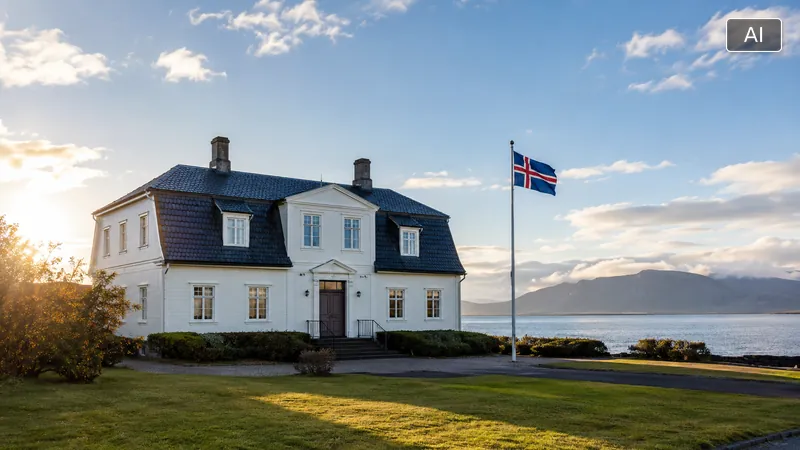
On 6 October 2026, US Secretary of State Marco Rubio visited Reykjavík, where he met Icelandic Foreign Minister Þorgerður Katrín Gunnarsdóttir at Höfði House. The visit brought renewed international attention to Iceland's strategic position in the North Atlantic and Arctic, while also providing an opportunity for the two countries to discuss the future of their longstanding relationship.
The location carried particular historical significance. Höfði was the setting for the famous meeting between US President Ronald Reagan and Soviet leader Mikhail Gorbachev on 11–12 October 1986. Forty years later, Rubio and Gunnarsdóttir walked through the same historic building before sitting down for bilateral discussions.
However, this was not simply a symbolic visit connected to an anniversary. The discussions covered defence and security, economic cooperation, investment, renewable energy, pharmaceuticals and the changing geopolitical situation in the Arctic.
A Warm Welcome at Höfði
Rubio arrived in Iceland on 5 October, ahead of his official programme the following morning.
At Höfði, Foreign Minister Þorgerður Katrín Gunnarsdóttir welcomed the American Secretary of State and accompanied him on a tour of the building. The two officials were shown the historical surroundings, including the room and chairs associated with the 1986 Reagan-Gorbachev summit.
The meeting was followed by bilateral talks, with both governments emphasising the importance of maintaining and strengthening relations between the two countries.
At a joint press conference later that morning, Gunnarsdóttir thanked Rubio for visiting Iceland and described the discussions as productive.
She highlighted the long history between the countries, noting that the United States was the first country to recognise the Republic of Iceland in 1944. Both countries became founding members of NATO in 1949 and have maintained a bilateral defence agreement since 1951.
She also emphasised Iceland's responsibility as an ally and its role in safeguarding security in the North Atlantic and Arctic regions.
Rubio, in turn, thanked Iceland for its welcome and spoke warmly about the country and its people.
He praised Iceland's natural beauty, peaceful society and renewable energy resources, describing the country as an important partner of the United States.
Prime Minister Kristrún Frostadóttir Joins the Discussions
Following the meeting at Höfði, Rubio travelled to Safnahúsið, the House of Collections on Hverfisgata in central Reykjavík.
There, he met Prime Minister Kristrún Frostadóttir, with Foreign Minister Gunnarsdóttir also attending.
According to the US State Department, the discussions included opportunities to expand economic cooperation, particularly in electricity production, technology and pharmaceuticals. The two governments also reaffirmed the importance of their defence partnership.
The Icelandic government identified the United States as Iceland's largest individual trading partner and highlighted opportunities for increased investment and commercial cooperation.
For Iceland, the discussions were particularly relevant in areas where the country has established expertise, including geothermal energy, biotechnology, marine industries and infrastructure.
Rubio said the two countries would work towards identifying investment opportunities for businesses on both sides of the Atlantic.
He also suggested bringing together American industries to examine opportunities in Iceland, while exploring possibilities for Icelandic companies in the United States.
Security and the Growing Importance of the Arctic
Security cooperation was one of the central subjects of Rubio's visit.
Iceland occupies an important geographical position between North America and Europe, close to the Greenland-Iceland-UK gap, a strategically significant maritime passage in the North Atlantic.
Although Iceland does not maintain a conventional standing military, it is a NATO member and contributes to collective defence through its geographical position, infrastructure, facilities and cooperation with allied forces.
Rubio stressed that the Arctic and North Atlantic have become increasingly important to international security.
He argued that the region had received less attention over the previous two decades but that changing geopolitical conditions had brought its strategic importance back into focus.
He also spoke about the importance of continued cooperation between NATO allies operating in Icelandic territory, describing deterrence as a means of preventing conflict rather than provoking it.
The visit took place during the 75th anniversary year of the bilateral US-Iceland Defence Agreement, signed in 1951.
Rubio also referred to the Northern Viking 2026 military exercise, held the previous month, in which more than 1,200 American personnel participated alongside allied forces.
Both governments expressed an interest in maintaining close cooperation on regional security.
The Greenland Question and International Relations
The Arctic discussions also included the wider geopolitical situation surrounding Greenland.
Gunnarsdóttir and Rubio discussed the recently reached understanding involving the United States, Greenland and Denmark, which both regarded as important for regional stability.
The subject carries particular significance for Iceland because developments in Greenland have direct implications for the security environment of the wider North Atlantic.
The ministers also discussed Russia's continuing invasion of Ukraine, the situation in the Middle East and relations with China.
Another issue arose during the press conference when Rubio was asked about President Donald Trump's controversial social media map depicting American territory across Greenland and Iceland.
The question followed earlier diplomatic concerns raised by Iceland over the matter.
Rubio declined to focus on social media posts, saying the purpose of the visit was to discuss the future. Gunnarsdóttir indicated that the issue had already been addressed and that Iceland was looking ahead in its relationship with the United States.
The exchange illustrated that, alongside the positive language surrounding the visit, the relationship also involves sensitive diplomatic questions that Iceland must address as an independent state and NATO ally.
From Diplomacy to Keflavík Air Base
After completing his meetings with Icelandic government representatives, Rubio visited the US Embassy in Reykjavík, where he met embassy employees and their families.
His programme then continued to Keflavík, where he visited the security area, toured facilities and met American service personnel stationed in Iceland.
During the visit, he was briefed aboard a P-8 Poseidon aircraft, a maritime patrol aircraft used for surveillance and anti-submarine operations.
The stop at Keflavík provided a practical connection between the diplomatic discussions in Reykjavík and the defence cooperation that has long formed part of Iceland-US relations.
Rubio departed Iceland around midday on 6 October, continuing his wider European diplomatic journey.
Economic Cooperation Beyond Defence
While security dominated much of the international attention surrounding the visit, economic cooperation was another important subject.
Iceland's renewable energy resources and expertise in geothermal technology offer potential opportunities for cooperation with American companies.
The discussions also included data centres, biotechnology, pharmaceuticals, digital infrastructure and other investment possibilities.
One particularly concrete development concerned pharmaceutical manufacturing.
Gunnarsdóttir said Iceland had for some time been seeking an agreement on mutual inspections of pharmaceutical production and that work on this arrangement would now proceed.
Such cooperation could help strengthen commercial relations and create opportunities for businesses operating in both countries.
For Iceland, whose economy is closely connected to international trade, investment and access to foreign markets, strengthening economic ties with the United States remains an important objective.
Höfði and the 40th Anniversary of the Reykjavík Summit
Rubio's visit took place just days before the 40th anniversary of the historic Reykjavík Summit.
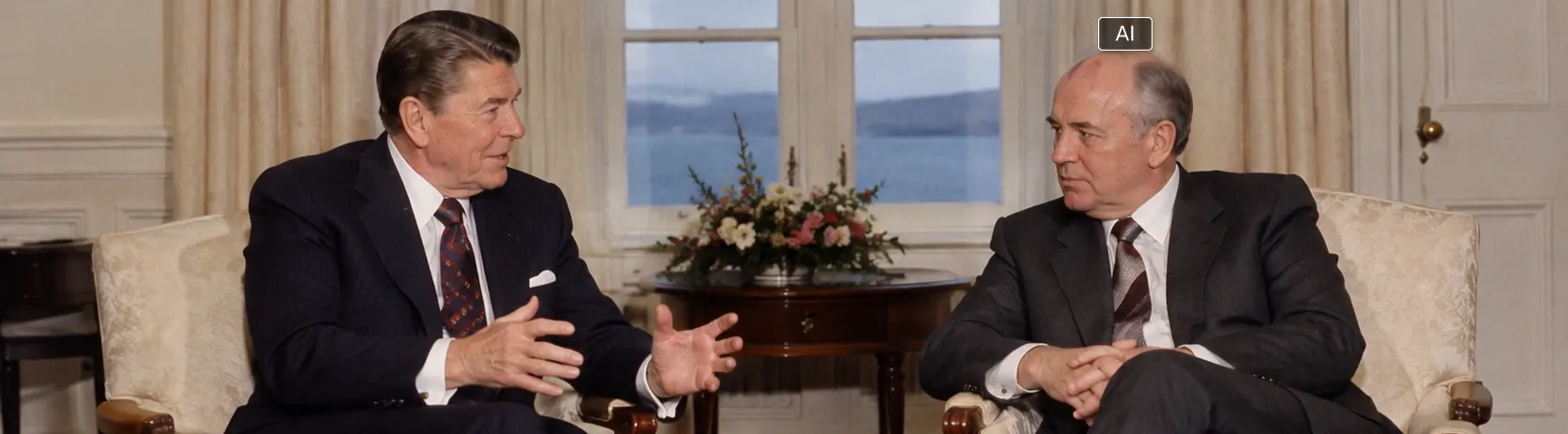
On 11 and 12 October 1986, Ronald Reagan and Mikhail Gorbachev met at Höfði during one of the most important periods of the Cold War.
Although the two leaders failed to reach a comprehensive agreement, their discussions helped create the conditions for the Intermediate-Range Nuclear Forces Treaty, signed in Washington in December 1987.
The treaty resulted in the elimination of an entire category of ground-launched nuclear and conventional missiles.
The anniversary was marked in Reykjavík with a programme of public events and historical activities. Höfði opened to visitors on 10 October, allowing the public to explore the building associated with the summit. A peace conference was also held at Harpa on 12 October as part of the anniversary programme.
The return of an American Secretary of State to Höfði during this anniversary period gave the building renewed diplomatic significance.
The historical meeting in 1986 had brought together two leaders seeking to reduce the danger of nuclear confrontation. In 2026, the discussions focused on a different international environment, with Arctic security, NATO cooperation, economic interests and relations between major powers taking centre stage.
Iceland's Position in a Changing International Environment
Rubio's visit demonstrated that Iceland continues to hold an important place in American foreign and security policy.
Its location, NATO membership, established defence agreement and energy resources give the country relevance well beyond its relatively small population.
For Iceland, maintaining a strong relationship with the United States is important, but so is ensuring that cooperation develops through dialogue, mutual respect and Icelandic decision-making.
The discussions in Reykjavík reflected both countries' stated intention to strengthen their partnership, not only in defence and security but also through trade, technology and investment.
Forty years after Höfði became the setting for a historic attempt to reshape relations between two rival superpowers, the building once again hosted conversations about international security and the future of the region.
The circumstances have changed considerably since 1986. Yet Iceland's geographical position and its relationships with its international partners continue to place it at the centre of important developments in the North Atlantic.
For a country without a conventional military of its own, maintaining reliable alliances, protecting its sovereignty and participating actively in international cooperation remain central parts of its foreign policy.
The visit of Marco Rubio brought those questions back to Höfði, connecting Iceland's diplomatic history with the challenges and opportunities of the present day.
Sources
- Icelandic Ministry for Foreign Affairs – Foreign Minister Gunnarsdóttir held talks with US Secretary of State Rubio
- Icelandic Government – Good meetings with the US Secretary of State
- Government of Iceland – Joint press conference of Þorgerður Katrín Gunnarsdóttir and Marco Rubio, 6 October 2026
- RÚV – Marco Rubio in Iceland, 6 October 2026
- Reuters – Rubio says Iceland central to North Atlantic security
Editorial note — 30 October 2026: This article has been substantially revised to provide a more complete account of the events surrounding US Secretary of State Marco Rubio's visit to Iceland in October 2026. Our original publication placed considerable emphasis on the historical significance of Höfði and the 1986 Reykjavík Summit. While that history remains an important part of the story, the article did not adequately cover the contemporary events that were central to the subject, including the official welcome, diplomatic meetings, public statements, discussions between Icelandic and American representatives, and the wider programme surrounding the visit. The revised article addresses these omissions and brings the diplomatic visit back to the centre of the coverage, while retaining the historical background that gives Höfði its international significance. We believe readers deserve both the historical perspective and a clear account of what actually took place. This update is intended to provide that more complete picture. We appreciate the importance of accurate, balanced and comprehensive reporting, and we regard meaningful corrections and improvements as an essential part of responsible journalism. This report is based on published statements from the Icelandic government, the US Department of State and reporting by established news organisations. It does not claim independent access to the diplomatic meetings.
Tips, corrections or questions: ritstjorn@frettir247.news
More from Iceland
 ICELAND · IMFIceland Takes the Floor for Eight Nations: Ásgeir Jónsson Presents Nordic-Baltic Position at IMF Meetings31 October 2026
 ICELAND · VOLCANOESIceland’s Volcanoes Are Quiet — But Magma Continues to Build Beneath Reykjanes30 October 2026
 ICELAND · NEWSPower Outage Reported in Laugarás as Crews Search for Fault14 October 2026