
Iceland Takes the Floor for Eight Nations: Ásgeir Jónsson Presents Nordic-Baltic Position at IMF Meetings
Iceland took on a prominent representative role at the International Monetary Fund’s October meetings in Bangkok, as Central Bank Governor Ásgeir Jónsson delivered a joint statement on behalf of eight Nordic and Baltic countries. The statement addressed the war in Ukraine, conflict in the Middle East, global debt, financial stability, artificial intelligence and the future of international economic cooperation.
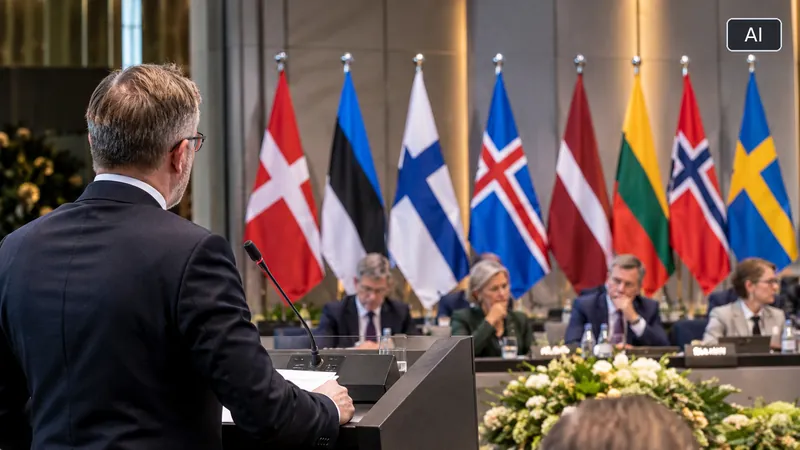
When international financial leaders gathered in Bangkok in October, Iceland was given a responsibility that extended well beyond its own national interests.
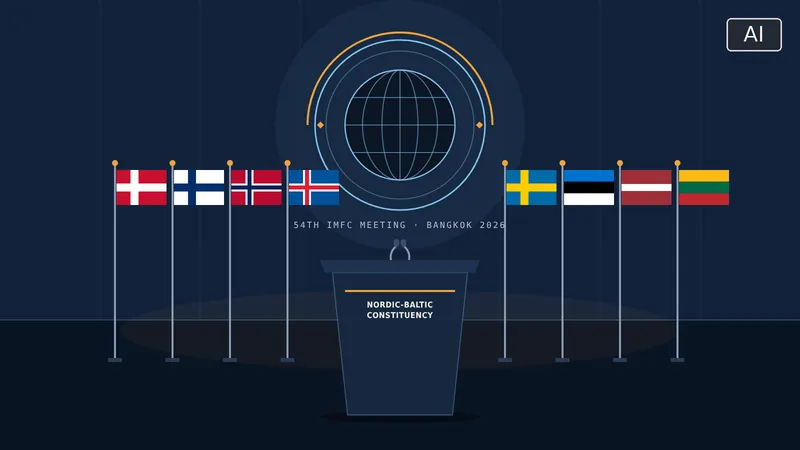
At the 54th meeting of the International Monetary and Financial Committee (IMFC), the central forum for discussing the direction of the International Monetary Fund, Central Bank of Iceland Governor Ásgeir Jónsson presented a formal statement on behalf of eight countries: Denmark, Estonia, Finland, Iceland, Latvia, Lithuania, Norway and Sweden.
The statement, dated 17 October 2026, was an agreed regional position rather than a speech representing Iceland alone.
Its contents offer an insight into how the Nordic and Baltic countries view the current international economic situation — and what they believe the IMF should prioritise as geopolitical tensions, financial vulnerabilities and technological change reshape the global economy.
For Iceland, a country with a population of around 400,000 and a highly internationally connected economy, the assignment also illustrates the importance of regional cooperation in international institutions.
Why Iceland was representing eight countries
The IMF and World Bank Annual Meetings took place in Bangkok, Thailand, from 12 to 18 October 2026.
The Central Bank of Iceland confirmed that Governor Ásgeir Jónsson and Deputy Governor for Financial Stability Tómas Brynjólfsson attended, alongside other representatives of the Bank. Minister of Finance and Economic Affairs Daði Már Kristófersson also participated in the IMFC meeting on behalf of the Nordic-Baltic Constituency.
The Governor represents Iceland on the IMF's Board of Governors, the Fund's highest-ranking decision-making body. On this occasion, Iceland also held the representative position for the Nordic-Baltic Constituency on the IMFC.
That distinction is important.
The IMFC meets twice a year and consists of representatives of 25 member countries. It advises the IMF Board of Governors on the management and direction of the international monetary and financial system and helps shape priorities for the Fund's work.
The Nordic-Baltic group comprises eight countries that cooperate within the IMF's institutional structure. The representative role rotates among the countries. At the April 2026 Spring Meetings, Denmark's Nationalbank Governor Christian Kettel Thomsen had represented the same eight-country constituency. In October, that responsibility passed to Iceland.
The arrangement gives smaller countries an opportunity to participate in international economic discussions through a shared regional position.
It does not give Iceland independent authority over the other seven countries, nor does it make the Governor the head of the IMF. Rather, he presents the position agreed by the constituency in the relevant committee.
The official IMF document identifies Ásgeir Jónsson as the speaker and lists all eight countries on whose behalf the statement was delivered.
What the eight countries actually said
The statement opens with concern about persistent uncertainty, wars, conflicts and the fragmentation of the international system.
It argues that these developments are placing growing pressure on the global economy and the multilateral institutions designed to maintain international cooperation.
Two conflicts receive particular attention: Russia's war against Ukraine and the ongoing conflict in the Middle East.
Ukraine and European security
The Nordic and Baltic countries strongly condemn Russia's continued war of aggression against Ukraine, describing it as a gross violation of international law.
They reaffirm their support for Ukraine's independence, sovereignty and territorial integrity, and call on Russia to withdraw its military forces from internationally recognised Ukrainian territory.
The statement also commits the eight countries to continuing political, military, humanitarian and economic support for Ukraine, including support for reforms connected with its path towards European Union membership.
This is not simply a political declaration separate from economic policy.
The statement explicitly connects the war to European and global security, economic fragmentation and the international economic outlook.
For the Nordic and Baltic countries, security and economic stability are closely linked. A prolonged conflict can affect energy markets, public spending, trade, investment decisions and confidence across Europe.
The Middle East and the cost of conflict
The statement also addresses the severe humanitarian and economic consequences of conflict in the Middle East.
It highlights the inflationary effects of higher commodity prices and calls on all parties to protect civilians, exercise restraint and pursue a negotiated long-term resolution in accordance with international law and the United Nations Charter.
The economic concern is straightforward: conflict in a strategically important region can disrupt energy supplies, transport routes and international trade.
Higher commodity prices can then spread through the global economy, increasing production costs and adding to inflationary pressure.
For small, open economies, these developments can be particularly difficult to manage because they have limited influence over international prices and supply conditions.
The eight countries therefore place international cooperation and predictable rules at the centre of their response.
A warning about public debt and the cost of borrowing
One of the statement's most significant economic themes is the growing pressure on government finances.
The eight countries warn that elevated public debt, higher borrowing costs and rising expenditure demands are making it increasingly urgent for governments to rebuild fiscal buffers and place public debt on a sustainable medium-term path.
The statement identifies several sources of spending pressure:
- Defence and security.
- Climate-related challenges.
- Demographic changes and ageing populations.
- Higher interest costs associated with public borrowing.
These pressures are occurring at a time when many governments have already accumulated substantial debt following successive economic shocks.
The concern is not simply the amount governments owe. It is the reduced ability to respond when another crisis arrives.
A government with high debt and expensive borrowing may find it more difficult to support households during an energy shock, invest in infrastructure or respond to a financial crisis without increasing its borrowing further.
The statement therefore calls for prudent fiscal policies and stronger economic frameworks.
It also makes an important point about international imbalances. Tariffs and restrictive trade measures are not presented as a solution to excessive external imbalances. Instead, the countries argue that the IMF should support policy adjustments in both surplus and deficit economies.
This reflects a preference for international economic coordination rather than a system increasingly shaped by trade restrictions and competing national interests.
Financial stability in the age of artificial intelligence
The joint statement does not treat artificial intelligence simply as a technological opportunity.
It recognises that AI could increase productivity and support economic growth, but warns that it also creates new financial, labour-market and social risks.
Three particular areas of concern are identified:
AI-related financial market corrections. If investors become excessively optimistic about the future profitability of AI companies and related infrastructure, a sudden reassessment could lead to falling asset prices and financial losses.
Leverage in non-bank financial institutions. Borrowing and interconnected financial positions outside traditional banks can amplify market stress when asset prices fall or financing conditions tighten.
Cybersecurity. Increasingly interconnected financial systems create new risks to critical infrastructure, data and essential services.
The eight countries argue that these vulnerabilities should be addressed promptly.
They also call for full implementation of internationally agreed financial regulations, including Basel III. They make a distinction between simplifying financial regulation and weakening it: modernisation should improve the effectiveness of the system, not lead to deregulation.
This is a significant position for countries with developed financial systems and internationally connected banking and investment sectors.
The statement also highlights the need for stronger cooperation to protect governments, businesses and individuals from growing cybersecurity threats.
AI must deliver benefits beyond financial markets
The statement's discussion of artificial intelligence goes further than the immediate risks to investors.
It recognises that AI, climate change, demographic shifts and financial innovation are changing the structure of the global economy.
These developments could create new opportunities for growth and higher productivity. But they could also create serious challenges for employment, public finances, economic growth and financial stability.
The eight countries emphasise the need for safeguards, sound governance and international cooperation to ensure that the benefits of advanced AI are widely shared.
This is an important distinction.
The economic success of AI should not be measured only by the market value of technology companies or the amount of money invested in data centres.
The longer-term question is whether businesses become more productive, whether workers can adapt to changing skill requirements and whether the benefits reach the wider economy.
The statement calls on the IMF to monitor the consequences of structural change and provide independent, evidence-based policy advice.
It also argues that countries need ambitious reforms to improve productivity, strengthen competition, increase labour supply and build economic resilience.
Why the IMF matters to smaller countries
A recurring theme throughout the statement is the importance of a rules-based international system.
The Nordic and Baltic countries reaffirm their support for the IMF as a central institution in the global financial safety net.
They argue that the Fund must remain a trusted provider of impartial economic analysis and policy advice.
For smaller economies, this has practical importance.
Iceland cannot independently determine international interest-rate conditions, global commodity prices or the rules governing international financial markets.
Its businesses depend on international trade, access to capital, reliable financial systems and predictable economic relationships.
A well-functioning multilateral system can therefore be particularly valuable to a small country.
The statement also makes clear that the IMF must remain adequately funded and capable of carrying out its responsibilities.
The eight countries support the Fund's work in surveillance, lending, capacity development and financial stability. They also stress that reforms and budget constraints should not undermine the quality or independence of its advice.
IMF governance: who has influence over the institution?
The statement contains an important section on the IMF's own governance.
The Fund is a quota-based institution. Member countries' quotas help determine their financial contributions, voting power and access to IMF resources.
The Nordic-Baltic countries support a strong and adequately resourced IMF, while calling for progress on the 16th General Review of Quotas and constructive discussion of the next review.
They argue that any adjustment to quota shares should reflect changes in the global economy while maintaining fairness and broad support among members.
The statement also stresses that countries receiving greater quota shares should accept corresponding responsibilities.
This is part of a wider debate about how international institutions should reflect the changing distribution of economic power.
Emerging economies have become increasingly important in the global economy, and questions about representation, voting rights and institutional legitimacy remain central to discussions about the future of the IMF.
The Nordic-Baltic position is that reform should strengthen the Fund's legitimacy without undermining its quota-based structure or its ability to operate effectively.
Iceland's own economic position in the international debate
Although the statement was issued on behalf of eight countries, Iceland's participation also raises questions about its own position in the international economy.
Iceland is a small, advanced economy with significant international exposure.
Its prosperity depends on a combination of fisheries, tourism, energy-intensive industries, services and international investment. Its domestic market is small, and developments in foreign markets can have a substantial effect on economic performance.
The IMF's 2026 Article IV assessment of Iceland provides important context.
In its report published on 30 July, the Fund noted that Iceland's economy had contracted by 1.3% in 2024 before growing by 1.3% in 2025.
The IMF identified persistent inflation and wage pressures, weak export performance and the need to improve productivity as important challenges.
It projected growth of 1.8% in 2026 and 2.1% in 2027, while warning that risks to growth were tilted to the downside and risks to inflation to the upside.
The Fund also emphasised the importance of fiscal resilience, monetary stability and structural reforms that could strengthen productivity and diversify the economy.
There is a direct connection between these domestic challenges and the priorities expressed in the joint statement.
The call for stronger productivity, more resilient public finances and effective international cooperation applies to Iceland as much as it does to the other countries in the constituency.
Iceland also has an energy position that differs from many other advanced economies. Its relatively low dependence on imported fuel and favourable domestic energy mix can provide some protection against certain international energy shocks.
However, this does not insulate the country from global inflation, changes in trade conditions, financial market volatility or disruptions affecting its export sectors.
The IMF's Iceland assessment underlines the importance of maintaining strong economic institutions and improving the country's ability to withstand external shocks.
What Iceland gains from representing the constituency
The representative role should not be exaggerated, but neither should its significance be dismissed.
Iceland was not setting global monetary policy, directing the IMF or speaking for every country in the organisation.
It was, however, entrusted with presenting the agreed position of eight countries at a high-level committee that advises the IMF Board of Governors.
That creates an opportunity to participate in discussions that influence the priorities of one of the world's most important international financial institutions.
The role also requires diplomatic coordination.
The Nordic and Baltic countries share several economic and institutional interests, but they are not identical economies. Their exposure to energy markets, trade, security risks and international finance differs.
A joint statement therefore represents a negotiated regional position, not simply a list of Icelandic policy preferences.
For Iceland, the opportunity is to contribute to a common position while maintaining its own voice in the IMF's wider institutional structure.
It is also a reminder that international influence is not determined by population size alone. Smaller countries can participate meaningfully when they cooperate, develop credible policy positions and contribute consistently to international institutions.
The IMFC meeting: why there was no joint communiqué
The October meeting also revealed the difficulties of reaching agreement across the IMF's membership.
The IMFC did not reach consensus on the wording of a complete communiqué.
Instead, the Committee's chair, Saudi Arabian Minister of Finance Mohammed Aljadaan, issued a Chair's Statement.
The Central Bank of Iceland reported that the statement was supported by IMFC members in its key respects. Aljadaan himself said that all members had agreed to its wording.
This distinction matters. A Chair's Statement is not the same as a collectively agreed communiqué adopted by consensus.
The absence of a full communiqué reflects the difficulty of finding common language among countries facing different geopolitical circumstances and economic priorities. Russia's invasion of Ukraine has in practice prevented the committee from issuing consensus communiqués in recent years.
The tensions were also visible in the room. According to Reuters, nearly half of the delegates walked out when Russian Finance Minister Anton Siluanov spoke — among them the Nordic and Baltic delegations.
There was also disagreement over how to describe artificial intelligence. The United States proposed replacing "artificial intelligence" with "super intelligence" in the statement. The proposal did not prevail; the Chair's Statement instead refers to "advanced intelligence technologies".
At the press briefing on 17 October, Aljadaan described a global economy showing resilience while facing mounting challenges. He highlighted the economic consequences of wars and disruptions to critical waterways and trade routes, as well as the opportunities and risks associated with artificial intelligence.
IMF Managing Director Kristalina Georgieva similarly described the meetings as marked by both optimism and concern.
She pointed to the promise of AI and the dynamism of Asia, but warned against relying too heavily on a single source of growth. She also highlighted inflation, high public debt and climate-related risks.
The message from the meeting was therefore not that international cooperation had failed. Rather, it was that cooperation remains essential at a time when reaching agreement is becoming more difficult.
A small country in a large economic conversation
Iceland's role in Bangkok was a practical example of how smaller countries can contribute to international economic discussions through regional cooperation.
The statement delivered by Ásgeir Jónsson was not limited to Iceland's immediate economic concerns. It addressed the security of Europe, the economic consequences of conflict, global debt, financial regulation, artificial intelligence and the future of the IMF itself.
These issues may appear distant from daily life in Iceland, but their consequences are not.
International instability can affect the price of imported goods, the cost of borrowing, the confidence of investors and the markets available to Icelandic exporters.
For a small economy, the ability to participate in discussions about the rules and institutions governing the international financial system is therefore more than a diplomatic formality.
The October meeting did not produce a complete IMFC communiqué, and Iceland did not emerge with new powers over the Fund.
What it did demonstrate was that Iceland, working alongside its Nordic and Baltic partners, had a recognised place in a serious international economic discussion — and a responsibility to present a common position on issues that will shape the years ahead.
Sources
- International Monetary Fund — Statement by Governor Ásgeir Jónsson, 54th Meeting of the IMFC, 17 October 2026 – The primary source for the article's analysis of the joint Nordic-Baltic position. The five-page statement lists all eight countries and sets out their positions on Ukraine, the Middle East, fiscal policy, financial stability, AI, structural reform and IMF governance.
- Central Bank of Iceland — Annual Meetings of the International Monetary Fund and the World Bank 2026, 21 October 2026 – The official Icelandic account of the delegation, the Governor's representative role, the participation of the Minister of Finance and the absence of consensus on a complete IMFC communiqué.
- International Monetary Fund — IMFC Statements and Documents, 54th Meeting, October 2026 – The official meeting record identifying the meeting dates, the IMFC's role and the statement issued by Governor Jónsson on behalf of the eight countries.
- International Monetary Fund — IMFC Press Briefing, 17 October 2026 – The official record of comments by IMFC Chair Mohammed Aljadaan and IMF Managing Director Kristalina Georgieva following the meeting.
- International Monetary Fund — Iceland: 2026 Article IV Consultation, 30 July 2026 – Used for the background on Iceland's economic performance, inflation, growth projections, productivity and external vulnerabilities.
- International Monetary Fund — IMF Members' Quotas and Voting Power – Used to explain the Fund's quota-based governance structure and the relationship between quotas and voting power.
- International Monetary Fund — IMF Executive Directors and Voting Power – Used for the distinction between the Executive Board, which conducts the Fund's day-to-day business, and the IMFC, which advises on the direction of the international monetary and financial system.
- International Monetary Fund — Chair's Statement of the Fifty-fourth Meeting of the IMFC, 17 October 2026 – Statement issued by IMFC Chair Mohammed Aljadaan, including the wording "advanced intelligence technologies".
- Reuters (published by Al-Monitor) — IMFC chair says global economy resilient; delegates walk out on Russian official, 17 October 2026 – Report of the walkout during the Russian finance minister's remarks.
Reporting distinction: The joint statement is attributed to the eight Nordic-Baltic countries and delivered by Ásgeir Jónsson in his representative capacity. It should not be interpreted as a personal statement by the Governor alone or as an independent Icelandic government declaration. The article also distinguishes the IMFC Chair's Statement from a full communiqué agreed by consensus.
Editorial Note — Iceland's Role at the IMF Annual Meetings
This report examines Iceland's role at the October 2026 Annual Meetings of the International Monetary Fund and the World Bank in Bangkok, where Central Bank Governor Ásgeir Jónsson represented the Nordic-Baltic Constituency at the International Monetary and Financial Committee.
The central focus is the joint statement delivered on behalf of Denmark, Estonia, Finland, Iceland, Latvia, Lithuania, Norway and Sweden. The report explores the positions expressed by the eight countries on geopolitical instability, the war in Ukraine, conflict in the Middle East, public debt, financial stability, artificial intelligence and the future of international economic cooperation.
The article also explains the function of the IMFC and the distinction between Iceland's representative role, the wider Nordic-Baltic constituency and the IMF's formal decision-making structure.
Iceland's participation is considered in the context of its position as a small, internationally connected economy, with reference to the IMF's 2026 assessment of Iceland.
The report is based primarily on official IMF documents and information published by the Central Bank of Iceland. It distinguishes the joint position of the eight countries from the Governor's individual views and from the wider conclusions of the IMF meetings.
Tips, corrections or questions: ritstjorn@frettir247.news
IMF Annual Meetings 2026
- The Global Economy Under Pressure: Growth, Debt, Energy and the Risks Ahead
- Iceland Takes the Floor for Eight Nations: Ásgeir Jónsson Presents Nordic-Baltic Position at IMF Meetings
- Iceland's Economy at a Crossroads: What the IMF Sees Ahead
- The New Economy Forum: How AI Is Reshaping Money, Work and Government
- Iceland's Next Economic Chapter: Building New Industries Beyond Tourism and Fisheries
More from Iceland
 ICELAND · FOREIGN AFFAIRSUS Secretary of State Marco Rubio Visits Iceland: Höfði Hosts a New Chapter in Iceland-US Relations30 October 2026
 ICELAND · VOLCANOESIceland’s Volcanoes Are Quiet — But Magma Continues to Build Beneath Reykjanes30 October 2026
 ICELAND · NEWSPower Outage Reported in Laugarás as Crews Search for Fault14 October 2026