
Hungary Opens the Files: 60,000 Names, and the Questions They Cannot Answer
Thirty-six years after the end of communism, Hungary has put the names of its secret-police informers online. The list is long, incomplete and in places wrong, and every family that searches it will have to decide what a name on a card actually means.
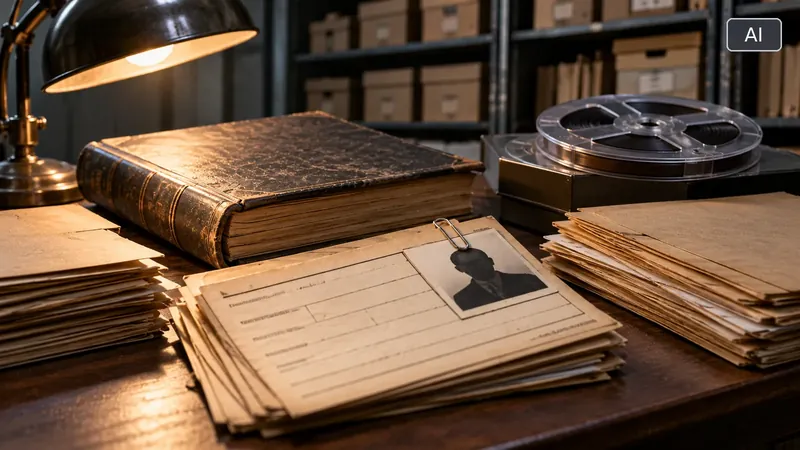
On the night of 4 November 1956, Soviet tanks rolled into Budapest and crushed the Hungarian revolution. Seventy years later, to the day, the Hungarian state chose the same date to open one of the regime's most closely guarded legacies: the names of the people it recruited to spy on their neighbours.
Since Wednesday, anyone with an internet connection can search the website nyitottaktak.hu, roughly "they opened them", by name, date of birth or code name. Between 50,000 and 60,000 names are now public. A further batch of recruitment files, the most detailed records, is due to be released in stages until 25 February.
"After 36 years, we are finally fulfilling what was once one of the key promises of the 1990 regime change," said Péter Magyar, the prime minister. He also asked Hungarians to treat the release "with dignity and humanity".
A promise that waited 36 years
Every Hungarian government since 1990 has had the chance to do this, and none did. Fidesz promised disclosure before 2010 and then, once in power, voted down opposition proposals to open the files without debate, according to the Hungarian news site Telex. As recently as 2024, Gergely Gulyás, then the minister in charge of Viktor Orbán's office, argued that opening the archive would not promote transparency because many files had been falsified or stolen.
Péter Magyar's government brought in the Disclosure of State Security Documents Act in September. It passed without a single vote against.
The reason for the long delay is not hard to guess. Critics have long argued that successive governments were reluctant to implicate public figures on every side of politics. Hungary already had a reminder of how that can look: in 2002, weeks after taking office, the Socialist prime minister Péter Medgyessy was engulfed in a scandal over his past as a communist-era agent.
What is actually online
The release is less dramatic than the word "files" suggests. There are no reports, no transcripts of conversations, and no accounts of whom an informer reported on. What has been published are three kinds of index records:
| Record | What it shows | What it does not show |
|---|---|---|
| "No. 6" cards | Real name, code name, date of birth, address, mother's name, occupation, the motive for recruitment and the handling officer's name and rank | What the person reported, or on whom |
| B-registers, 1957–1962 | Some 25,000 recruits logged in numerical order as files were opened | Why someone was recruited, or whether they ever informed |
| The "H" database | About 58,000 names copied onto magnetic tape in January 1990 | Whether a person was actually an agent; it includes some who never were |
The informers' reports themselves stay closed. The law requires the names of the people who were watched to be removed, along with details of health, addiction and sexual orientation. The people who were spied on can still request their own files, as they have been able to since 1998.
A list is not a verdict
This is the part that matters most, and the part most likely to be forgotten in the rush to search for a famous name.
Gergő Bendegúz Cseh, who runs the state security archive, says the records are not necessarily true in every case and are very incomplete. Somewhere between 150,000 and 160,000 people are estimated to have been recruited between 1944 and 1990. Only about a third of their names are known, and substantive information survives for perhaps one in ten. Files were lost in 1956, and many more were destroyed as the regime collapsed. A government commission later found that unlawful shredding carried on into 1995.
Recruitment was also rarely a free choice. Many were pressured with threats to their jobs, their children's university places or their access to medicine. Some were registered and then refused to inform, at great risk to themselves. The historian László Eörsi says some of them could be considered heroes, and warns against judging anyone by their presence on a list alone.
Not everyone welcomes the release. Zsuzsanna Borvendég, a historian and MEP for the far-right Our Homeland party, argues that in most surviving reports "it isn't even possible to identify the agent, let alone their motives", and that publishing names without context risks misleading the public. Krisztián Ungváry, a historian who campaigned for years for full disclosure, puts the opposite case: access to the records a state kept on its citizens is a right that "should not depend on the whims of those in power".
The government has set up hotlines for counselling and emotional support. "A great many families will be confronted with information that is difficult for them to bear," Magyar said.
How others did it
Hungary is late, but it is not the first country to wrestle with this, and its neighbours show how differently it can go.
Germany opened the Stasi archive almost immediately. The Stasi Records Act came into force at the end of 1991, and from January 1992 East Germans could read what had been collected about them. More than two million people have done so. The scale was vast: in 1988 the Stasi had 189,000 unofficial collaborators. But the German model starts with the person who was watched. You read your own file, and the informers appear as part of your story. Hungary has done something closer to the reverse, by publishing the informers' index cards for everyone to search.
Poland shows the risk. In June 1992 the interior minister, Antoni Macierewicz, released a list of 64 sitting politicians recorded as collaborators. Within weeks the Constitutional Tribunal ruled the resolution behind it unconstitutional, partly because those named had no way to appeal. The most famous case of all, whether Lech Wałęsa was the informer code-named "Bolek", went through the courts for decades: a lustration court cleared him in 2000 because it could not establish whether the documents were genuine, and prosecutors concluded in 2017 that many of them were authentic.
The Czech Republic had its own warning. The former dissident Jan Kavan was accused of collaborating with the StB secret police, and a court fully exonerated him only in 1996, after years of proceedings.
The lesson from all three is the same. A secret-police file records what the secret police wrote down. That can be the truth, a lie, a target, a hope or a quota.
What happens next
The recruitment files due by 25 February will be the real test. They are the only records that describe, sometimes over hundreds of pages, how a person was approached, what pressure was used and whether they gave in. A 13-member advisory committee, chaired by the historian János M. Rainer, can recommend declassifying more. Fidesz's parliamentary leader, János Bóka, argues that the law hands the government more control over the process. Under the law, the final say on classification stays with the agencies that hold the files.
Cseh, the archive director, does not expect many bombshells. The files of most major public figures were already available to researchers. The real impact will be quieter, and much harder to measure: a daughter finding her father's code name, a man discovering why a promotion never came, a village learning who wrote the reports.
Rainer has called the release "mainly of symbolic importance". After 36 years, that is not nothing. If it prompts people to reflect, Ungváry says, making the names public "will have been beneficial". The hard part, as every country that has done this has found, is that a name can be read in seconds, while understanding what lies behind it can take a lifetime.
Sources
- BBC (via Yahoo News) — Secret police files released in Hungary, 4 November 2026 – Nick Thorpe's report from Budapest: what the No. 6 cards contain, Péter Magyar's appeal, and the arguments of Krisztián Ungváry and Zsuzsanna Borvendég.
- Euronews — Hungary: communist-era files released, up to 60,000 former agents revealed, 4 November 2026 – The number of names, the estimate of 150,000 informers, the archive director's caveats, the Medgyessy case and László Eörsi's warning.
- Telex — What exactly are the communist-era secret service files now opened in Hungary?, 5 November 2026 – What each type of record shows, what stays closed, the history of failed attempts and the comments of János M. Rainer.
- Veridica — Hungary is finally opening the files. What survived is another question, November 2026 – The law and its vote, the advisory committee, the Kenedi Commission on file destruction, and the Polish and Czech cases. Opinion piece; used for facts only.
- Stasi Records Archive — Frequently asked questions, 2026 – The number of Stasi unofficial collaborators in 1988.
- German Federal Archives — Access to Stasi records, 2026 – How many people have read their own Stasi files since 1992.
Reporting note: This article is based on reporting by the BBC, Euronews and the Hungarian news site Telex, published figures from the German Stasi Records Archive and the Federal Archives, and an analysis by Veridica, used here for facts only. Fréttir 24/7 has not searched the Hungarian database for individual names. The illustration is AI-generated.
Tips, corrections or questions: ritstjorn@frettir247.news
More from World
 WORLD · SOUTH KOREA · MIDDLE EASTSouth Korea Sails Towards Hormuz, and Stops Short5 November 2026
 WORLD · GERMANYGermany's Generation Z Takes to the Streets: Anger Over Military Service, Education and an Uncertain Future31 October 2026
 WORLD · UNITED STATES · MIDTERMSUS Midterms 2026: Democrats Win Congress — Now Comes the Test of Governing America4 November 2026