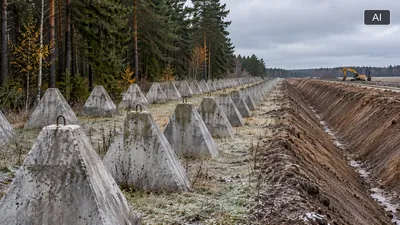
Britain's Military Chief Warns of a Rising Threat From Russia
Air Chief Marshal Sir Richard Knighton says Britain faces its most dangerous period in his adult life, and that households have a part to play.
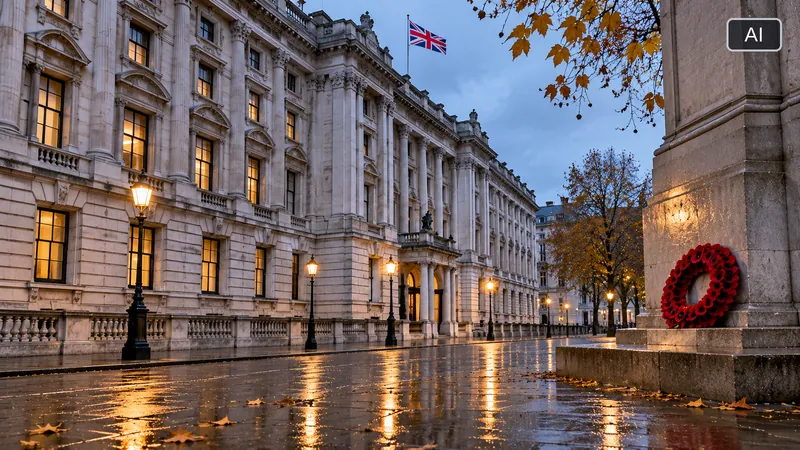
Britain's most senior military officer has warned that the country is living through the most dangerous period of his adult life, and that the threat, coming mainly from Russia, is growing. Air Chief Marshal Sir Richard Knighton, the Chief of the Defence Staff, made the remarks in an interview with the Financial Times published last weekend, as Britain marked Remembrance Sunday.
Knighton, 57, is a career Royal Air Force officer and a former Chief of the Air Staff. He took over as head of the armed forces on 2 September 2025, succeeding Admiral Sir Tony Radakin.
Sabotage, cyber attacks and assassinations
In the interview, Knighton said the Russian state was behind targeted assassinations, sabotage and cyber attacks in Europe, and to some extent in Britain, and that there was proof of it. He described Moscow as increasingly willing to take risks, and said Britain was falling behind its European allies in confronting the threat. Russia has repeatedly denied carrying out hybrid attacks on European soil.
He also argued that the public needs to understand the risks, at a time when the government is asking the country to spend more on defence, and that this may mean making different choices and setting different priorities.
Tins on the shelves
Knighton has taken the government's advice himself. In a separate interview with the BBC, he said he had stocked up on extra food and water at home.
On 22 October the Cabinet Office asked households to be ready to cope for three days if power, water, phone lines or the internet were cut, by keeping a small supply of non-perishable food and bottled water at home and signing up to their utility companies' list of people who need extra help in an emergency. "Those who can follow this advice should follow this advice," said the Security Minister, Dan Jarvis. The government named storms, floods and wildfires, as well as hostile states, among the risks.
Shoppers took the advice seriously. Within days, the British supermarket chain Iceland reported that sales of tinned food had risen by 40%, the electronics retailer Maplin said torch sales had nearly quadrupled, and the online grocer Ocado ran out of several kinds of bottled water.
"Our objective must be to avoid war"
Knighton's warnings are not new. In his first annual lecture as Chief of the Defence Staff, at the Royal United Services Institute in London last December, he said: "The Russian leadership has made clear that it wishes to challenge, limit, divide and ultimately destroy NATO." He added that, apart from distance, the threat to Britain "isn't really any different to the threat in Germany".
His conclusion in that speech was not a call to arms. "Our objective must be to avoid war," he said, arguing that a strong defence is the way to deter one.
The question of money
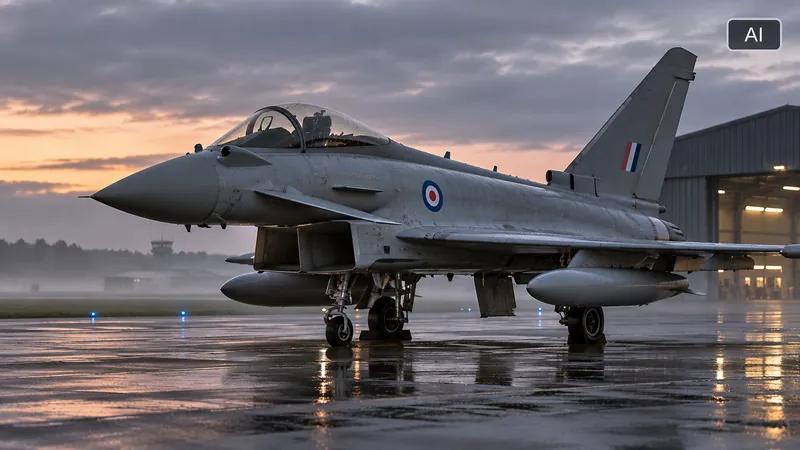
Knighton has also been blunt about funding. Giving evidence to a House of Lords committee in June, he said that unless the money for day-to-day operations increased, "we will have to dial back our activities and our exercise and operational activity". He asked for "a clear path" to NATO's target of spending 3.5% of national income on core defence, which Britain has committed to reach by 2035.
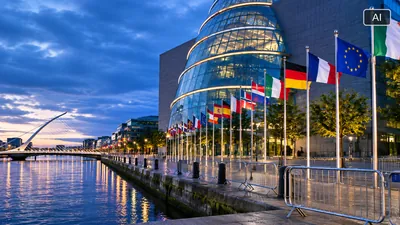
His latest warning comes as American envoys try to broker an end to the war in Ukraine, with talks in the United Arab Emirates, Moscow and Dublin in recent days. Whatever comes of them, Britain's military chief is clear that the danger from Russia will not end with a ceasefire.
Sources
- GOV.UK — Chief of the Defence Staff speech, 15 December 2025 – Knighton's annual lecture at RUSI, the source of the direct quotes on Russia and on avoiding war.
- GOV.UK — Air Chief Marshal Sir Richard Knighton takes over as Chief of Defence Staff, 2 September 2025 – His start date, predecessor and previous post.
- Yahoo News (from The Independent) — UK military chief issues stark warning over Russian threat, 9 November 2026 – Summary of his interviews with the Financial Times and the BBC.
- Breaking Defense — UK defense chief says operations to be 'dialed back' without additional spending, 16 June 2026 – His evidence to the House of Lords on funding and NATO's 3.5% target.
- GOV.UK (Cabinet Office) — Households encouraged to take small simple steps to stay prepared in an emergency, 22 October 2026 – The government's advice to households and the Security Minister's comments.
- The National (Reuters) — UK government advises stockpiling water and food, 23 October 2026 – The risks named by the government.
- The National (Reuters) — Beans, water and radios sell out after UK's stockpile warning, 27 October 2026 – Sales figures from Iceland, Maplin and Ocado.
- Newsweek — NATO state lays 'dragon's teeth' on defense line to stop Russia, 12 November 2026 – The talks in the UAE, Moscow and Dublin.
Reporting note: Knighton's interviews with the Financial Times and the BBC are summarised in our own words; the direct quotes in this article come from his official speech at RUSI in December 2025, published by the UK government, from his evidence to the House of Lords in June 2026, as reported by Breaking Defense, and from the Cabinet Office. Retail figures were reported by Reuters.
This article was drafted with AI assistance and reviewed and edited by Fréttir 24/7's editorial team.
Tips, corrections or questions: ritstjorn@frettir247.news