Dublin Week Ends With Europe Set to Join Ukraine Peace Talks
Fifty leaders met in Dublin over two days and left with a European team for the Ukraine peace talks, a prisoner exchange and, for Ireland, a strike called off.
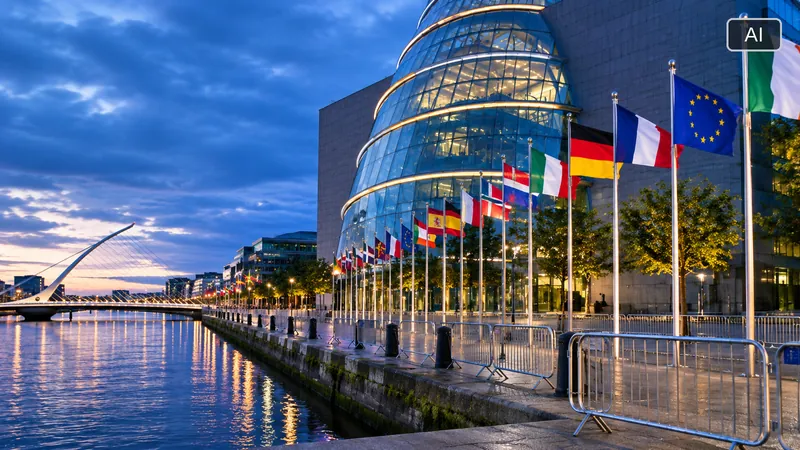
For two days this week Dublin hosted the largest diplomatic gathering in Irish history. On Thursday 12 November more than 50 leaders, from Iceland to Armenia, met at the Convention Centre on the River Liffey for the European Political Community, a forum set up after Russia's full-scale invasion of Ukraine in 2022. On Friday the 27 EU leaders stayed on for an informal summit of their own.
A place at the table
The week's main result is that Europe expects to be in the room when talks on ending the war in Ukraine resume. On Friday António Costa, President of the European Council, announced that Europe's team will be made up of the EU institutions and five military powers: France, Germany, Italy, Poland and the United Kingdom. Europe "must speak with one clear voice", he said. EU officials expect the five countries to send their national security advisers, and NATO is also expected to take part.
The day before, Ukraine's President Volodymyr Zelensky met the US envoys Steve Witkoff and Jared Kushner at Casement Aerodrome outside Dublin, straight after their talks with Vladimir Putin in Moscow. Zelensky said Russia had accepted a prisoner exchange, which he called "a real result". Kushner said: "We cannot conclude this deal without the Europeans being at the table." The Kremlin said Europeans could take part if they genuinely wanted to contribute to peace.
On Thursday 40 European countries also signed a Dublin declaration saying that any matter affecting Europe's security should be decided with Europeans involved.
What was not settled
Talks between Russian, Ukrainian, US and European delegations in Abu Dhabi earlier in the week brought no breakthrough on territory. Russia wants a broad agreement on Europe's "security architecture" before the details of the war are discussed. Germany's Chancellor Friedrich Merz called that "the same old game", and Latvia's Prime Minister Andris Kulbergs called it "a trap".
Money is the other open question. Ukraine is expected to need about €70 billion next year, and the EU must find about €45 billion of it. Leaders will decide how at a special summit on 26–27 November, where a 22nd package of sanctions against Russia is also due.
A strike called off
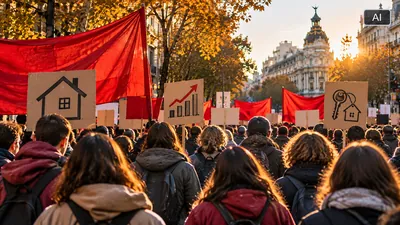
Ireland also avoided a confrontation at home. A strike by public servants, timed for the day of the summit, was called off on the eve after the government and unions agreed a draft pay deal. It covers more than 420,000 public servants and gives a 10.75% rise over about two years and nine months, to March 2029. Union members will now vote on it.
The Garda, Ireland's police, mounted its largest operation ever: more than 15,000 twelve-hour shifts over 72 hours. About 1,000 people joined an anti-war protest, and two men were arrested for public order offences.
And a lesson on AI
Between the talks on war and money, the British-Canadian computer scientist Geoffrey Hinton, often called one of the "godfathers" of AI, briefed EU leaders on the benefits and risks of artificial intelligence. Ursula von der Leyen, President of the European Commission, said Europe "must get it right".
The next European Political Community meeting will be held in Switzerland in the spring.
Sources
- RTÉ — 50 leaders in Dublin for State's largest diplomatic event, 12 November 2026 – The scale of the summit, the programme, the security operation and the protest.
- The Irish Times — Zelenskiy says Europe to be included in Ukraine peace talks as he meets US envoys in Dublin, 12 November 2026 – Zelensky's meeting with the US envoys, the prisoner exchange and the arrests.
- Reuters, via Yahoo News — EU settles on five-nation group to speak for Europe at Ukraine peace talks, 13 November 2026 – Europe's negotiating team, António Costa's remarks, the Kremlin's response and the Dublin declaration.
- Euronews — EU leaders in Dublin grapple with who speaks for Europe in peace talks, 13 November 2026 – Jared Kushner's remarks and the special summit on 26–27 November.
- The Irish Times — Ursula von der Leyen describes two-day summit in Dublin as 'intense', 13 November 2026 – Geoffrey Hinton's briefing and Ukraine's financing needs.
- Irish Examiner — Public sector strike called off as Government and unions agree pay deal, 11 November 2026 – The terms of the draft pay deal for Ireland's public servants.
- EUobserver — First talks about EU envoy on Ukraine war to dominate Dublin summits, 11 November 2026 – Background on the European Political Community and the two summits.
Reporting note: This article is based on reporting by RTÉ, The Irish Times, the Irish Examiner, Reuters, Euronews and EUobserver. Talks between the US, Russia and Ukraine are ongoing, and Europe's place in the next round has not been confirmed by Moscow.
This article was drafted with AI assistance and reviewed and edited by Fréttir 24/7's editorial team.
Tips, corrections or questions: ritstjorn@frettir247.news