
Slow Down: Iceland and Ireland Remember Their Road Victims
On the World Day of Remembrance, both islands think of the families left behind, and of young drivers. Speed is the danger both keep returning to.

At two o'clock this afternoon every radio station in Iceland played the same song, sung by KK and his sister Ellen. KK wrote "When I Think of Angels" in memory of another sister, who was killed in a road crash in the United States in 1992, and today, the World Day of Remembrance for Road Traffic Victims, it was played for everyone the country has lost on its roads. People gathered in 17 places, from Reykjavík and Akureyri to Patreksfjörður and Vestmannaeyjar. Many of the ceremonies were organised by the youth sections of the country's rescue teams. It was the 16th time the day has been marked in Iceland.
In Reykjavík the ceremony was held on the helicopter pad by the emergency department of Landspítali in Fossvogur, led by the director of the Icelandic Road Administration, Bergþóra Þorkelsdóttir. The choir of Menntaskólinn við Hamrahlíð sang KK's song. President Halla Tómasdóttir spoke, and so did Haraldur Már Haraldsson, who told the crowd how, as a young man, he was speeding when he caused the crash that killed his childhood friend. In Akureyri a Coast Guard helicopter landed at the ceremony at the base of the Súlur rescue team.
The Minister of Infrastructure, Eyjólfur Ármannsson, used the day to announce action on speeding: a public awareness campaign, and major changes to traffic law to give the police stronger powers against serious traffic offences, to be published for consultation in the coming days. "We cannot stand by in such circumstances, and must take action," he said. "We must respond and overcome risky behaviour on the roads through a joint effort by all of us, by the whole of society."
Iceland: twelve lives this year
Twelve people have died on Iceland's roads so far this year. Each was someone's child, partner, parent or friend, and many families marked today without someone they love. In a country this small the loss reaches far: in a new survey by Samgöngustofa, the Icelandic Transport Authority, just over a quarter of Icelanders, 26%, said they had lost a close relative or friend in a road crash.
The long view is more hopeful. Between 1986 and 1995 an average of 23 people died on Iceland's roads each year; over the past ten years the average was 11.5. That did not happen by chance. Traffic grew by almost three-quarters between 2000 and 2019, yet deaths fell, as the busiest roads were rebuilt with separated lanes, roundabouts replaced dangerous junctions, roadsides were made safer, speed limits came down at single-lane bridges, speed checks increased and more people buckled up, according to the International Transport Forum. Cars themselves are also far safer than they were in the 1970s and 1980s. Even so, 1,645 people have now died on Icelandic roads since the first recorded fatal crash, on 25 August 1915.
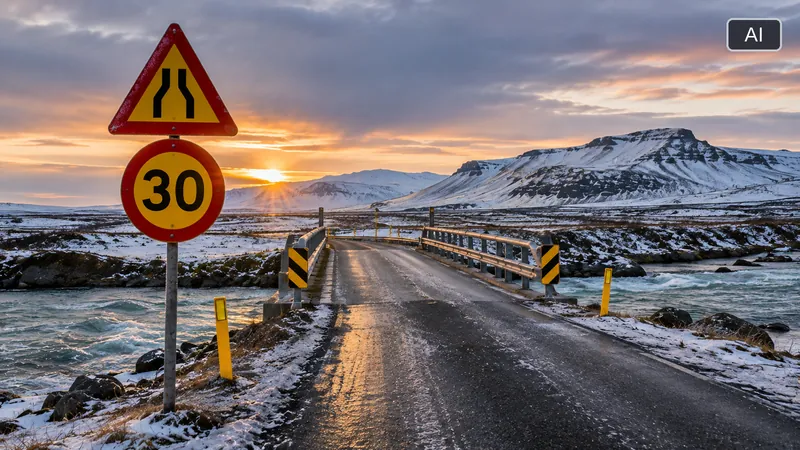
Samgöngustofa chose young road users as this year's theme. Crashes involving young drivers have fallen considerably over 20 years, but young drivers are still far more likely to crash than older ones, perhaps because they have less experience and trust their own skill too much. The authority's data also show that young drivers have improved in recent years, and far fewer young people are now hurt in cars. But speeding is still one of the main causes of their serious and fatal crashes, and police data show risky driving rising again in some groups.
Ireland: a sharp rise among the young
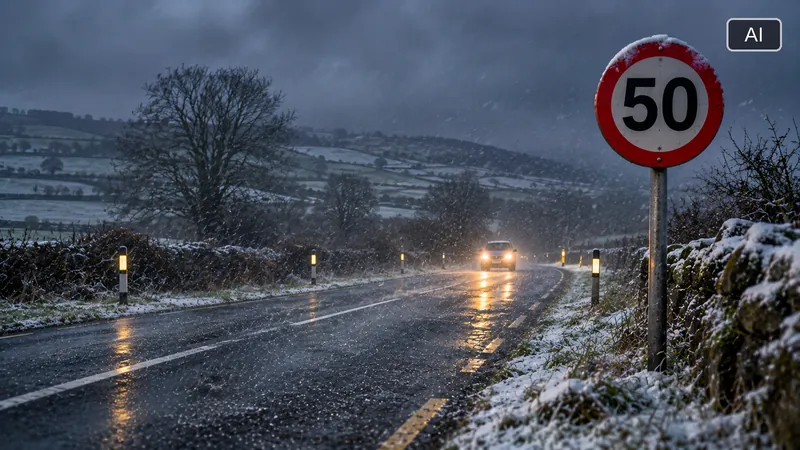
Ireland is heading the wrong way. By the end of October, 155 people had died on its roads this year, against 142 at the same point last year. In late October provisional Garda figures counted 45 people under 25 among the dead, almost a third of the total, up from 32 a year earlier. That is 45 young people who will not grow older. In August five young men died together in a single crash on the M9.
The Road Safety Authority's research shows when young drivers are most at risk. Of the 189 drivers aged 17 to 25 involved in fatal crashes between 2021 and 2025, more than eight in ten were men, and over half of their crashes happened between 8pm and 4am. "Young drivers are overrepresented in fatal collisions," said the RSA's chief executive, Sam Waide. Dr Kiran Sarma of the University of Galway said they are "not a single high-risk group", and that research can now pick out which young drivers are most at risk.
The authorities are tightening the rules. Since 1 November, learner drivers can no longer keep renewing their permits without sitting a driving test. The aim, the RSA says, is to "ensure learner permits are used for their intended purpose".
A worldwide toll
Iceland and Ireland are two small pieces of a far larger picture. Around the world, about 1.19 million people die on the roads every year, more than two every minute, according to the World Health Organization. For children and young people aged 5 to 29, there is no more common cause of death. More than half of those killed are not in cars at all, but walking, cycling or riding motorbikes and scooters. Deaths fell by about 5% between 2010 and 2021, but the WHO's Director-General, Tedros Adhanom Ghebreyesus, called that progress "nowhere near fast enough". The UN wants to halve road deaths by 2030.
In the European Union about 19,400 people lost their lives on the roads in 2025, 3% fewer than the year before. Sweden and Denmark have the lowest death rates. Young people aged 18 to 24, and people over 65, die in numbers out of proportion to their share of the population. "Every life lost on our roads last year is one too many," said the EU's transport commissioner, Apostolos Tzitzikostas. Most of these deaths do not happen where people might expect: in 2024, 53% were on rural roads, 38% in towns and cities, and only 8% on motorways.
Spain shows the same pattern. Its motorways have a fearsome reputation, but of the 1,119 people killed on Spanish roads outside towns in 2025, three in four died on ordinary two-lane roads, most often when a car left the road. About one in four of the car and van occupants who died was not wearing a seatbelt. It was the second-lowest toll since 1960, and still, in the words of Spain's interior minister, Fernando Grande-Marlaska, "too many, an excessive price for Spanish society".
In Britain 1,538 people died on the roads in 2025, the fewest outside the pandemic years, but the number killed or seriously injured rose by 4% to almost 30,000. Speed was a factor in more than half of the fatal crashes. In the United States an estimated 36,640 people died in 2025, 6.7% fewer than in 2024. In Canada 1,964 people were killed in 2023, the most in a decade; 300 of them were aged 15 to 24.
Darker roads ahead
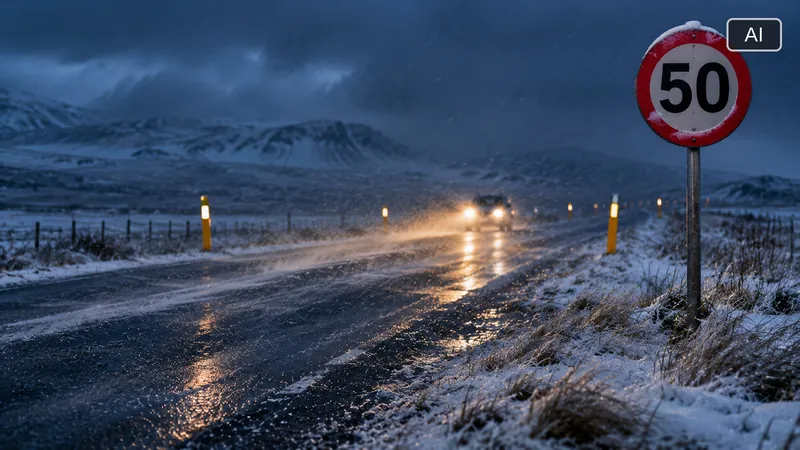
Winter is now closing in, and with it the most dangerous time of year on northern roads. In Reykjavík the sun now rises at about ten in the morning and sets at about half past four, and by Christmas there will be little more than four hours of daylight. Roads that were dry in September are now often wet, icy or covered in slush, and visibility can vanish in minutes when snow blows in. Running off the road is one of the most common kinds of serious crash on Iceland's rural roads, and in winter the margin for error is smaller still.
Ireland faces the same darkness. As the clocks went back, Assistant Garda Commissioner Denis Ferry asked drivers to look out for pedestrians and other vulnerable road users. Twenty-nine pedestrians have been killed on Irish roads this year.
Every figure here points the same way. Whether it is a young driver on a country road at midnight, a car sliding off an icy bend, or a pedestrian on a dark evening, the margin between getting home and not getting home is often a matter of a few kilometres an hour. Better roads and safer cars have saved thousands of lives, but they cannot make that choice for the driver.
The RSA's Sam Waide put it in two words: "slow down".
Sources
- Stjórnarráð Íslands — Minningardagur: Fræðsluátak og breytingar á umferðarlögum til að sporna við hraðakstri, 15 November 2026 – The minister's announcement on speeding and traffic law, and today's ceremonies (in Icelandic).
- mbl.is — Boðar breytingar á umferðarlögum, 15 November 2026 – The Reykjavík ceremony, the speakers, KK's song and the minister's address (in Icelandic).
- Stjórnarráð Íslands — Minningardagur: Fjórðungur landsmanna hefur misst náinn ættingja eða vin í umferðarslysi, 13 November 2026 – The Samgöngustofa survey and Iceland's road death figures since 1915 (in Icelandic).
- Akureyri.net — Fórnarlamba bílslysa minnst við athöfn í dag, 15 November 2026 – The ceremony in Akureyri (in Icelandic).
- Samgöngustofa — Sjónum beint að ungu fólki á minningardegi um fórnarlömb umferðarslysa, November 2026 – Young road users and speeding (in Icelandic).
- International Transport Forum (OECD) — Iceland road safety country profile – Traffic growth and the safety measures behind falling deaths.
- RTÉ — Significant increase in young people dying on Irish roads, 22 October 2026 – Irish road deaths among under-25s, the M9 crash and pedestrian deaths.
- Irish Examiner — Road deaths among young people up by 12 as RSA reform plan due within weeks, 22 October 2026 – Deaths among 16 to 25-year-olds and the Garda appeal on pedestrians.
- Dublin People — New RSA research highlights late night and early morning risk for young drivers, 8 October 2026 – The RSA study of young drivers in fatal crashes, 2021 to 2025.
- Nova — New learner driver rules to take effect tomorrow as road deaths rise, 30 October 2026 – The new learner permit rules and this year's death toll.
- World Health Organization — Despite notable progress, road safety remains urgent global issue, 13 December 2023 – Global road deaths and the WHO Director-General's comments.
- European Commission (Road Safety Charter) — EU road deaths drop by 3% in 2025, 24 March 2026 – EU road deaths in 2025 and the transport commissioner's comments.
- Brussels Times — EU road deaths drop slightly in 2025, but major safety goals at risk, March 2026 – Where EU road deaths happen: rural roads, towns and motorways.
- DGT — 2025 finaliza con 1.119 fallecidos en siniestros de tráfico en vías interurbanas, 8 January 2026 – Spain's 2025 road deaths and the interior minister's comments (in Spanish).
- UK Department for Transport — Reported road casualties Great Britain, 2025, 30 July 2026 – Road deaths and serious injuries in Britain in 2025.
- NHTSA — Early Estimate of Motor Vehicle Traffic Fatalities in 2025, April 2026 – The early estimate of US road deaths in 2025.
- Transport Canada — Canadian Motor Vehicle Traffic Collision Statistics: 2023 – Canada's road deaths in 2023.
Reporting note: This article is based on information from the Icelandic government and Samgöngustofa, mbl.is, Akureyri.net, RTÉ, the Irish Examiner, Dublin People and Ireland's Road Safety Authority, and on official figures and reports from the World Health Organization, the European Commission, Spain's traffic authority (DGT), the International Transport Forum (OECD), the UK Department for Transport, the US National Highway Traffic Safety Administration and Transport Canada. US figures for 2025 are an early estimate; Irish figures are provisional Garda figures. The Irish Examiner counted 38 deaths among 16- to 25-year-olds by 22 October; RTÉ's figure of 45 covers everyone under 25. Quotes from Icelandic and Spanish are translated by Fréttir 24/7.
This article was drafted with AI assistance and reviewed and edited by Fréttir 24/7's editorial team.
Tips, corrections or questions: ritstjorn@frettir247.news
More from Iceland
 ICELAND · EMERGENCY SERVICESIceland's 112 Down for an Hour Before the Storm14 November 2026
 ICELAND · CIVIL PROTECTIONThree Days, a Radio and Some Cash: Iceland Joins Europe's Preparedness Drive5 November 2026
 ICELAND · IMFIceland Takes the Floor for Eight Nations: Ásgeir Jónsson Presents Nordic-Baltic Position at IMF Meetings31 October 2026