Three Suitcases, 3,000 Tarantulas and Some Very Dirty Socks
Peruvian officials stopped three travellers at Lima airport carrying more than 3,000 live tarantulas packed into socks. Some of the spiders may belong to species that science has not yet named. The case says a lot about a trade that moves faster than the people trying to catalogue it.
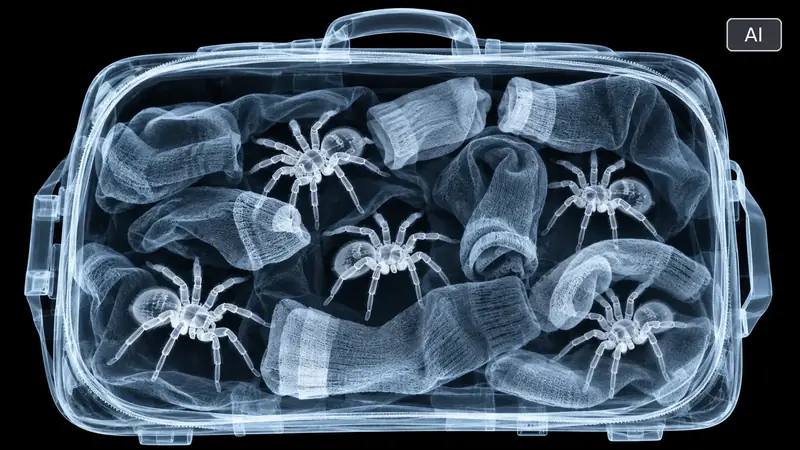
There are many reasons not to look inside a stranger's socks. At Jorge Chávez International Airport in Lima this week, officials from Peru's forestry and wildlife service found one more.
Acting on an anonymous tip-off received through the agency's reporting platform, officers from the service, known as SERFOR, together with environmental police and prosecutors, stopped three foreign travellers at check-in as they were about to board. In three suitcases they found more than 3,000 live tarantulas, packed into labelled socks.
"We noticed that some of them were moving," Cora Suárez, the SERFOR officer in charge of the airport's wildlife checkpoint, told AFP. "There were small ones and large ones."
The three, two German nationals and a Polish national, were detained and face criminal proceedings. Most reports say they were bound for Germany.
Eggs, hatchlings and adults
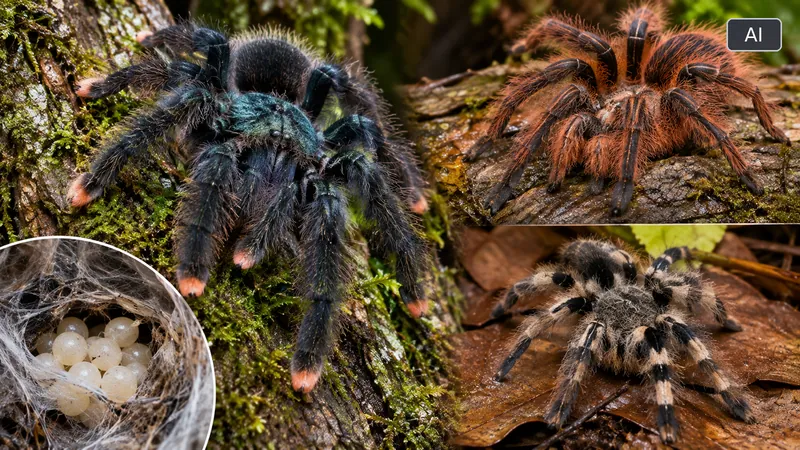
This was not a random grab from the forest floor. The spiders were at every stage of life, from eggs and hatchlings to adults, and came from at least five regions of Peru: Junín, Loreto, Cajamarca, Cusco and La Libertad. According to SERFOR, the traffickers made a careful selection of species, some of which may not yet have been described by science.
The identifications so far are preliminary. They include several species of Pamphobeteus, a genus of large South American tarantulas, among them Pamphobeteus antinous, which is listed as vulnerable under Peruvian law. There was also Thrixopelma lagunas, and spiders from the genera Antikuna and Avicularia, the tree-dwelling "pinktoes" popular with collectors, which experts are still examining.
That last point is what makes the case unusual. Smugglers usually take what the market already knows it wants. Here, if SERFOR's assessment holds, some animals were heading for European collections before biologists had given them a name.
A spider in a sock is worth €500
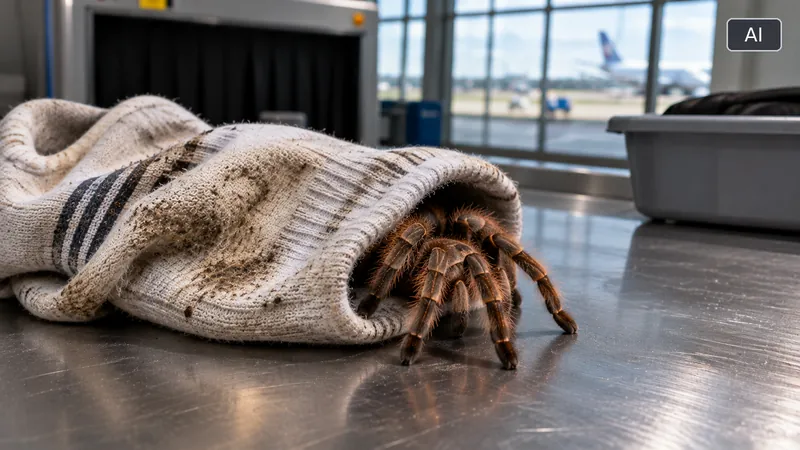
The economics explain the socks. Suárez told AFP that a single tarantula can sell for around €500 in Europe. A sock is cheap, soft and keeps a spider from meeting its neighbour, which matters, because tarantulas are not known for their tolerance of company.
How much the whole haul was worth is harder to say. Some outlets have multiplied the €500 by 3,000 and arrived at well over a million. That assumes every spider, egg and hatchling would have fetched the top price, which is unlikely. What is clear is that a few suitcases can carry a fortune, and that the risk-to-reward ratio is attractive to anyone willing to take it.
The trade nobody counts
Tarantulas are the forgotten end of the wildlife trade. Ivory and pangolins make headlines; spiders rarely do.
The most thorough study so far, published in the journal Communications Biology in 2022, searched the internet for arachnids offered for sale between 2000 and 2021. It found 1,264 species of spiders and scorpions being bought and sold, including more than half of all known tarantula species. Around two-thirds of the individuals traded were caught in the wild. And 79 per cent of the species on sale did not appear in the international trade databases at all. The authors noted that the CITES appendices, the international list of protected species, have only four entries for spiders.
In other words, most of this trade happens outside the rules, because there are hardly any rules to break internationally. That leaves countries such as Peru to enforce their own laws at their own airports.
For scale: Interpol's global Operation Thunder, which ran for a month in 2025 across 134 countries, seized nearly 10,500 butterflies, spiders and insects in total. The Lima suitcases alone held close to a third of that number.
Not the first time
Lima's airport has seen this before. In November 2024, officers there stopped a South Korean man who had 320 tarantulas, 110 centipedes and nine bullet ants strapped to his body. The wildlife made it no further than the departure hall then either.
What happens now
Under Peru's penal code, trafficking wild animals without permits is a crime, not just a customs offence. Where protected species are involved, the sentence can be between four and seven years in prison. No formal charges have been reported yet, and the three have not been named.
The spiders themselves will stay in official custody until experts have finished identifying them. They will then be moved to an authorised breeding centre. For any undescribed species among them, that could mean the first time scientists get a proper look at them was courtesy of a smuggler's laundry.
SERFOR's message to the public was simple: "Don't buy into a crime." For anyone tempted by a rare spider online, the question worth asking is not only how much it costs, but how it got there.
Sources
- Infobae Perú — Extranjeros intentaron sacar del Perú más de 3000 tarántulas ocultas en maletas, 5 November 2026 – The tip-off, the agencies involved, the species identified, the regions of origin and the legal framework.
- Caretas — Tres extranjeros son detenidos en el Jorge Chávez cuando intentaban sacar más de 3000 tarántulas del Perú, 5 November 2026 – SERFOR's account of the arrests and the vulnerable status of Pamphobeteus antinous.
- Euronews (AFP) — Trio suspected of attempting to smuggle 3,000 tarantulas into Germany, 6 November 2026 – Cora Suárez's comments to AFP and the estimated price of a tarantula in Europe.
- Gizmodo — Authorities at Lima airport find more than 3,000 tarantulas hidden in dirty socks, 6 November 2026 – The SERFOR statement in English, the life stages found and the spiders' fate.
- Communications Biology — Searching the web builds fuller picture of arachnid trade, 2022 – Marshall et al.: 1,264 arachnid species in trade, the share caught in the wild and the gaps in trade databases.
- Natural History Museum, London — Demand for exotic pets risks spider and scorpion extinctions, May 2022 – Summary of the study, including the four spider entries in the CITES appendices.
- Interpol — 30,000 live animals seized in global operation against wildlife and forestry crime, December 2025 – Operation Thunder 2025: 134 countries and about 10,500 butterflies, spiders and insects seized.
- Korea JoongAng Daily — Korean man arrested at Peru airport with tarantulas, centipedes and bullet ants strapped to body, November 2024 – The 2024 case at the same airport.
- El Peruano — Ley N.° 31622, 2022 – The official text of the Penal Code amendment setting four to seven years' prison for aggravated wildlife crimes.
Reporting note: This article is based on statements by Peru's National Forestry and Wildlife Service (SERFOR) as reported by Peruvian media and AFP, the official text of Peru's Penal Code, peer-reviewed research and Interpol data. The suspects have not been named and have not been charged. Species identifications are preliminary. The illustrations are AI-generated.
This article was drafted with AI assistance and reviewed and edited by Fréttir 24/7's editorial team.
Tips, corrections or questions: ritstjorn@frettir247.news