
US Midterm Elections 2026: Trump Faces a Crucial Test as Control of Congress Goes to the Voters
Americans head to the polls on November 3 to elect all 435 members of the House of Representatives and decide 35 Senate contests. With Republicans holding narrow congressional majorities and voters increasingly concerned about living costs, healthcare and foreign policy, the midterms could significantly reshape Donald Trump's remaining two years in the White House.
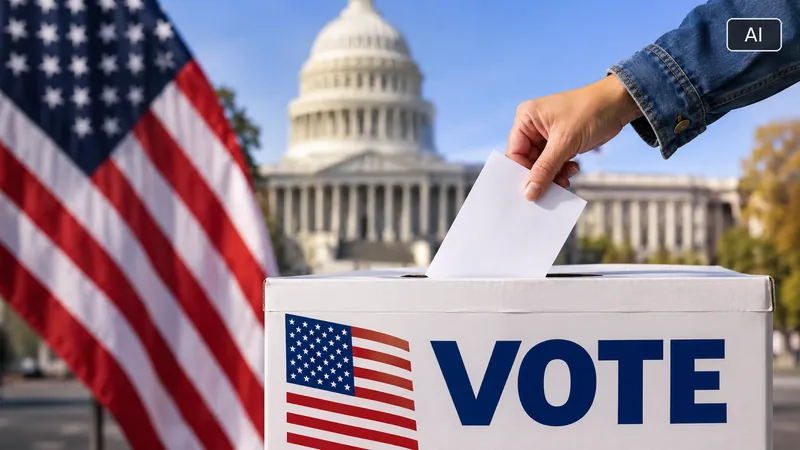
An election that could reshape Washington
The United States is approaching one of the most consequential political tests of Donald Trump's second presidency.
On Tuesday, November 3, American voters will elect a new House of Representatives, vote in 35 Senate contests and decide numerous state and local elections. The results will determine whether Republicans retain control of Congress or Democrats gain the power to challenge the administration more directly during the final two years of Trump's current presidential term.
Although midterm elections do not determine who occupies the White House, they can substantially change how the federal government operates. A president who loses control of either chamber of Congress can face greater resistance to legislation, government spending proposals, political appointments and major policy initiatives.
The 2026 election is therefore about more than individual congressional candidates. It is also a nationwide assessment of the direction of the country under Trump's leadership.
What exactly are Americans voting for?
The American Congress consists of two separate chambers: the House of Representatives and the Senate. Both participate in making federal laws, approving government spending and overseeing the executive branch, but they have different responsibilities and electoral arrangements.
The House of Representatives has 435 voting members. Each represents a congressional district, and the number of representatives allocated to each state depends on its population. All 435 seats are contested every two years.
The Senate has 100 members, with two representing each of the 50 states regardless of population. Senators serve six-year terms, and approximately one-third of the chamber faces election every two years.
On November 3, 33 regularly scheduled Senate seats will be contested, alongside two special elections in Florida and Ohio. This brings the total number of Senate contests to 35.
The difference between the two chambers is important. The House reflects population distribution, while the Senate gives every state equal representation. Consequently, a party can win more votes nationally without necessarily controlling both chambers.
For international observers, this is one of the defining features of the American political system.
The current balance of power
Republicans enter the election controlling both chambers of Congress.
In the Senate, Republicans hold 53 seats, compared with 45 Democrats and two independents who caucus with the Democrats. This gives Republicans an effective 53–47 advantage.
Democrats therefore need a net gain of four seats to secure a Senate majority.
The House is even more closely divided. Its current composition is 218 Republicans, 214 Democrats, one independent and two vacant seats. Republicans hold a narrow working majority, and Democrats need a net gain of three seats to take control.
This means relatively small changes in a limited number of constituencies could determine which party controls Congress.
The Republican position is particularly exposed in the House, where a national political shift can quickly translate into the loss of several competitive districts.
The Senate races attracting the most attention
Although 35 Senate contests are taking place, the balance of power is likely to be decided by a much smaller group of competitive states.
Among the most closely watched are Alaska, Texas, Kansas, Iowa, Ohio, Michigan and Maine.
In Alaska, Democratic challenger Mary Peltola is attempting to unseat Republican Senator Dan Sullivan. The race has attracted national attention not only because of its political importance but also because of a second candidate on the ballot named Dan Sullivan. The New York Times reported that text messages among Peltola campaign members discussed recruiting a namesake candidate. Her campaign says it has no involvement with either Sullivan campaign, and Peltola called the report a distraction. The Justice Department has filed a lawsuit seeking to halt certification of a possible Peltola win.
Texas is another major battleground. Republican Attorney General Ken Paxton, who defeated Senator John Cornyn in a May primary runoff, faces Democratic candidate James Talarico in a state where Democrats have struggled to win statewide elections for decades. A Democratic victory would represent a significant political development.
Kansas has also emerged as an unexpectedly competitive contest. Republican Senator Roger Marshall faces Democratic challenger Adam Hamilton. A potential Democratic victory in a traditionally Republican state would be an important indication of the strength of the national political environment.
In Iowa, the Senate contest has attracted attention because polling has suggested a much closer race than Republicans might normally expect in the state.
Ohio is another important battleground, with Republican Senator Jon Husted facing Democrat Sherrod Brown. The contest also reflects wider debates about industrial employment, economic policy, artificial intelligence infrastructure and the future of manufacturing.
Michigan presents another closely watched race, where Democrat Abdul El-Sayed faces Republican Mike Rogers. Internal Democratic divisions have complicated the final stage of the campaign.
In Maine, Republican Senator Susan Collins faces Democratic challenger Troy Jackson, who was nominated at a party convention in July after primary winner Graham Platner withdrew. Collins has a long political record and has previously demonstrated an ability to attract support beyond the traditional Republican electorate.
These contests are important because Democrats need to overcome a four-seat Republican advantage in the Senate. Even a strong national performance may not be sufficient if they fail to win several of the Republican-held battlegrounds.
The House: a nationwide political contest
The battle for the House is spread across the country.
All 435 districts are voting, meaning that every seat is at stake. However, most districts are not considered genuinely competitive.
Ballotpedia has identified 46 districts as battleground contests, while an NPR analysis published on October 29 identified a much wider campaign environment, with substantial spending in approximately 70 districts.
Competitive districts in states such as Michigan, North Carolina, New York, Florida and California are attracting significant attention and campaign resources.
The House election is particularly sensitive to national political sentiment. Midterm elections frequently produce losses for the party occupying the White House, as voters use congressional elections to express approval or dissatisfaction with the president.
Democrats are hoping to turn dissatisfaction with the administration into enough victories in individual districts to regain the chamber.
Republicans, meanwhile, are trying to defend their narrow majority by keeping their supporters engaged and persuading voters that the administration's economic and political programme deserves continued congressional support.
The economy and cost of living dominate the campaign
Economic concerns have emerged as the central issue of the 2026 midterms.
Inflation, housing, food prices, gasoline and healthcare expenses are all influencing the political debate.
For many American households, the issue is not simply whether inflation is rising or falling. It is whether everyday expenses remain affordable after several years of accumulated price increases.
A recent Reuters/Ipsos survey found that approximately half of registered voters considered the cost of living the most important factor influencing their congressional vote.
Gallup's October 29 research provides further evidence of the importance of economic issues. Fifty per cent of registered voters said the economy was extremely important to their vote, while the same proportion identified healthcare as extremely important.
Gasoline prices have become particularly sensitive following the military conflict involving Iran. Higher energy costs have affected household budgets and added to concerns about the administration's economic policies.
Employment and wages also remain part of the wider debate. Voters are considering whether economic growth is translating into better opportunities, stable employment and improved purchasing power.
Republicans argue that their tax legislation and economic policies are intended to encourage investment and growth. Democrats have focused on household affordability, healthcare costs and the distribution of economic benefits.
The political challenge for the administration is that voters judge economic performance not only through national economic indicators but also through their own financial circumstances.
Healthcare, immigration and public safety
Healthcare is another major electoral issue.
Republicans have defended legislation extending tax cuts while reducing federal expenditure on Medicaid and other health programmes. Democrats have criticised the reductions, arguing that they could place additional pressure on lower-income households and people who depend on government-supported healthcare.
The future of health insurance subsidies and the cost of medical treatment have also featured in the wider congressional debate.
Immigration remains one of the most divisive subjects in American politics.
The Trump administration has emphasised stricter border enforcement and a substantial reduction in migrant apprehensions at the US-Mexico border. Preliminary Department of Homeland Security figures cited by Reuters indicated a 95 per cent decline compared with the previous administration's figures.
Republicans present this as evidence that tougher enforcement is working.
Democrats have raised concerns about the methods used by federal immigration authorities, enforcement funding and incidents involving federal agents. The issue has become particularly controversial following fatal encounters involving immigration officials.
Both parties have attempted to present themselves as offering the more credible approach to border security, public safety and immigration enforcement.
Trump's influence on the election
Donald Trump is not personally standing for election, but his influence is central to the campaign.
The president has repeatedly encouraged voters to treat the midterms as a judgement on his administration. He has appeared at campaign events and has made his political record an important part of Republican messaging.
However, his approval ratings have created difficulties for Republican candidates in competitive constituencies.
A Reuters/Ipsos poll completed on October 26 placed Trump's overall approval rating at 32 per cent, one point above a record low the previous week. In the same survey, Democrats led Republicans by 47 per cent to 36 per cent among registered voters on the national congressional preference question, or by 50 per cent to 41 per cent when undecided voters leaning towards a party were included.
These figures should not be interpreted as a prediction of the final election result. The national congressional preference question, commonly known as the generic ballot, asks voters which party they would support in their own congressional district without necessarily naming individual candidates.
Nevertheless, the figures suggest a difficult national environment for Republicans.
Trump's supporters remain an important part of the Republican electoral base. His administration's policies on immigration, taxation, government spending and national security continue to motivate many conservative voters.
At the same time, dissatisfaction among independent voters and some former supporters could influence close races.
The election will therefore test whether Trump's political influence remains sufficient to protect Republican candidates in states and districts where the national environment appears to favour Democrats.
Foreign policy becomes a domestic election issue
Foreign policy has also become unusually important in this election.
The conflict involving Iran, higher energy prices, trade tariffs and relations with international partners have all entered the domestic political debate.
The economic consequences of international decisions are particularly important. Higher fuel prices and concerns about inflation can affect voters who might otherwise pay limited attention to foreign policy.
Gallup's October 29 survey found that 47 per cent of registered voters considered the situation in Iran extremely important to their congressional vote.
The Chicago Council on Global Affairs has also reported that Americans increasingly connect foreign policy decisions with economic conditions at home.
For international readers, this is an important development. Decisions involving military action, trade relationships and energy security are not being debated solely as matters of international strategy. They are also being judged through their impact on American household finances.
The election could influence congressional funding decisions and oversight of the administration's foreign policy, although a change in congressional control would not automatically transfer the president's constitutional foreign policy powers to Congress.
What happens if Democrats win control?
A Democratic victory in either chamber would change the political environment in Washington.
If Democrats regain the House, they would control its leadership and committee structure. This would give them greater influence over which legislation reaches the floor and which issues receive congressional investigation.
House committees could examine administration decisions, government expenditure, immigration enforcement, foreign policy and the conduct of federal agencies.
Democrats could also use their control of the chamber to block or delay legislation supported by the president.
If Democrats also win the Senate, the administration would face a more substantial obstacle to implementing its legislative programme.
The Senate plays a central role in confirming many presidential appointments, including senior executive officials and federal judges. Control of the chamber therefore has consequences extending beyond ordinary legislation.
However, even with control of Congress, Democrats would not automatically be able to reverse presidential policies. The president retains important executive powers, and legislation generally requires approval from both chambers and the president, subject to the constitutional veto process.
A divided Congress could also create difficulties over government funding, increasing the possibility of political confrontations and temporary government shutdowns.
For Trump, losing control of Congress would mean spending the final two years of his presidency negotiating with a more independent legislature rather than relying on Republican majorities.
The final weekend: early voting and election disputes
The campaign entered its final weekend with unusually high early-voting participation.
Reuters reported on October 31 that more than 51 million Americans had already voted in person or by mail, exceeding the nearly 46 million who voted before Election Day in the 2022 midterms.
The Associated Press had separately reported more than 43 million early votes five days before Election Day, based on a different reporting snapshot and coverage of 47 states and Washington, DC.
The increase has been particularly pronounced in several competitive states, including Texas, Maine, Michigan, Kansas and South Carolina.
However, early-voting figures cannot be treated as a reliable prediction of the final result. They do not necessarily reveal candidate preferences, and participation patterns differ between states and political groups.
Election administration has also become a subject of national controversy.
The Justice Department has pursued legal action concerning voter registration records in several states. On October 26, a federal appeals court rejected, by two votes to one, the department's emergency request to set aside about 20,000 California mail ballots cast by voters it suspects are not citizens; California officials dispute the department's list, and the case returned to a lower court.
In Alaska, the dispute over the second Dan Sullivan on the ballot, and the Justice Department's lawsuit linked to it, has become another significant late-campaign development.
These disputes underline the importance of public confidence in election administration. Reuters reported that 76 per cent of voters surveyed were confident their ballots would be counted accurately.
What happens after November 3?
Election night does not necessarily produce final results.
When polling stations close, officials begin reporting preliminary vote totals. Media organisations may project winners when the available evidence is sufficiently clear, but these projections are not official certifications.
The United States has no single national election authority responsible for administering all federal elections. State and local authorities manage voting, counting and certification under their respective laws.
Mail ballots, provisional ballots and votes from military and overseas voters may take additional time to process, depending on state regulations.
Election officials subsequently conduct a process known as the canvass. This involves reconciling ballots, checking records and ensuring that eligible votes have been included. Many jurisdictions also conduct post-election audits.
Once the required procedures have been completed, the appropriate state authorities certify the results.
Close contests may involve recounts or legal challenges, potentially extending the time before a final result is established.
The newly elected Congress is scheduled to begin its next session on January 3, 2027.
Until then, the existing Congress remains in office.
A defining moment for Trump's second presidency
The November 3 midterms represent a major test for Donald Trump, his administration and the Republican Party.
Republicans are attempting to preserve control of Congress despite a difficult national polling environment and widespread concerns about household costs. Democrats see an opportunity to regain legislative influence and introduce greater scrutiny of the administration.
The House appears particularly vulnerable to a change in control, while the Senate presents a more complicated electoral challenge because Democrats must overcome a four-seat Republican advantage.
For international observers, the consequences extend well beyond Washington.
The balance of power in Congress can influence American trade policy, military spending, foreign aid, immigration legislation, economic policy and the country's ability to maintain consistent international commitments.
The result will not determine the direction of American foreign policy on its own, nor will it remove the president from office. But it could fundamentally change the political conditions under which the United States is governed.
On November 3, American voters will decide whether Trump's Republican Party retains the legislative support it has enjoyed during his second presidency, or whether Washington enters a new period of divided government.
Sources
- Reuters — US campaign for control of Congress enters final weekend, 31 October 2026 – Final-week developments, early-voting totals, voters' confidence in the count and the immigration figures cited.
- Reuters (via GV Wire) — Trump approval rises from record low to 32% ahead of midterm election, Reuters/Ipsos poll finds, 26 October 2026 – Trump's approval rating and the national congressional preference figures.
- Reuters — Three issues defining the 2026 US midterm elections, 20 October 2026 – The cost of living, immigration and Trump's influence on the campaign.
- Associated Press (via News4Jax) — Report: Peltola's campaign involved in effort to recruit second Dan Sullivan, 28 October 2026 – The Alaska namesake dispute, the campaign's response and the Justice Department lawsuit.
- Straight Arrow News — Appeals court rejects Trump administration push to set aside 20,000 California mail ballots, 27 October 2026 – The Ninth Circuit's 2–1 ruling of 26 October.
- House Press Gallery — party breakdown of the House of Representatives – 218 Republicans, 214 Democrats, one independent and two vacancies.
- Gallup — The issues voters say matter in the midterm, 29 October 2026 – The share of registered voters rating the economy, healthcare and Iran as extremely important.
- Ballotpedia — United States Senate elections, 2026 – The 33 regular and two special Senate elections.
- NPR (via OPB) — What House races are competitive in the 2026 midterm election, 29 October 2026 – Competitive House districts and campaign spending.
- Fox 2 Detroit — Maine's 2026 Senate race: Susan Collins vs. Troy Jackson – Troy Jackson's nomination after Graham Platner's withdrawal.
- US Election Assistance Commission — Election results, canvass and certification – How votes are counted, canvassed and certified.
Reporting note: This article was prepared before Election Day using reporting and survey data available on 31 October 2026. Polls are survey findings, not forecasts, and early-voting figures show participation, not support for any party. Fréttir 24/7 will update the coverage as results are confirmed.
Tips, corrections or questions: ritstjorn@frettir247.news
More from World
 WORLD · GERMANYGermany's Generation Z Takes to the Streets: Anger Over Military Service, Education and an Uncertain Future31 October 2026
 WORLD · EUROPEEurope Burns? France’s October Riots Expose a Crisis of Public Order30 October 2026
 WORLD · POLANDPoland's Constitutional Crisis Deepens as President Nawrocki and Prime Minister Tusk Clash Over Control of the Judiciary31 October 2026