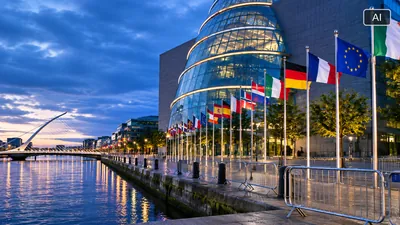
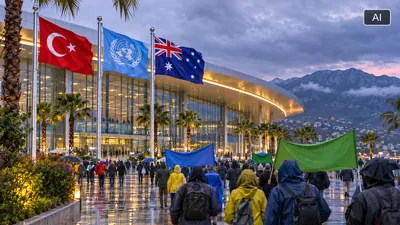
Manila Rolls Out the Welcome as Leaders Arrive for ASEAN
Leaders from Southeast Asia and far beyond landed in Manila on Saturday for the 49th ASEAN summit. Donald Trump will arrive late, on the final day.
Update, 21 November 2026: Australia and the Philippines signed the new Defence Cooperation Arrangement in Manila on 15 November. It updates a 1995 agreement and is meant to make joint patrols, exercises and disaster relief easier to organise.
The planes started landing on Saturday. By the evening the leaders of Indonesia, Malaysia, Thailand, Brunei, Laos, Vietnam and Timor-Leste had arrived in the Philippine capital for the 49th summit of the Association of Southeast Asian Nations (ASEAN), which runs from Sunday 15 to Tuesday 17 November.
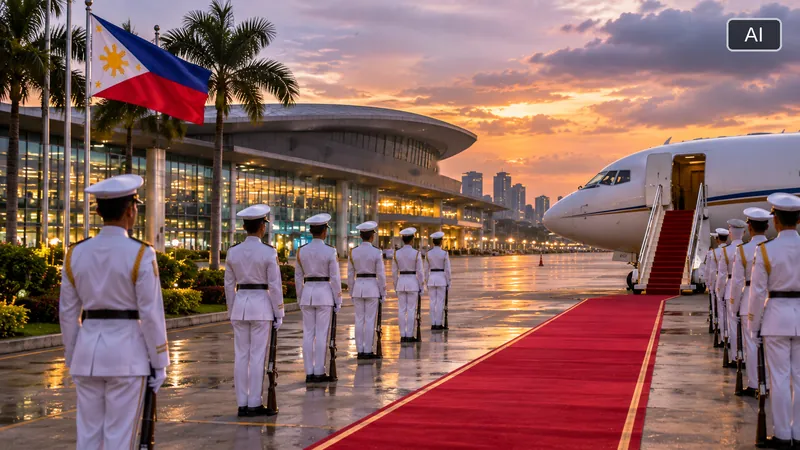
Each was met on arrival by a member of President Ferdinand Marcos Jr.'s cabinet. Indonesia's President Prabowo Subianto was greeted by the education secretary, Thailand's Prime Minister Anutin Charnvirakul by the justice secretary and Malaysia's Prime Minister Anwar Ibrahim by the interior secretary. Brunei's Sultan Hassanal Bolkiah, Laos's Prime Minister Saleumxay Kommasith, Vietnam's Prime Minister Le Minh Hung and Timor-Leste's Prime Minister Xanana Gusmão, whose country joined ASEAN last year, also arrived during the day. Cambodia is represented by a deputy prime minister, because Prime Minister Hun Manet is chairing the summit of French-speaking countries in Phnom Penh.
Guests from far away
Not all the visitors are Southeast Asian. Canada's Prime Minister Mark Carney was the first to arrive. He met Marcos the same day, and the two signed a joint statement committing to a free trade agreement by 2027. Australia's Prime Minister Anthony Albanese is expected to sign a defence cooperation agreement with the Philippines.
Brazil's President Luiz Inácio Lula da Silva flew in on Friday for a state visit, straight from the climate talks in Antalya, and will attend Sunday's plenary as the chair's guest. Brazil is seeking full status as an ASEAN dialogue partner. The UN Secretary-General, António Guterres, arrived on Saturday evening for the opening ceremony and a summit between ASEAN and the UN on Monday. The Philippine foreign secretary, Ma. Theresa Lazaro, has confirmed that India's Prime Minister Narendra Modi and Japan's Prime Minister Sanae Takaichi will also come.
Trump on the last day
US President Donald Trump will land only hours before the closing ceremony on 17 November, but he will attend a special summit between ASEAN and the United States that day and stay in Manila until 19 November. "The Asean Summit will proceed as scheduled, even though US President Donald Trump will arrive late," said Claire Castro, the presidential palace's press officer.
From Manila Trump travels to China for the APEC summit in Shenzhen. China's foreign ministry has said it is "in communication with relevant parties" about a first meeting between Trump, Xi Jinping and Vladimir Putin there. Nothing has been confirmed.
Four-fifths of a rulebook
The Philippines has set three priorities for its year in the chair: peace and security, prosperity, and people empowerment. The item most likely to define the summit is a code of conduct for the South China Sea.
For more than two decades the two sides have been trying to agree a code of conduct for those waters. In 2002 ASEAN and China signed a non-binding declaration on how parties should behave there, meant to lead to a fuller code. Progress was slow for years, and in 2024 ASEAN set itself a target of finishing the talks by 2026.
This week the numbers moved. On Friday the Philippine foreign ministry's spokesperson for ASEAN affairs, Dax Imperial, said the code was 70% complete. On Saturday, the day the foreign ministers met, Foreign Secretary Ma. Theresa Lazaro put it at 80%, saying progress had been "hastened" during the Philippines' year in the chair. After all this time, the negotiators are now working on the last fifth of the text rather than arguing over whether to have one.
That last fifth holds the hardest questions. According to the foreign ministry, four remain: how the code relates to the 2002 declaration, whether it will be legally binding, which waters it covers, and how terms such as "self-restraint" are defined. ASEAN members have long wanted a binding code; China has preferred a more flexible one. The Philippines also wants the rights of countries outside the talks to be respected.
Getting this far has needed every side at the table: the ten long-standing ASEAN members, newer member Timor-Leste, and China. Imperial would not say whether the code will be finished this year, but said all parties are committed to continuing the talks. Some in the region urge patience, arguing that a strong code matters more than a fast one.
Leaders will also review the bloc's five-point peace plan for Myanmar. At the end of the summit the Philippines will hand the ASEAN chairmanship for 2027 to Singapore.
Sources
- Euronews — Australia and Philippines sign new defence pact amid South China Sea tensions, 15 November 2026 – The signing and what the agreement covers.
- Inquirer — PH, Australia sign new pact streamlining security cooperation, 15 November 2026 – The 1995 agreement it replaces.
- GMA News — Indonesia, Thailand, Malaysia leaders arrive for 49th ASEAN Summit, 14 November 2026 – The arrivals and who welcomed each leader.
- Bernama — ASEAN, partner leaders arrive in Manila for 49th ASEAN Summit, 14 November 2026 – The full list of leaders, the guests and the agenda.
- The Manila Times — World leaders here for Asean Summit, 15 November 2026 – Canada's trade commitment, Australia's defence agreement and Donald Trump's schedule.
- GMA News — ASEAN leaders to arrive in PH starting Nov. 14 for 2026 summit – The summit schedule.
- PTV News — PH begins ASEAN 2026 chairship – The three priorities of the Philippine chairmanship.
- AP, via The Korea Times — China confirms discussions underway on historic Xi-Trump-Putin meeting, 7 November 2026 – China's statement on a possible three-way meeting in Shenzhen.
- The Manila Times — COC on South China Sea now 80% done, says DFA, 14 November 2026 – Foreign Secretary Ma. Theresa Lazaro on the progress of the code of conduct.
- Philippine News Agency — South China Sea COC negotiations 70 percent complete, 13 November 2026 – The four remaining issues and the commitment of all parties to continue.
- VOA, via GlobalSecurity.org — ASEAN aims to conclude South China Sea code of conduct by 2026, 12 June 2024 – The 2026 target for concluding the talks.
- East Asia Forum — ASEAN's elusive code of conduct for the South China Sea (Jaime Naval, University of the Philippines) – The history of the talks since the 2002 declaration.
- The Jakarta Post — Line in the sand: ASEAN must choose substance over speed in the South China Sea (Endy Bayuni), 30 July 2026 – The argument for a strong code over a fast one (opinion).
Reporting note: This article is based on reporting by GMA News, Bernama, The Manila Times, the Philippine News Agency and AP, with background from VOA, East Asia Forum and The Jakarta Post. Fréttir 24/7 will report on the outcome of the summit.
This article was drafted with AI assistance and reviewed and edited by Fréttir 24/7's editorial team.
Tips, corrections or questions: ritstjorn@frettir247.news