
Iceland Holds Interest Rates at 8% as Inflation Reaches 5.9%
Iceland’s Central Bank is maintaining high interest rates as policymakers seek to bring inflation under control while economic activity slows.
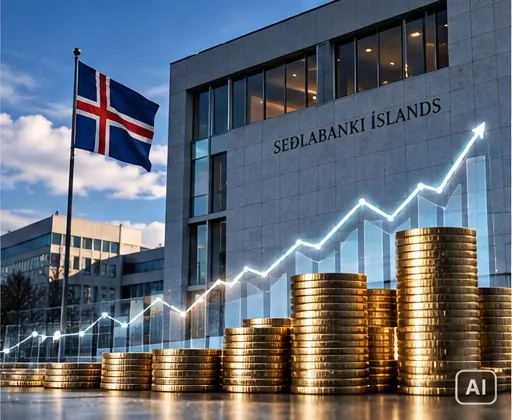
The Central Bank of Iceland has kept its key policy rate at 8.00%, citing persistent inflation and elevated inflation expectations despite signs of slowing economic activity.
The Monetary Policy Committee announced the decision on 7 October 2026, with all members supporting it. In its statement, the Bank reported that inflation had reached 5.9%, its highest level in two years.
Why interest rates matter
Interest rates influence how much households and businesses pay to borrow money. Higher rates can increase borrowing costs, including for some mortgage holders, while making saving more attractive, depending on the terms offered by financial institutions.
By making borrowing more expensive, a central bank can help moderate demand and reduce inflationary pressure over time. The effects are not immediate, however, and vary between households, businesses and different types of loans.
What is driving inflation?
The Central Bank said the latest increase in measured inflation had been influenced primarily by the conflict in the Middle East and higher public charges.
Underlying inflation, which helps economists assess broader price pressures, had remained relatively stable at slightly above 4% for some time. Nevertheless, the Bank said both measured and underlying inflation remained too high, while inflation expectations were also elevated.
The Bank also noted that economic activity was clearly slowing. It said most indicators pointed towards inflation easing relatively quickly in 2027, although considerable uncertainty remained, particularly around international economic developments and Iceland’s labour market.
This is a forecast rather than a guarantee. Future inflation and interest-rate decisions will depend on how economic conditions develop.
What happens next?
The Central Bank says monetary policy will continue to depend on developments in economic activity, inflation and inflation expectations.
For households and businesses, the outlook will depend partly on how prices, wages and borrowing costs evolve. The Bank’s assessment indicates that reducing inflation remains a priority, even as policymakers monitor the effects of high interest rates on the wider economy.
On 21 October, the Central Bank published the minutes of the Monetary Policy Committee’s meeting on 5–6 October. The meeting minutes provide further detail on the committee’s discussion and the reasoning behind its decision.
The next policy rate decision is scheduled for 18 November 2026, according to the Central Bank’s published calendar.
Primary sources: Central Bank of Iceland monetary policy statement, 7 October 2026; meeting minutes, published 21 October 2026.
This article summarises the Central Bank’s published material and adds general educational context about interest rates and inflation. It does not constitute financial advice.
Update note: Updated on 24 October 2026 to include a link to the published meeting minutes. The policy decision described in the article was announced on 7 October.
Tips, corrections or questions: ritstjorn@frettir247.news
More from Iceland
 ICELAND · IMFIceland Takes the Floor for Eight Nations: Ásgeir Jónsson Presents Nordic-Baltic Position at IMF Meetings31 October 2026
 ICELAND · FOREIGN AFFAIRSUS Secretary of State Marco Rubio Visits Iceland: Höfði Hosts a New Chapter in Iceland-US Relations30 October 2026
 ICELAND · VOLCANOESIceland’s Volcanoes Are Quiet — But Magma Continues to Build Beneath Reykjanes30 October 2026