Iceland at COP31: AMOC, a Threat to National Security
Iceland's climate minister told the talks in Antalya that a weaker Gulf Stream system threatens national security, and put money into watching it.
For most countries at the UN climate conference in Antalya, the debate is about emissions targets and money. Iceland brought a more specific worry: the ocean currents that keep the country habitable.
"Tipping points do not wait for political consensus," the Minister for the Environment, Energy and Climate, Jóhann Páll Jóhannsson, told the conference in his speech on Tuesday.
The negotiations themselves are covered in COP31's Final Days: A Draft Deal and Deep Divisions.
The system that keeps Iceland warm
Iceland's main concern is the Atlantic Meridional Overturning Circulation, or AMOC (veltihringrás Atlantshafsins). It is a vast system of ocean currents that includes the Gulf Stream. Warm surface water flows north towards Iceland and Greenland, where it cools, becomes heavier and sinks, drawing more warm water after it. The warmth the sea gives off is carried over Iceland and northern Europe by the westerly winds. It is a large part of the reason Iceland is far milder than its latitude would suggest.
Scientists warn that warming and fresh meltwater from Greenland could weaken the system, and that it could pass a tipping point beyond which the change is sudden and hard to reverse. In his speech the minister said that above 1.5C of global warming, the risk of crossing such tipping points grows, with sudden, irreversible and cascading effects. For Iceland, he said, these are not distant scientific questions but "questions directly connected to our security, our livelihoods and our future".
Treated as a security risk
Iceland has taken the issue further than most countries. In September 2025 the government referred the risk from changes to the AMOC to its National Security Council. The minister then appointed an expert group on climate tipping points, which is due to report soon. In October this year a scenario exercise brought together many parts of the government to assess where Iceland is vulnerable and how it could respond.
On Wednesday Iceland hosted an event on tipping points and climate risk at COP31, together with the Nordic Council of Ministers. Speakers included the European Commissioner for oceans and fisheries, Costas Kadis, Norway's minister of climate and environment, Sigrun Aasland, and the climate scientists Johan Rockström, Stefan Rahmstorf, Mike Meredith and Bill Hare.
Money for measuring the ocean
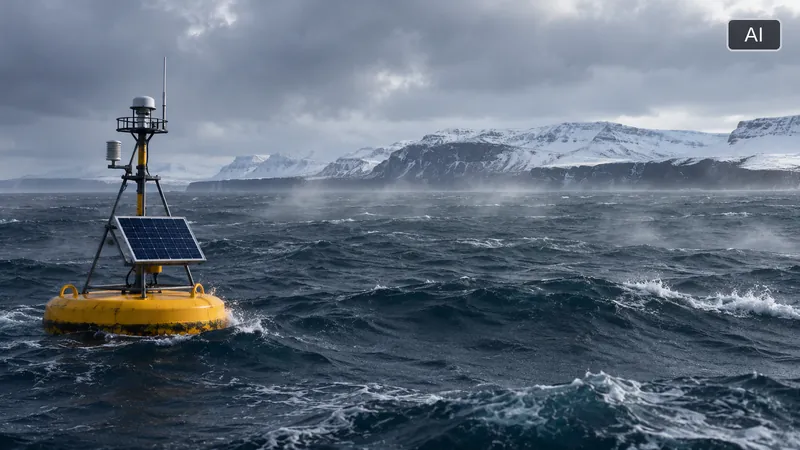
The minister also announced new funding. Iceland will contribute 5 million krónur a year to the Global Ocean Observing System, through the EU-led OceanEye International Alliance, and raise its annual contribution to UNESCO's Intergovernmental Oceanographic Commission from 7 to 10 million krónur.
"We need continuous measurements, open data sharing and international cooperation," he said. The ministry says Iceland's decades of ocean and environmental monitoring put it in a strong position to contribute to research on the North Atlantic, and it plans to link its measurements more closely to international systems.
Geothermal energy in the spotlight
The minister's other theme was energy. Recent international tensions, he said, have shown the risk of relying on imported fossil fuels, and faster building of clean energy improves both energy security and climate security.
"Geothermal energy has never before received as much attention at a UN climate conference as it does now," he said. "No single nation has all the knowledge, technology and investment capacity needed to use geothermal energy worldwide." Iceland and New Zealand have worked together on geothermal research and drilling technology since signing an agreement at last year's conference in Belém, and Iceland's UNESCO-affiliated GRÓ Geothermal Training Programme has trained hundreds of specialists from around the world.
Sources
- Stjórnarráð Íslands — Vendipunktar bíða ekki eftir pólitískri samstöðu, 17 November 2026 – The minister's speech at COP31: tipping points, energy security and geothermal energy (in Icelandic).
- Stjórnarráð Íslands — Ísland eykur framlög til hafvöktunar og leiðir umræðu um loftslagsvendipunkta sem þjóðaröryggishættu, 18 November 2026 – The National Security Council, the new ocean monitoring funds and the COP31 event (in Icelandic).
Reporting note: This article is based on two statements from Iceland's Ministry for the Environment, Energy and Climate, published on 17 and 18 November 2026. The description of how the AMOC works is general scientific background. The minister's quotes are translated from Icelandic by Fréttir 24/7.
This article was drafted with AI assistance and reviewed and edited by Fréttir 24/7's editorial team.
Tips, corrections or questions: ritstjorn@frettir247.news