
Iran and the United States: Why Is Diplomacy Still So Difficult?
As Qatar works to bridge the divide between Washington and Tehran, two familiar disputes remain at the centre of negotiations: Iran's nuclear programme and freedom of navigation through the Strait of Hormuz.
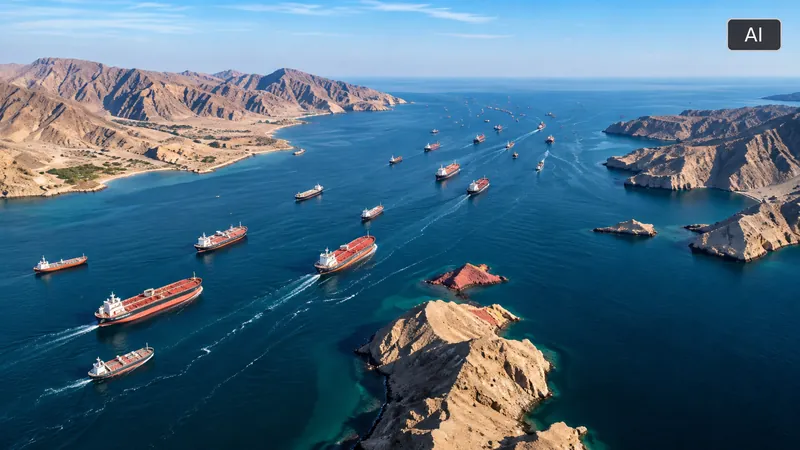
WASHINGTON / TEHRAN — After years of negotiations, international agreements, sanctions and increasingly serious military confrontations, the United States and Iran are once again communicating through intermediaries.
This time, Qatar is playing a central role.
The Gulf state has been passing proposals and responses between Washington and Tehran in an effort to find a diplomatic settlement to the conflict that began in February 2026. Pakistan and other regional governments have also participated in efforts to prevent further escalation.
Yet the underlying disagreements remain remarkably familiar.
Washington wants enforceable restrictions on Iran's nuclear programme and reliable access for international inspectors. It also wants commercial vessels to be able to navigate the Strait of Hormuz without threats or politically imposed restrictions.
Iran wants relief from American economic sanctions, an end to the US blockade of its ports and assurances that concessions will not simply be followed by renewed military pressure.
The objectives are clear enough. Finding an acceptable order in which to achieve them has proved considerably harder.
Why Qatar is carrying the messages

For countries that maintain normal diplomatic relations, disagreements can be discussed directly through embassies, foreign ministries and regular meetings between officials.
The United States and Iran have not had formal diplomatic relations since 1980, following the Iranian Revolution and the hostage crisis at the American embassy in Tehran.
That rupture has shaped relations ever since.
Successive administrations in Washington and Tehran have relied on intermediaries when direct communication became politically difficult or impractical. Oman, Switzerland and other countries have played important roles at different times.
Qatar has emerged as a particularly important intermediary during the present conflict because it maintains working relationships with both sides.
Its diplomats can carry proposals, clarify demands and help governments explore possible compromises without requiring their leaders to announce direct negotiations.
There is nothing inherently unusual about this form of diplomacy. Back channels have helped resolve international disputes throughout modern history.
But the continuing dependence on intermediaries raises a larger question: why have two governments with clearly defined interests struggled for so long to establish a reliable diplomatic framework?
The answer lies partly in their conflicting security priorities and partly in a history that has left both sides deeply suspicious of the other's commitments.
The nuclear question remains central
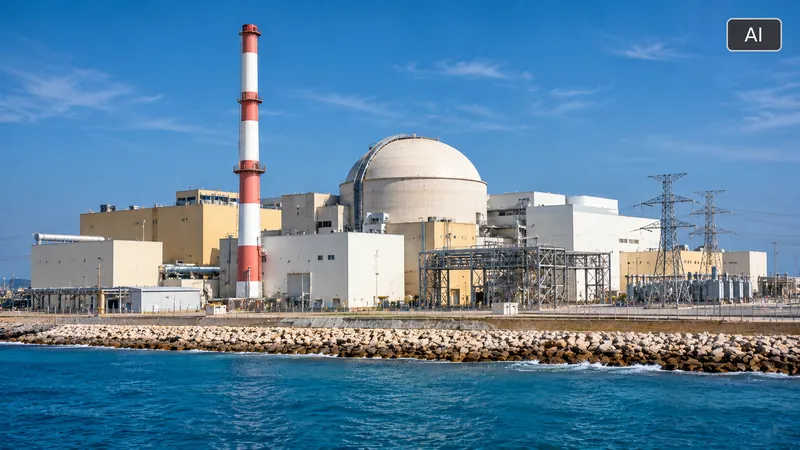
The United States has consistently regarded preventing Iran from acquiring nuclear weapons as a major national security objective.
That concern extends beyond Washington. Several Middle Eastern governments and European countries also fear that an Iranian nuclear weapon could destabilise the region and encourage further nuclear proliferation.
Iran insists that its nuclear programme serves peaceful purposes.
The country already possesses civilian nuclear infrastructure, including the Bushehr nuclear power plant, which produces electricity.
Civilian nuclear power, however, is not the same as developing a nuclear weapon.
The difficulty arises because some nuclear technologies, particularly uranium enrichment, can have both civilian and military applications. The level of enrichment, the quantity of nuclear material produced and the ability of international inspectors to account for that material are therefore crucial.
For Washington, the issue is not simply whether Iran declares its intentions to be peaceful. It is whether a verifiable agreement can provide sufficient confidence that nuclear material will not be diverted towards weapons development.
For Tehran, the dispute also concerns sovereignty and its claimed right to maintain a civilian nuclear programme.
A lasting settlement would need to address both questions: what nuclear activities Iran may undertake, and how the international community can independently verify that agreed restrictions are being respected.
Why the 2015 agreement did not settle the matter
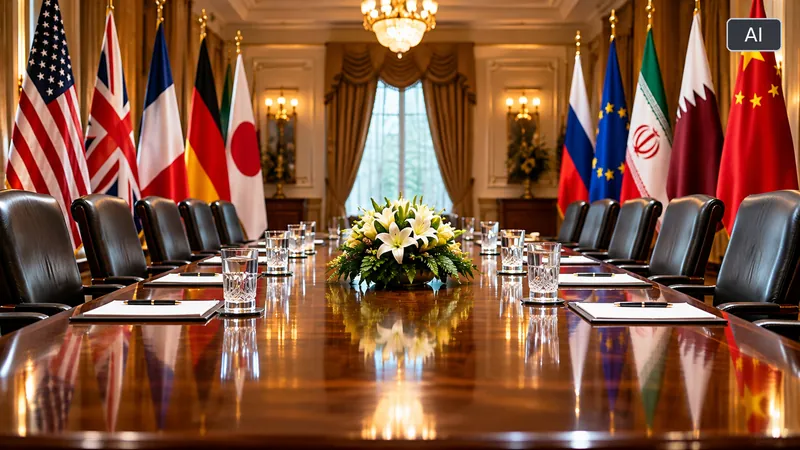
There has already been an important attempt to resolve this dispute.
In July 2015, Iran reached the Joint Comprehensive Plan of Action, or JCPOA, with the United States, Britain, France, Germany, Russia, China and the European Union.
The agreement placed restrictions on Iran's nuclear activities in exchange for sanctions relief and provided for international monitoring.
In January 2016, the International Atomic Energy Agency verified that Iran had implemented key nuclear-related commitments, allowing significant sanctions relief to take effect.
That was a substantial diplomatic achievement.
However, President Donald Trump withdrew the United States from the agreement in 2018, arguing that it did not adequately address longer-term nuclear concerns, ballistic missiles and Iran's regional activities.
American sanctions were subsequently restored, and Iran later moved beyond several restrictions established under the agreement.
Efforts to restore a durable arrangement failed.
The history matters because it complicates the question of trust.
Washington has concerns about Iran's nuclear activities and its willingness to accept lasting constraints. Tehran points to the American withdrawal as evidence that a negotiated agreement may not provide dependable economic or security guarantees.
Neither concern can be dismissed simply by repeating the demands of one side.
Any future agreement will need to be more than a diplomatic announcement. It will require detailed obligations, independent verification and a credible mechanism for responding to disputes.
The Strait of Hormuz: A waterway of international importance
The second major issue is the Strait of Hormuz.
Situated between Iran and Oman, the narrow waterway connects the Persian Gulf to the Gulf of Oman and the wider Indian Ocean.
It is one of the world's most important maritime passages, particularly for energy exports from the Gulf.
Its importance extends far beyond the countries bordering it.
Oil and gas shipments passing through the strait help supply international markets, and disruption can affect energy prices, transport costs, industrial production and household budgets around the world.
For the United States and its partners, secure commercial navigation is therefore a major international economic and security interest.
Iran, meanwhile, views the strait as an important part of its regional security environment and has sought to connect arrangements for shipping with demands concerning sanctions and military pressure.
The disagreement is not merely about ships moving through a narrow stretch of water. It concerns whether access to a strategically important international passage can become part of a wider political negotiation.
International navigation should not depend on the success or failure of negotiations between two governments.
Nevertheless, the present conflict has demonstrated how quickly shipping security can become entangled with broader disputes.
Why negotiations are still stuck
Recent diplomatic efforts have focused heavily on the sequence of concessions.
Washington wants meaningful progress on nuclear restrictions and inspections as part of any agreement.
Iran has demanded economic relief, including changes to sanctions and the American blockade, before accepting some of the measures sought by Washington.
This creates a familiar diplomatic problem.
If the United States relaxes pressure before receiving verifiable nuclear concessions, it risks surrendering negotiating leverage without securing the outcome it wants.
If Iran accepts major restrictions before receiving economic relief, its leadership fears it could remain exposed to sanctions and renewed military pressure.
Both governments therefore want assurances before taking steps that the other considers necessary to establish trust.
Qatar's proposals have attempted to overcome this difficulty through phased measures, with each side undertaking specific actions over a short period.
Iranian officials have nevertheless publicly rejected negotiations over the nuclear programme under the current circumstances, even as broader diplomatic contacts continue through intermediaries. This illustrates how far apart the two sides remain on one of the central issues.
By early November, however, no comprehensive settlement had been announced.
Reports of new proposals and diplomatic exchanges indicate that communication remains active, but continued dialogue is not the same as an agreement.
Has the international community failed to resolve the dispute?
The nuclear disagreement has occupied international diplomacy for more than two decades.
The United Nations, the International Atomic Energy Agency, European governments, Russia, China and successive American administrations have all participated in efforts to limit the danger of nuclear proliferation and prevent a wider confrontation.
Those efforts have produced agreements, inspections, sanctions and periods of reduced tension.
They have not produced a durable settlement.
The distinction is important.
The 2015 nuclear agreement demonstrated that negotiations could establish meaningful restrictions and verification arrangements. Its subsequent collapse demonstrated how vulnerable those arrangements could be to changing political circumstances and unresolved disagreements.
The involvement of Russia and China adds another layer of complexity.
Both countries have maintained relations with Tehran and participated in nuclear diplomacy. They also have their own strategic and economic interests in the region, which do not always align with those of the United States and European governments.
Their participation can provide additional diplomatic channels, but competition among major powers can also make coordinated international pressure more difficult.
A settlement ultimately requires more than international consensus about the desirability of peace. It requires agreement on specific obligations and a means of ensuring that they are fulfilled.
The interests of ordinary Iranians
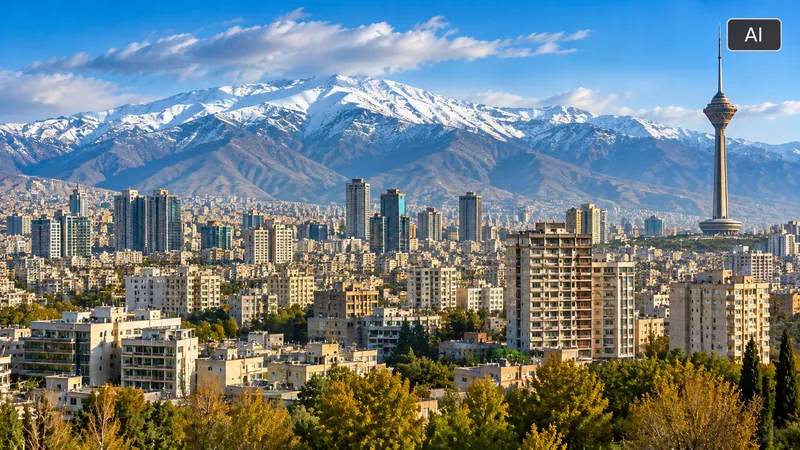
International coverage of Iran often concentrates on presidents, military leaders, nuclear facilities and diplomatic negotiations.
Yet the consequences of prolonged confrontation are felt most directly by ordinary people.
Economic sanctions, interrupted trade, inflation, uncertainty and the effects of war can damage employment prospects, household finances and access to essential goods.
Iran's population is not synonymous with its government.
Many Iranians have little influence over the decisions taken by their political leadership, despite bearing much of the economic and human cost.
That reality makes a negotiated settlement particularly important.
An agreement that reduces the risk of renewed conflict, restores predictable commercial activity and provides verifiable nuclear safeguards could offer substantial benefits to people in Iran and throughout the wider region.
The same applies internationally. Countries far removed from the Persian Gulf can face higher energy and transport costs when the region becomes unstable.
For smaller economies, including Iceland, those consequences are another reminder that geopolitical disputes rarely remain confined to the countries directly involved.
What would a workable agreement require?
A sustainable settlement would probably need to address several issues together.
Iran would need to accept nuclear restrictions and inspection arrangements sufficient to provide credible international assurance that its programme would not produce nuclear weapons.
Commercial shipping would need dependable access through the Strait of Hormuz under internationally recognised navigation principles.
The United States would need to establish a clear, credible framework for sanctions relief tied to verifiable Iranian compliance.
Both sides would also need a process for resolving alleged violations without allowing every disagreement to become a new military confrontation.
These are demanding conditions, but they are not entirely unfamiliar.
Variations of them have appeared in previous negotiations.
The unresolved problem is whether the governments involved are prepared to make concessions that can be defended domestically and sustained internationally.
Diplomacy remains the alternative
The latest mediation efforts suggest that Washington and Tehran still recognise the value of keeping diplomatic channels open.
For the United States, a verifiable agreement could address nuclear proliferation concerns, improve shipping security and reduce the risk of further regional conflict.
For Iran, a settlement could provide a route towards economic recovery, reduced isolation and greater stability.
Qatar can help the two sides communicate, but it cannot make the fundamental political decisions for them.
Those decisions remain in Washington and Tehran.
After decades of confrontation, the question is no longer whether the two governments understand each other's demands.
It is whether they can agree on enforceable commitments, accept the necessary compromises and establish enough trust to make another diplomatic agreement last.
Until then, intermediaries will continue carrying messages across a divide that direct diplomacy has yet to close.
Sources
- US Department of State (archive) — Joint Comprehensive Plan of Action (2015) – The 2015 nuclear agreement and its implementation.
- US Treasury (OFAC) — JCPOA Implementation Day, 16 January 2016 – Sanctions relief after the IAEA verified Iran's key nuclear commitments.
- Reuters — Iranian negotiators in Doha to continue talks to end the US-Iran war, official says, 1 November 2026 – Qatar's seven-day trust-building plan, Iran's counter-plan and the US blockade of Iranian ports.
- The Guardian — Indirect talks and the Strait of Hormuz, 1 November 2026
- Al Jazeera — Mediators continue US-Iran negotiations amid war rhetoric: what we know, 1 November 2026 – Qatari and Pakistani mediation, Iran's conditions and the state of the talks.
- Iran International — Iran rejects nuclear talks despite ongoing mediation with US, 1 November 2026 – Statements by Mohsen Rezaei and Abbas Araghchi on nuclear talks and mediation.
- Al Jazeera — Qatari officials in Iran in bid to revive ceasefire deal with US, 30 October 2026
Reporting note: This article is an explanatory analysis of the principal obstacles to a negotiated settlement between the United States and Iran. It draws on publicly reported diplomatic developments, the historical record of the 2015 nuclear agreement and statements attributed to the governments involved. It does not suggest that Fréttir 24/7 has independently participated in or verified confidential negotiations. The illustrations are AI-generated.
Tips, corrections or questions: ritstjorn@frettir247.news
More from World
 WORLD · GERMANYGermany's Generation Z Takes to the Streets: Anger Over Military Service, Education and an Uncertain Future31 October 2026
 WORLD · EUROPEEurope Burns? France’s October Riots Expose a Crisis of Public Order30 October 2026
 WORLD · UNITED STATESUS Midterm Elections 2026: Trump Faces a Crucial Test as Control of Congress Goes to the Voters31 October 2026