
Yemen — From Ancient Kingdoms to a War Without an End in Sight
A country shaped by centuries of trade, political division and cultural history is once again facing widespread conflict. As fighting continues and regional tensions grow, Yemen's struggle for peace remains one of the Middle East's most difficult challenges.
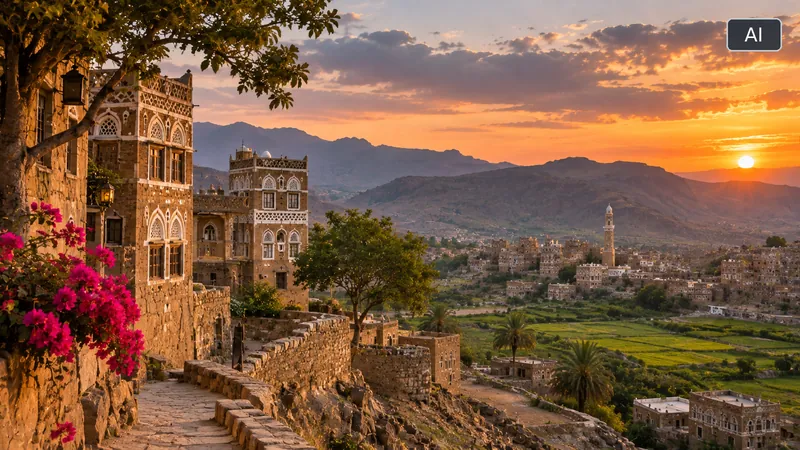
Yemen has lived through more than a decade of civil war, foreign military intervention and economic hardship. Periods of relative calm have offered hope that the country might eventually find a path towards peace, but renewed hostilities in 2026 have demonstrated how fragile those hopes remain.
Across the country, competing political and military authorities continue to struggle for control. Saudi Arabia and Iran remain influential regional actors, while the United States and other international powers have been drawn into the wider security consequences of the conflict.
The fighting has also placed renewed attention on the Red Sea, where Yemen's geographical position gives it considerable importance to international trade and maritime security.
Yet the country's significance cannot be measured only in military terms.
Behind the political disagreements, territorial disputes and regional rivalries is a population that has endured years of displacement, economic disruption and declining access to essential services.
Understanding Yemen requires more than following the latest military developments. It requires examining how a country with a long and remarkable history became divided, why efforts to restore peace have struggled, and what remains at stake for its people.
Renewed Fighting in a Divided Country
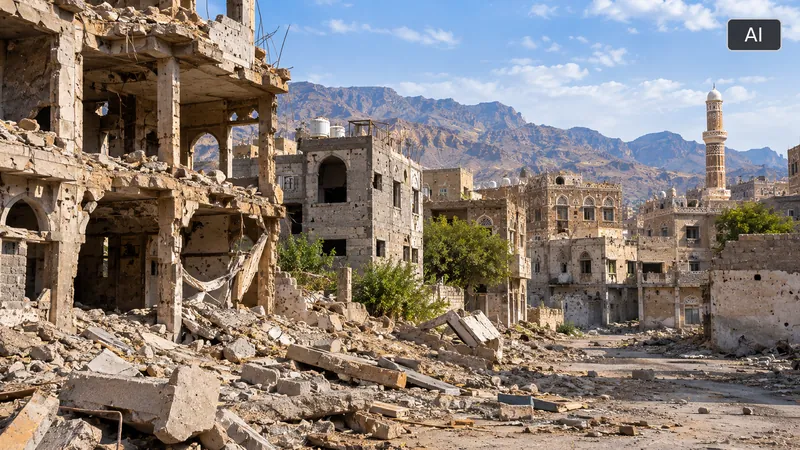
The conflict entered another serious phase during September and October 2026, with military operations expanding across several parts of Yemen.
Fighting intensified along the western coast, around the city of Taiz and in areas approaching the Bab el-Mandeb Strait, one of the world's strategically important maritime passages.
Forces associated with the Houthi movement, also known as Ansar Allah, remain a major military and political presence in Yemen. The movement controls the capital, Sanaa, and substantial areas of the country's northwest.
Opposing forces operate under the internationally recognised Presidential Leadership Council, headed by Rashad al-Alimi, although their political interests and military structures are not always unified.
The renewed confrontation has involved ground operations, airstrikes and missile and drone attacks, including attacks affecting Saudi Arabia.
Both sides have made claims concerning military advances and the control of strategic locations. In a rapidly changing conflict, such claims require careful assessment, particularly where independent verification is limited.
The United Nations warned in October that Yemen had returned to large-scale hostilities across multiple front lines, reversing much of the relative calm that followed the 2022 truce.
The developments illustrate a central difficulty in Yemen's conflict: military operations can alter the balance of power without necessarily resolving the political disagreements that caused the fighting.
An Ancient Land at a Strategic Crossroads
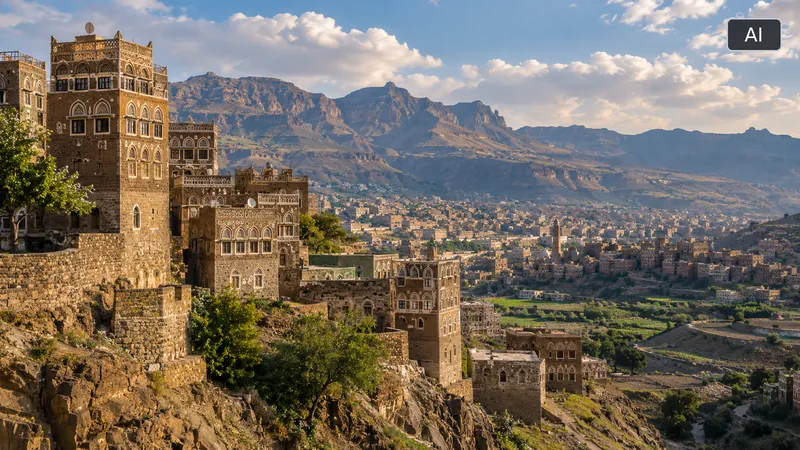
Long before Yemen became associated with modern warfare, it was home to some of the Arabian Peninsula's most influential ancient kingdoms.
Located at the southwestern edge of Arabia, Yemen occupies a position between the Red Sea, the Gulf of Aden and the Arabian Sea.
Its geography helped establish the region as an important centre of commerce linking Africa, the Middle East, the Mediterranean and Asia.
Among its ancient civilisations was the kingdom of Saba, traditionally associated with the Queen of Sheba. Trade in frankincense, myrrh and other valuable commodities helped sustain prosperous communities and trading networks.
Yemen's historical importance was not limited to commerce. Its distinctive architecture, religious traditions, agriculture and cultural heritage developed over many centuries.
The country's mountainous highlands, coastal plains and desert regions also encouraged different forms of local government and social organisation.
Tribal relationships, regional identities and religious communities became important elements of political life.
These differences did not make modern conflict inevitable. They do, however, help explain why the distribution of authority and resources has remained a recurring issue throughout Yemen's history.
Two Yemens Become One
The modern Republic of Yemen was created relatively recently.
For much of the twentieth century, northern and southern Yemen followed separate political paths.
In the north, the overthrow of the monarchy in 1962 led to the establishment of a republic and a civil war in which regional powers supported opposing factions.
In the south, Britain had controlled the port of Aden since 1839. Following independence in 1967, South Yemen eventually became a Marxist state closely associated with the Soviet Union.
The two countries developed different political institutions, military organisations and economic relationships.
On 22 May 1990, North and South Yemen formally united.
Ali Abdullah Saleh, who had governed North Yemen since 1978, became president of the unified republic.
Unification represented an important moment in the country's modern history, but it did not eliminate longstanding disagreements.
Political representation, military command, public revenue and the distribution of economic resources remained contentious.
In 1994, civil war broke out between northern and southern factions. Forces loyal to Saleh defeated the southern attempt at secession, but resentment over the political balance of the unified state persisted.
These unresolved questions would later contribute to the emergence of new opposition movements and demands for southern autonomy.
The Rise of the Houthis
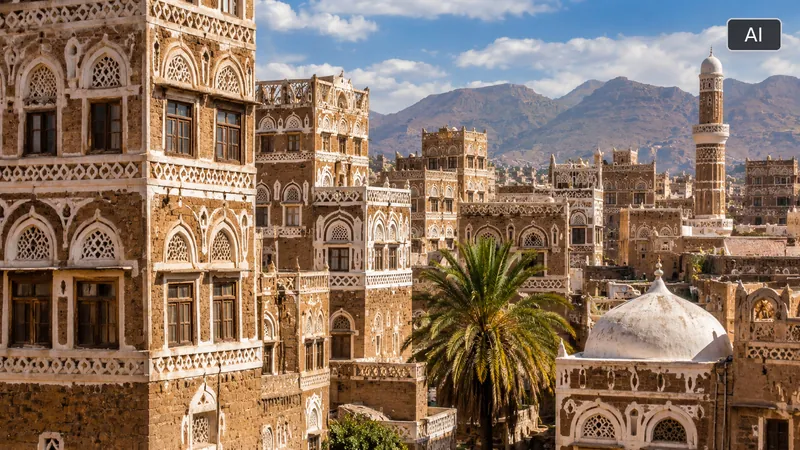
The Houthi movement emerged from northern Yemen's Zaydi Shia community, which has deep historical roots in the region.
Originally associated with religious revival and opposition to government policies, the movement developed into an organised political and military force.
Its early leadership criticised corruption, foreign influence and the concentration of political authority under President Saleh.
Between 2004 and 2010, the Houthis fought several conflicts against Yemen's government.
The movement subsequently expanded its political and military influence during a period of growing national instability.
In 2011, Yemen became part of the wider Arab Spring demonstrations that swept across the Middle East.
Protesters demanded political reform, an end to corruption and the departure of President Saleh.
Following prolonged unrest, Saleh transferred power to his vice-president, Abdrabbuh Mansur Hadi, in 2012.
The transition was intended to establish a more inclusive political system, but disagreements over the future structure of the state remained unresolved.
In September 2014, Houthi forces entered Sanaa and took control of much of the capital.
The following year, the internationally recognised government lost control of key institutions, and President Hadi fled Yemen.
The confrontation developed into a wider civil war that would reshape the country.
Saudi Arabia Intervenes
In March 2015, Saudi Arabia led a military coalition into Yemen with the stated objective of restoring the internationally recognised government and preventing further Houthi advances.
Saudi Arabia also regarded the emergence of a powerful armed movement near its southern border, with ties to Iran, as a serious security concern.
The United Arab Emirates became an important coalition participant, while the United States provided various forms of military and intelligence support.
The intervention did not remove the Houthis from Sanaa.
Instead, Yemen became divided between competing authorities, military organisations and regional alliances.
The war involved airstrikes, ground fighting, missile attacks and restrictions affecting civilian life.
Coalition military operations have faced criticism over civilian casualties and damage to infrastructure. The Houthis have also faced allegations of serious abuses, including attacks affecting civilians, restrictions on humanitarian access and the detention of aid personnel.
International humanitarian law applies to all parties, regardless of their political objectives or the circumstances in which military operations take place.
The prolonged conflict weakened state institutions and contributed to an increasingly severe humanitarian and economic emergency.
Saudi Arabia, Iran and the Wider Region
Yemen's conflict is frequently described as a regional confrontation between Saudi Arabia and Iran.
Both countries have played significant roles, but the war cannot be understood solely through their rivalry.
Saudi Arabia's priorities include border security, regional stability and protection against missile and drone attacks.
Iran has supported the Houthis, contributing to the movement's military capabilities and its position within wider regional politics.
The Houthis, however, have their own domestic history, leadership and political objectives.
The United Arab Emirates has also maintained important relationships with armed and political groups in southern Yemen, particularly those concerned with regional autonomy and control of strategic coastal areas.
These interests have not always aligned with those of the internationally recognised government.
Yemen's political landscape is therefore more complicated than a confrontation between two clearly defined sides.
Even a reduction in hostilities between Saudi Arabia and the Houthis would leave difficult questions about southern Yemen, state authority, political representation and the future of the country's armed forces.
This complexity helps explain why military agreements and temporary ceasefires have not produced a comprehensive peace settlement.
The Red Sea: A Local War With Global Consequences
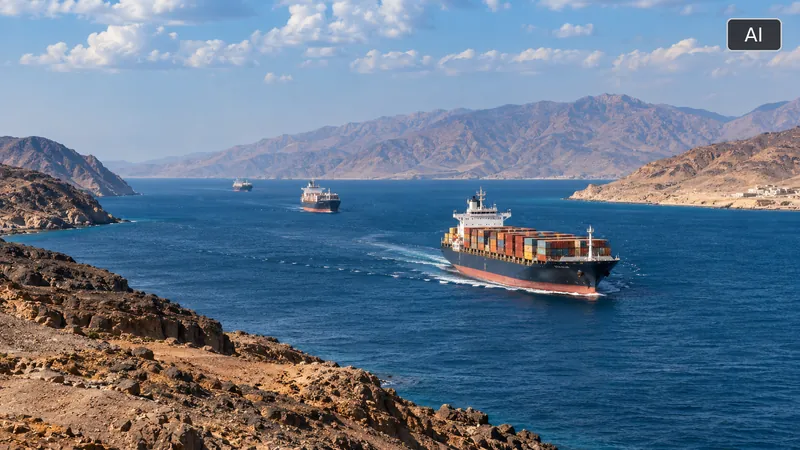
Yemen's position beside the Bab el-Mandeb Strait gives the country importance far beyond the Arabian Peninsula.
The narrow passage between Yemen and the Horn of Africa connects the Gulf of Aden with the Red Sea and provides access to the Suez Canal.
Commercial vessels travelling between Europe and Asia use this route to transport goods, energy supplies and other essential cargo.
When shipping companies consider the passage unsafe, some vessels are diverted around southern Africa, adding time and expense to international journeys.
The conflict in Yemen has therefore become closely connected with questions of maritime security and international commerce.
Following the outbreak of the Gaza war in October 2023, the Houthis began attacks against commercial shipping in and around the Red Sea.
The movement described these operations as support for Palestinians and opposition to Israel.
The United States and Britain subsequently conducted military strikes against Houthi targets, saying their objective was to protect international shipping and reduce the movement's ability to threaten vessels.
American operations intensified under President Donald Trump in 2025 before an agreement mediated by Oman brought a halt to direct attacks between the United States and the Houthis.
That arrangement did not end Yemen's civil war or resolve every regional confrontation involving the movement.
Renewed fighting in 2026 has once again placed the security of the Red Sea under international scrutiny.
Control of coastal territory can provide strategic advantages, but the ability to influence maritime traffic also depends on missile capabilities, naval operations and wider regional security conditions.
The consequences of disruption are felt not only by governments and shipping companies but also by consumers and businesses dependent on international trade.
The Humanitarian Crisis
For Yemen's population, the most immediate consequences of the conflict are often far removed from diplomatic negotiations or military strategy.
Years of fighting have damaged infrastructure, disrupted economic activity and weakened the institutions responsible for essential public services.
Millions of Yemenis require humanitarian assistance, while food insecurity, displacement and childhood malnutrition remain widespread.
The country's dependence on imported food makes households particularly vulnerable to interruptions in trade, higher transport costs and restrictions on the movement of supplies.
Many families have been displaced more than once, losing homes, livelihoods and access to education.
The deterioration of healthcare services has created additional dangers for children, pregnant women, older people and those requiring regular medical treatment.
Renewed hostilities in 2026 have added further pressure to communities already struggling with the cumulative effects of prolonged conflict.
Taiz and the Struggle for Essential Supplies
The humanitarian situation around Taiz illustrates how military operations can affect civilian life even beyond the immediate battlefield.
During October 2026, United Nations agencies warned that fighting and restrictions on access routes were severely disrupting the movement of food, fuel, medicines and other essential supplies.
Hospitals faced shortages of fuel and medical oxygen, while difficulties obtaining water placed additional pressure on households.
Aid organisations reported that insecurity and blocked routes were preventing assistance from reaching people in need.
Human rights organisations, including Amnesty International and Human Rights Watch, have called on the Houthi authorities to reopen the roads into the city.
United Nations humanitarian agencies have nevertheless documented serious access restrictions and called for safe passage for humanitarian assistance and commercial goods.
The situation demonstrates why protecting civilian infrastructure and maintaining access to essential supplies remain central obligations during armed conflict.
For families living in affected areas, the consequences are immediate: access to drinking water, medical treatment, food and safe transport can become uncertain.
These problems cannot be resolved through military advances alone.
Why Peace Has Remained Elusive
The difficulties facing Yemen's peace process extend beyond the immediate military confrontation.
The country's competing political authorities disagree over the future structure of government, the distribution of power and the control of national resources.
Economic questions are especially important.
Oil revenue, public-sector salaries, taxation, ports and access to international trade all affect the ability of different authorities to govern.
Southern political movements continue to raise questions about autonomy and the future relationship between northern and southern Yemen.
Regional powers also have security interests that influence negotiations.
The United Nations-brokered truce of 2022 demonstrated that a reduction in large-scale fighting was possible.
Although the formal agreement expired, the relative calm that followed created opportunities for further diplomatic engagement.
However, a comprehensive settlement did not emerge.
Renewed military operations in 2026 exposed the fragility of arrangements that reduced violence without resolving the underlying political disputes.
A lasting peace would require more than a ceasefire.
It would involve agreement on political representation, security arrangements, economic administration and the future of armed groups.
It would also require the restoration of public services and conditions allowing displaced families to rebuild their lives.
Such negotiations are difficult because the parties involved do not necessarily share the same vision of Yemen's future.
The Role of Diplomacy
Despite renewed hostilities, diplomatic efforts have continued.
The United Nations, regional governments and international mediators have sought to prevent further escalation and encourage a return to political negotiations.
Oman has played an important mediating role in previous discussions, while Saudi Arabia remains central to the regional security dimension of the conflict.
The United Nations Special Envoy for Yemen, Hans Grundberg, has emphasised that military gains cannot replace the political negotiations needed to settle the war.
This reflects a fundamental challenge.
Military operations may change the negotiating positions of competing authorities, but they cannot automatically establish a political system accepted across the country.
A sustainable agreement would need sufficient support among Yemen's political and social communities to survive future disagreements.
It would also need to address the practical realities of reconstruction, economic recovery and the restoration of essential services.
As of 1 November 2026, renewed fighting has left the prospect of a comprehensive settlement uncertain.
Diplomacy remains active, but no lasting agreement has yet brought Yemen's competing authorities together under a shared political framework.
A Future Still Uncertain
Yemen's immediate future will be shaped by developments on the battlefield, regional security decisions and the willingness of competing political authorities to negotiate.
The western coast and Bab el-Mandeb remain strategically important, while the security relationship between Yemen and Saudi Arabia continues to influence regional tensions.
The wider Middle East also affects Yemen's circumstances, particularly through relationships involving Iran, Israel and the United States.
Yet the country's future cannot be determined solely by outside governments.
Any durable political settlement must address Yemen's internal divisions and provide a workable framework for its people.
That means confronting difficult questions about governance, economic resources, regional identity and the institutions needed to support a functioning state.
It also means recognising that Yemen's recovery would take considerable time, even if large-scale fighting were to stop.
Rebuilding hospitals, schools, roads, water systems and economic opportunities would require sustained domestic and international efforts.
For families who have spent years living with insecurity, the restoration of ordinary life would itself represent an enormous achievement.
Yemen — More Than a War
Yemen's history stretches back thousands of years.
It has been home to influential kingdoms, important trading centres, distinctive religious traditions and communities whose cultural heritage forms part of the wider history of the Arabian Peninsula.
The country's modern experience has included independence, unification, political upheaval and repeated struggles over authority.
Since 2014, however, prolonged conflict has overshadowed much of that history in international reporting.
The renewed hostilities of 2026 have shown how difficult it remains to transform military confrontation into political reconciliation.
For neighbouring countries, Yemen's stability is closely connected to regional security.
For international commerce, the Red Sea remains an essential maritime passage.
For Yemenis themselves, the priorities are often more immediate: safety, reliable access to food and water, functioning public services, employment and the possibility of raising families without the constant threat of further conflict.
The war has continued through changing governments, shifting alliances and repeated diplomatic initiatives.
Its eventual resolution remains uncertain.
But Yemen is more than the armed groups, military operations and regional rivalries that dominate the headlines.
It is a country with a long history, a complex society and millions of people whose lives and ambitions extend far beyond the conflict.
After more than a decade of war, Yemen's greatest unresolved question is not simply who will control its territory, but whether its people will finally have the opportunity to build a peaceful and stable future.
Sources
- United Nations in Yemen – Humanitarian developments, UN programmes and official statements.
- Office of the UN Special Envoy for Yemen – Peace negotiations and Security Council briefings.
- UN Special Envoy's Security Council briefing, 9 October 2026 (UN DPPA) – Renewed fighting, regional security and the political process.
- UN Humanitarian Coordinator's statement on Taiz, 20 October 2026 – Civilian access to food, water and medical services.
- UN Geneva — Taiz humanitarian emergency, 23 October 2026 – Humanitarian access and displacement.
- UN News — Deepening concerns for Taiz City as aid is blocked from entering, 23 October 2026 – OCHA, WFP, UNICEF and IOM on access, water, food and displacement in Taiz.
- Amnesty International — Huthis must open Ta'iz roads immediately, 22 October 2026 – Road closures, UN warnings about fuel and oxygen at medical facilities, and civilian casualties.
- Human Rights Watch — Houthis depriving Taizz civilians of food, medicine, 29 October 2026 – Human rights and civilian protection; call to reopen roads into Taizz.
- Al Jazeera — Fighting in Yemen intensifies: what's the latest on the battlefield?, 15 October 2026 – The fronts, coalition airstrikes and attacks on Saudi Arabia, with claims from both sides.
- Council on Foreign Relations — War in Yemen – Background and regional context.
Reporting note: Originally published 10 October 2026. Substantially revised on 1 November 2026 to provide a broader historical and contemporary account of Yemen's conflict, including the renewed hostilities of 2026, regional involvement, maritime security and the humanitarian consequences. The article is intended as an explanatory feature rather than a live account of military operations. Claims made by parties to the conflict are distinguished from information reported by international organisations and other sources. Developments on the ground remain subject to change. The illustrations are AI-generated.
Tips, corrections or questions: ritstjorn@frettir247.news
More from World
 WORLD · GERMANYGermany's Generation Z Takes to the Streets: Anger Over Military Service, Education and an Uncertain Future31 October 2026
 WORLD · EUROPEEurope Burns? France’s October Riots Expose a Crisis of Public Order30 October 2026
 WORLD · UNITED STATESUS Midterm Elections 2026: Trump Faces a Crucial Test as Control of Congress Goes to the Voters31 October 2026